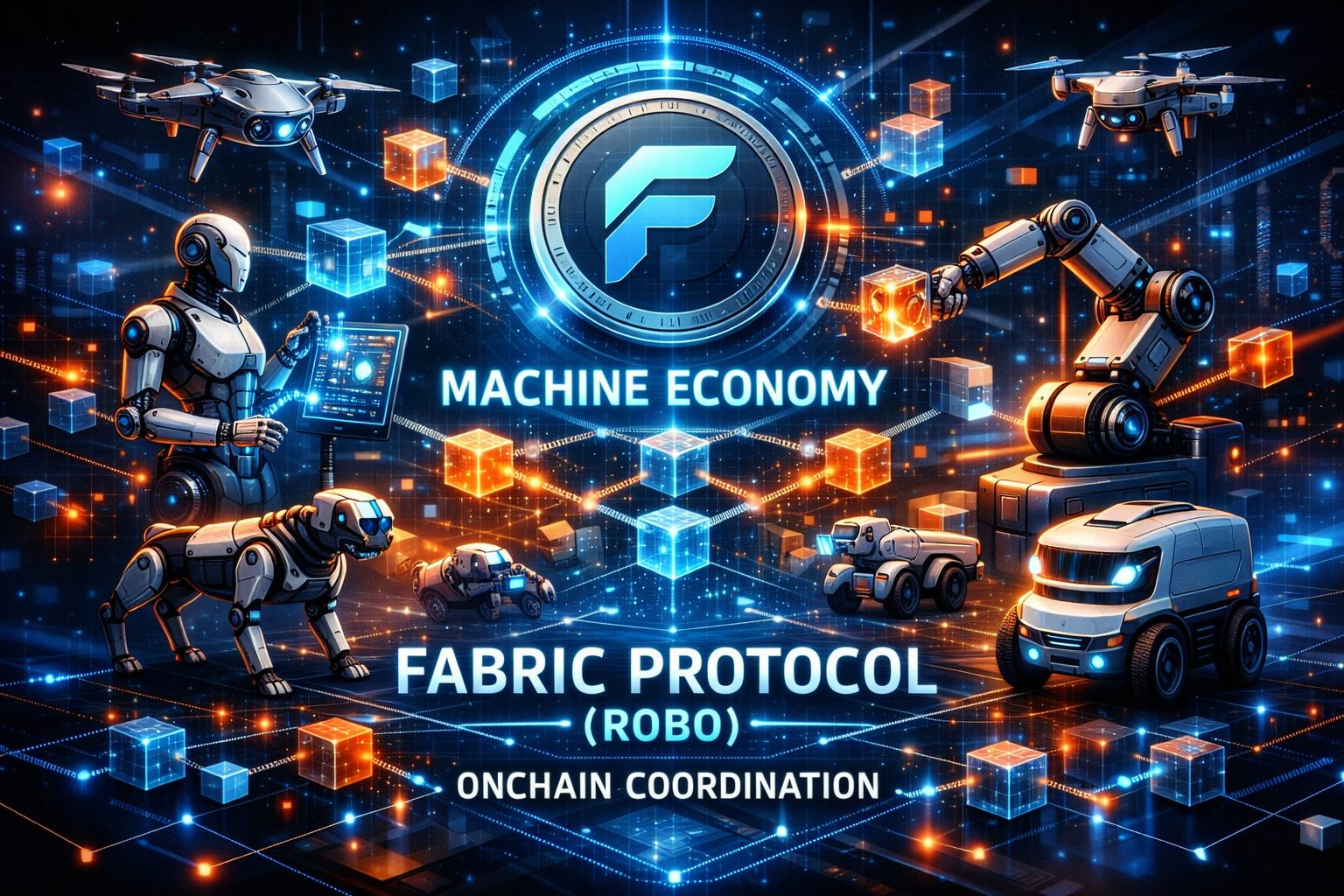
Fabric Protocol is a next-generation blockchain project aiming to build the payment, identity, and coordination layer for robotic and autonomous systems. Rather than being another DeFi or AI-token play, @Fabric Foundation Fabric focuses on creating an open, decentralized ecosystem where robots and intelligent machines can interact, transact, and coordinate onchain — bridging Web3 and the emerging machine economy. �
BSC News
At its core ROBO is the native utility token of the Fabric network.
It’s used for protocol payments, identity verification, staking, governance, and accessing coordination services on the network.
Initially launched on Base (an Ethereum Layer-2) for scalability, with plans to evolve towards its own Layer-1 network as adoption grows. �
BSC News
This positioning gives $ROBO a more specialized value proposition than many generic crypto projects — it targets the intersection of robotics, decentralized infrastructure, and economic coordination.
🚀 Recent Developments & Momentum
✅ Exchange Listings & Market Adoption
Fabric Protocol hit a major milestone in February 2026 with listings on multiple centralized exchanges, including big names like Coinbase, KuCoin, and others. These listings help unlock liquidity and price discovery for Robo beyond airdrop distributions. �
BSC News +1
Several trading platforms have detailed spot trading and incentives for early traders, indicating growing market interest. �
Market data around this listing period showed impressive trading activity and price performance, with ROBO gaining vs. major assets and drawing strong volume relative to its market cap — a sign of active participation. �
MEXC
📊 What this means: Exchange listings are critical for broader adoption. Getting on major platforms helps institutional and retail investors access ROBO more easily, which is a crucial step in any fundamental growth story.
🛠 Technology and Real Utility
Unlike meme tokens or speculative assets with weak use cases, Fabric emphasizes real infrastructure utility:
🤖 Machine Economy Integration
Fabric builds:
Onchain identity and payments for robots and autonomous systems
Coordination and task settlement mechanisms that allow machines from different manufacturers to interact
This tackles a real problem: today's robots are siloed, locked into proprietary systems with no shared financial or governance infrastructure. �
BSC News
This positions Fabric toward a world where machines can transact and coordinate like economic agents, aligning incentives between developers, operators, and machines themselves.
📈 Roadmap & Future Catalysts
While Fabric’s full detailed roadmap isn’t published like a typical Web3 whitepaper, several clear trajectory points emerge:
🔹 Growth Beyond Base
Fabric plans to grow beyond its initial Layer-2 deployment on Base, hinting at a more independent blockchain infrastructure as network activity scales. �
BSC News
🔹 Increased Protocol Adoption
As robotics and autonomous systems proliferate, broader adoption of an open robot coordination layer becomes more realistic. Applications could include:
Autonomous delivery networks
Industrial fleet coordination
Automated identity and settlement for IoT systems
Each of these expands ROBO’s utility as a medium of exchange and protocol stake.
🔹 Network & Governance Evolution
ROBO’s governance functions will likely gain prominence as the community grows — giving holders voting power over upgrades, fees, and network parameters.
🔹 Ecosystem Development
Expect partnerships, integrations, and tooling that support robot developers and industrial participants — especially if Fabric delivers concrete developer tools and open SDKs.
⚖️ Fundamental Strengths
✅ Strong real-world use case — not just DeFi/AI buzzwords
✅ Native token utility for staking, fees, and governance
✅ Market momentum via exchange listings
✅ Focus on robotic coordination & identity infrastructure
✅ Early mover in the machine economy narrative