
It was one of those ordinary afternoons where I found myself reorganizing my desk drawers, pulling out old letters and notes that I'd tucked away years ago. Holding them, I felt a strange comfort in knowing these words were for my eyes only, untouched by outside scrutiny. No one could search them, analyze them, or use them against me in some unintended way. That moment of pure, unrecorded privacy lingered with me as I closed the drawer.
Moments later, I logged into my Binance Square account and began working on the CreatorPad campaign task dedicated to Midnight Network Architecture and Privacy Technology Explained. It was during the part where I had to review the privacy layer schematic in the submission interface—that intricate screen element mapping out shielded data flows—that the connection became impossible to ignore. Here was a system intentionally carving out spaces of concealment within a verifiable framework, and it made my earlier reflection on those private letters feel eerily relevant to blockchain design.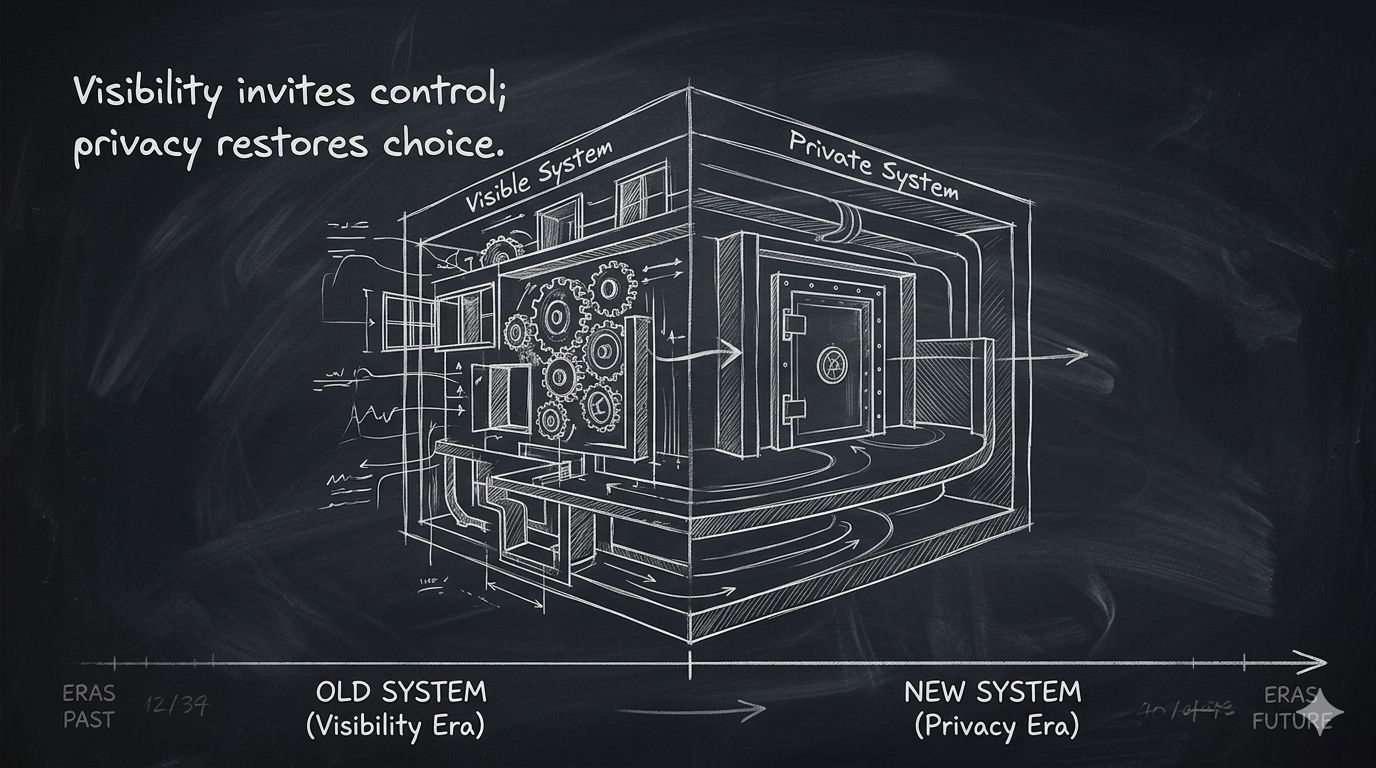
The notion that unsettled me is simple yet disruptive: the transparency we've long praised as cryptocurrency's core virtue could actually be its greatest liability. For years, the mantra has been that public ledgers foster trust through radical openness—anyone can verify, so no one can cheat. It's a belief that underpins so much of what draws people to this space. But encountering that schematic shifted my perspective; what if this insistence on visibility is quietly undermining the autonomy we seek?
Consider how privacy functions in the non-digital world. We don't publish our medical histories or financial negotiations for public consumption because exposure alters dynamics, breeds caution, and often invites misuse. Relationships thrive in confidence, innovations spark in secrecy before they're ready for the light. Crypto's push toward total transparency flips this logic, creating an environment where every wallet address, transaction, and holding becomes a permanent, searchable record. The idea that such openness inherently protects users starts to ring hollow when real-world outcomes show increased surveillance capabilities for anyone with basic tools. It's not paranoia—it's pattern recognition.
This goes further when you examine the uneven playing field it creates. Large entities can mine the open data for insights, correlations, and advantages, while individual participants face constant exposure without equivalent defenses. We've convinced ourselves that auditability equals fairness, but perhaps it's time to admit that selective privacy might be the missing piece for genuine user sovereignty. The discomfort lies in admitting that our foundational crypto tenet might need revisiting if we're serious about building systems that empower rather than expose.
Midnight Network offers a tangible example of this rethinking in action. Its architecture integrates privacy technology in a way that maintains network integrity without forcing every detail into the open, allowing for interactions that respect the human need for discretion.
Finishing that task left the question hanging in my mind with quiet conviction: if privacy-centric approaches like this gain traction, are we prepared to acknowledge that the transparent ledger era was merely a stepping stone, not the destination? $NIGHT #night @Fabric Foundation