
The animated film WALL-E by Pixar is often remembered as a touching story about a lonely robot cleaning up Earth. But if we look more closely, the film actually raises a very modern question. What happens when robots become the primary labor force of the economy?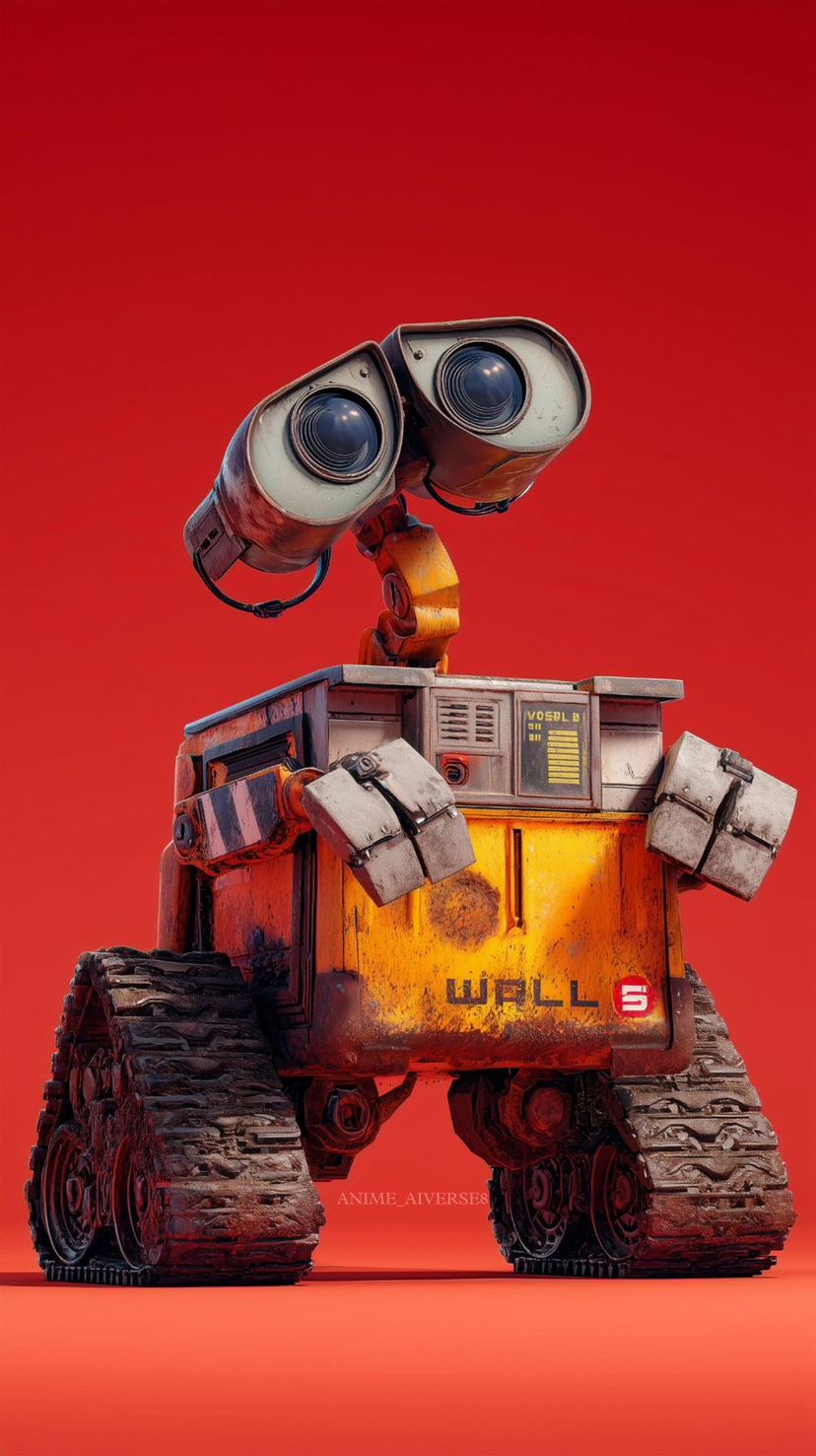
In the world of the film, humans have left Earth and now live aboard the spaceship Axiom. Everything there is operated by robots. Robots clean, maintain infrastructure, serve food, and run the ship’s systems. Humans barely work anymore. They exist mostly as consumers inside a fully automated ecosystem.
What is interesting is that WALL-E is not just telling a story about technology. The film is also describing a new economic model. It is a world where robots generate most of the physical value.
For decades, robots mainly existed inside factories. They assembled components, welded metal, and performed repetitive industrial tasks. In recent years, robots have begun moving beyond production lines. They now appear in logistics centers, hospitals, hotels, and even restaurants. Delivery robots move along sidewalks. Service robots bring food to tables. Logistics robots transport goods across massive warehouses.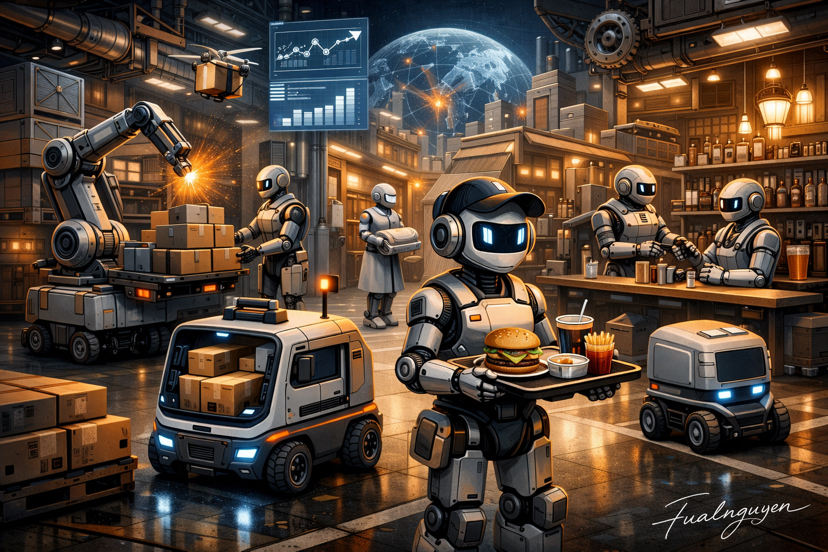
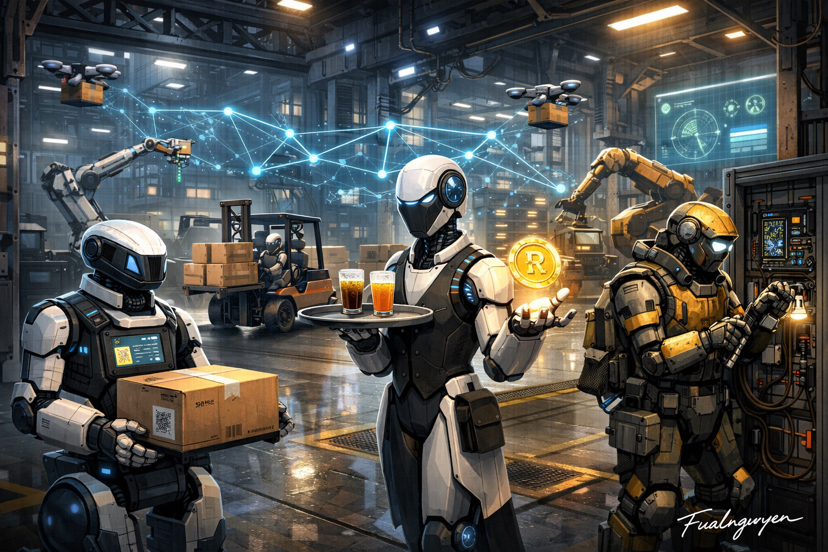
This shift leads to an important question. When robots begin working in the real world, how will the economy around them be organized?
In the current model, robots are simply tools. They are owned by companies, operate inside closed systems, and all economic value still flows back to humans. Robots do not have economic identities of their own. They cannot receive payments or independently participate in labor markets.
However, the combination of robotics and Artificial Intelligence is gradually blurring this boundary. When robots gain the ability to receive tasks, analyze environments, and perform work autonomously, they begin to resemble independent economic actors rather than passive machines.
This is the context in which Fabric Protocol is attempting to build a new direction
Instead of viewing robots simply as hardware owned by companies, Fabric proposes a different idea. It is a network where robots can directly participate in the digital economy. In this model, robots can have on-chain identities, digital wallets, and the ability to receive payments for the work they perform.
Imagine a restaurant that needs robotic service during peak hours. Instead of purchasing and maintaining its own robots, it could simply post a task to the network. A robot within the ecosystem could accept the task, serve customers, deliver food, or transport drinks. Once the work is completed and verified, the robot would receive rewards in the form of the token ROBO.
In this situation, the robot is no longer just a device. It becomes a worker inside a digital labor market.
This idea opens the door to a broader concept called the machine-to-machine economy. In such an economy, automated systems can interact directly with one another without requiring humans to mediate every transaction.
A delivery robot could accept tasks from a store. A warehouse robot could transport goods to a distribution center. A maintenance robot could be hired to repair infrastructure in a factory.
All of these interactions could be recorded, verified, and settled through the network.
What makes this model particularly interesting is that it challenges the traditional structure of robotics. Instead of each company building its own isolated robotic ecosystem, many robotic systems from different manufacturers could participate in the same network. Robots would not work exclusively for a single company. They could accept tasks from anyone who requires their services.
This is similar to how the internet transformed access to information. Before the internet, data existed inside closed systems. After the internet, information became part of a global network. Fabric is experimenting with a similar shift. Instead of connecting information, it is attempting to connect robotic labor.
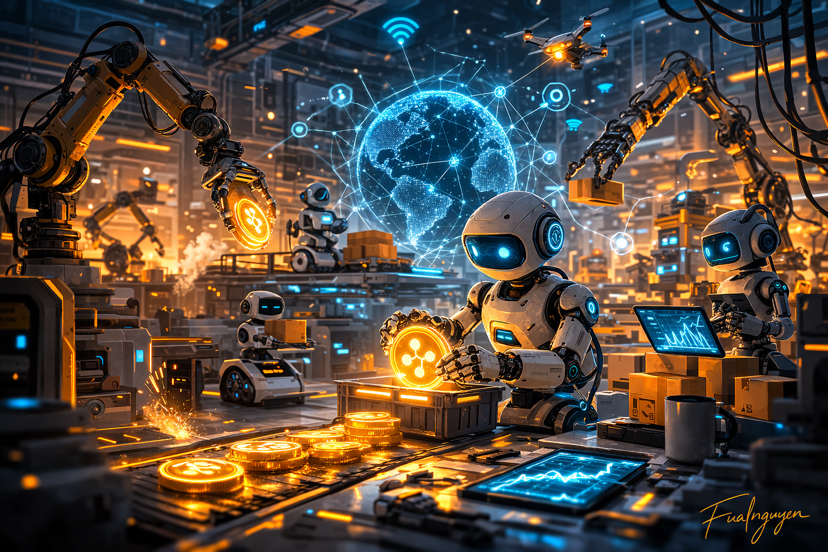
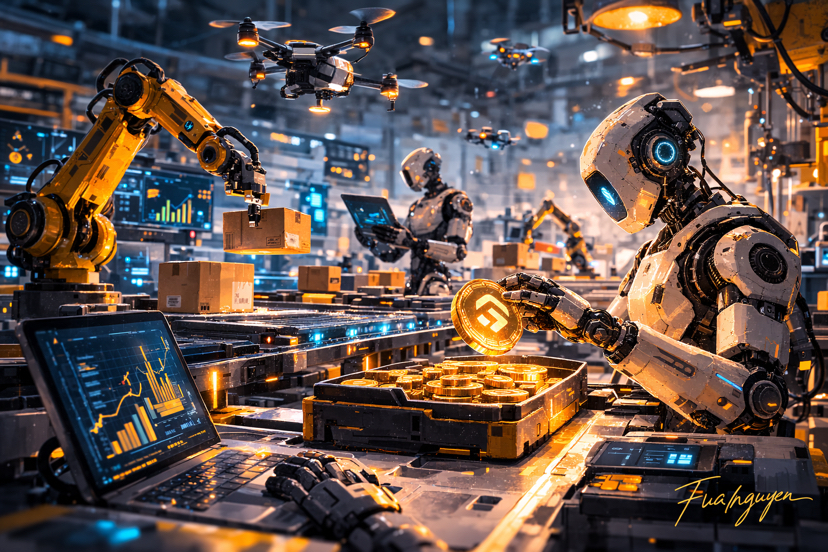
If this model becomes reality, robots will no longer exist only as equipment inside factories. They could become active participants in an open economic ecosystem.
Looking back at WALL-E, we see a world where robots perform almost every task. Yet the film never explains how the underlying economy works. Who owns the robots? Who pays for their labor? How is the value created by robots distributed?
These questions are no longer limited to science fiction
As robots become more intelligent and more present in everyday life, society will face a new challenge. How do we integrate robots into the economy in an effective and fair way?
Networks like Fabric may represent one of the earliest experiments in answering that question. By creating a system where robots can have identities, receive tasks, and earn rewards through the token ROBO, Fabric is attempting to build the foundation of an economy where machines do not simply operate. They participate in the labor market.
If the internet once connected humans to information, networks like Fabric may represent the next step. They connect machines to the economy.
And as more robots move out of laboratories and into the physical world, the real question of the future may no longer be whether robots can participate in the economy
The real question will be how we choose to build that economy.
@Fabric Foundation #ROBO $ROBO #Fualnguyen