i build on abstraction layers for a living and honestly the first thing you learn is they are only useful until they arent 😂
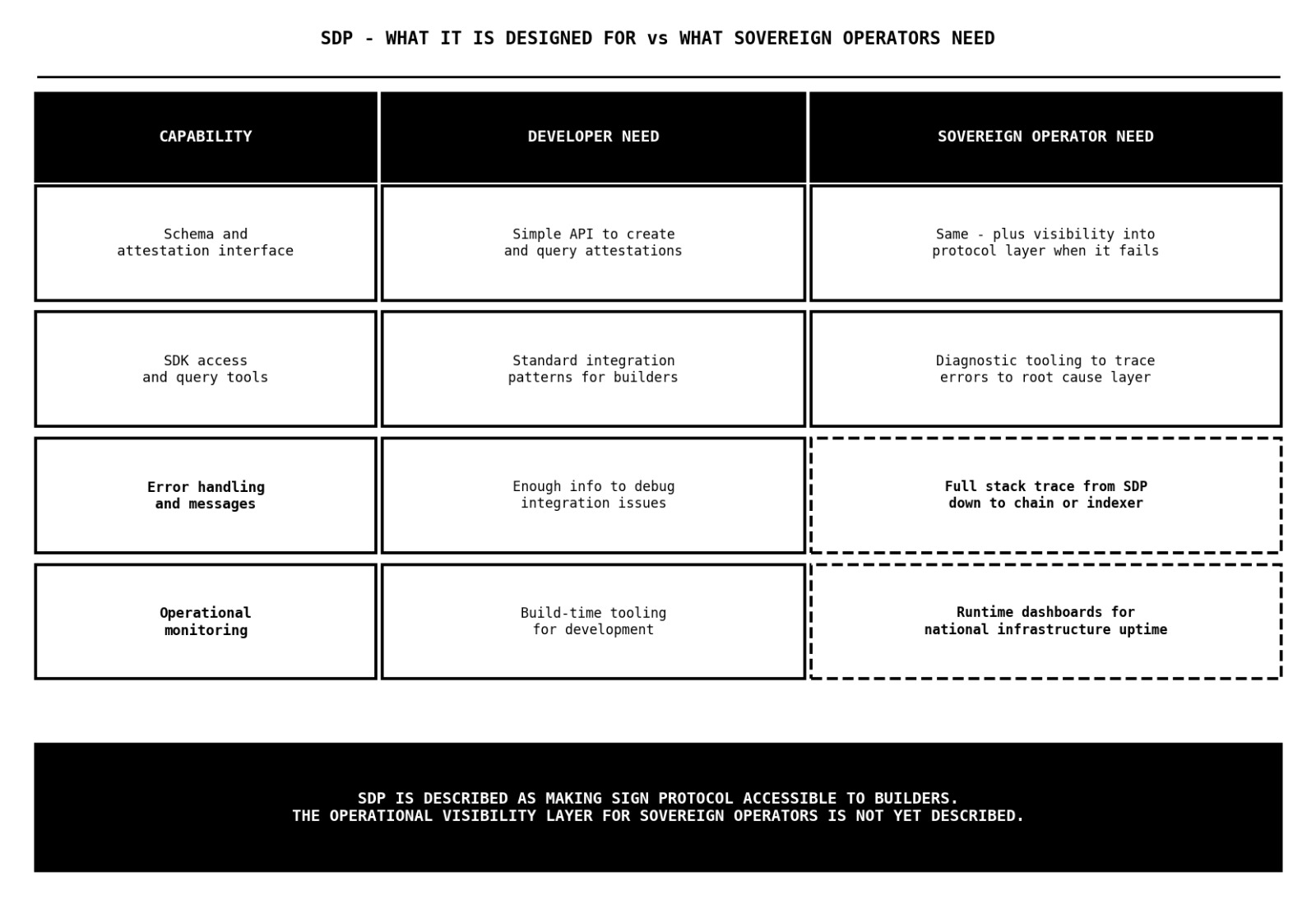
I spent yesterday going through the Sign Developer Platform section. the SDP.its the builder-facing layer that sits on top of Sign Protocol. schemas, attestations, SDK access, query tools. the idea is that developers dont need to interact with the raw protocol directly. the platform handles that.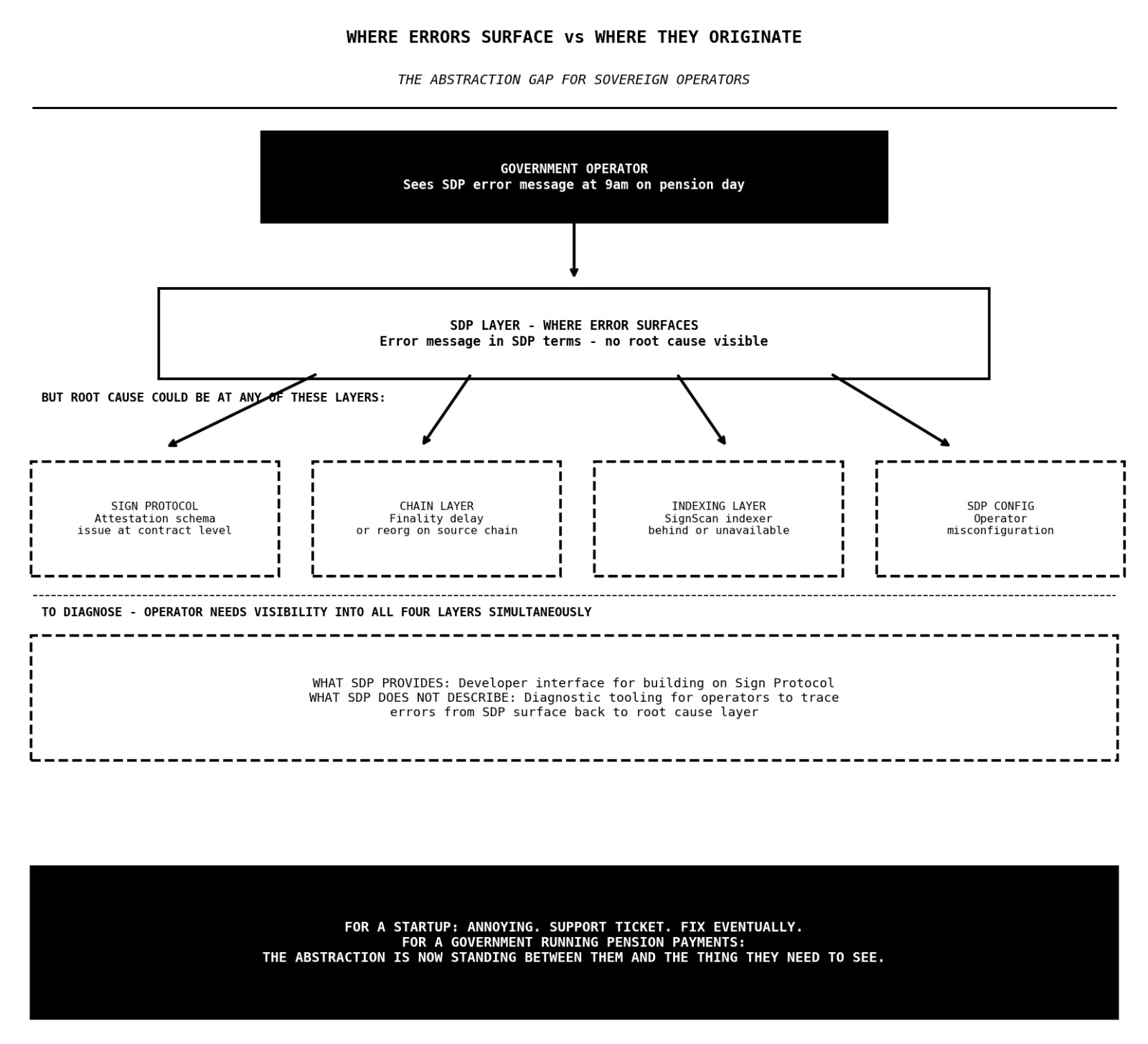
And i get why that exists. it genuinely reduces complexity.
a developer building a KYC-gated application doesnt need to understand the underlying attestation schema structure at the contract level. the SDP gives them an interface. they call the interface. it works. thats the value.
but then i started thinking about who else is using this.
the SIGN stack is being positioned for government deployment. national CBDC infrastructure. sovereign identity systems. benefit distribution at population scale. those deployments are not being run by developers who built on SDP for three years. they are being run by government technology teams, procurement officers, central bank infrastructure teams.and what stopped me was this.
when something breaks on SDP - an attestation that should resolve doesnt, a schema query returns unexpected results, a distribution batch fails mid-execution - the error surfaces at the SDP layer. the abstraction layer. not at the protocol layer underneath it.
wait. let me think through what that actually means.a government operator sees an SDP error. the error message is in SDP terms. to understand whether the problem is in the SDP configuration, the Sign Protocol layer below it, the chain the attestation lives on, or the indexing layer that feeds the query - they need visibility into all four levels simultaneously. the abstraction that made building easier now makes debugging harder.for a startup this is annoying. you spin up a support ticket. you wait. you fix it eventually.
for a government running pension payments on a Tuesday and getting an SDP error at 9am - the abstraction layer is not protecting them from complexity anymore. it is standing between them and the thing they need to see.
the docs describe SDP as making Sign Protocol accessible. thats accurate. what i cant find is the operational visibility layer. the tooling that lets a sovereign operator look through the abstraction when something goes wrong. the diagnostic path from SDP error back to root cause at whatever layer the actual failure lives.
And maybe that exists
maybe its in the implementation detail i havent seen. but the absence of it in the documentation for a platform being pitched at sovereign scale is the part that keeps sitting with me.
honestly dont know if SDP is the right abstraction layer for sovereign infrastructure operators who need full visibility when things break or a developer convenience layer that was not designed for the diagnostic requirements that come with running national payment systems?? 🤔#SignDigitalSovereignInfra @SignOfficial $SIGN