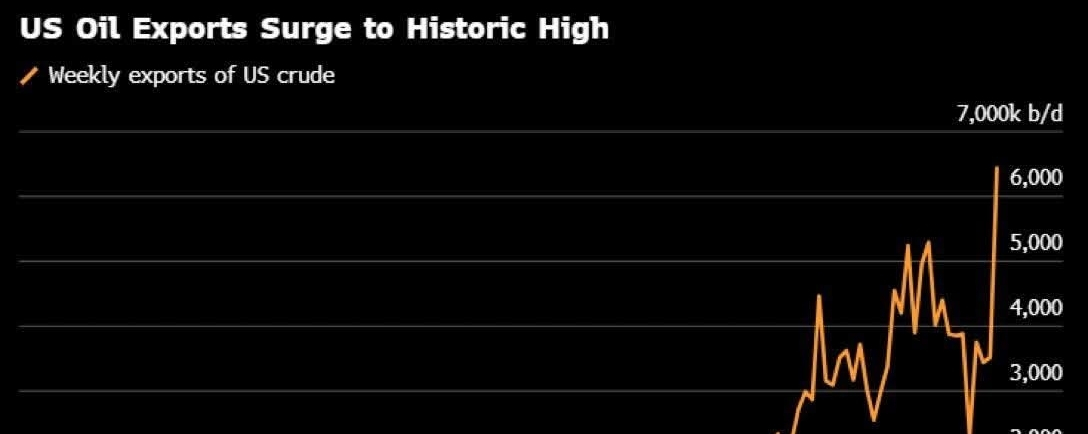
HOUSTON — In a historic shift for global energy markets, U.S. crude oil exports have officially surged past the 6 million barrels per day (bpd) milestone. Data released this week by the Energy Information Administration (EIA) confirms that the United States hit a record 6.44 million bpd, effectively becoming a net exporter of crude oil for the first time on a weekly basis since the 1940s.
A Geopolitical Pivot
The primary catalyst for this unprecedented surge is the escalating conflict in the Middle East. With the war involving Iran significantly disrupting shipping through the Strait of Hormuz—a chokepoint that typically handles 20% of the world’s oil—global refiners are scrambling for stable alternatives.
As Middle Eastern supplies face logistical freezes and soaring insurance premiums, American shale has stepped in to fill the vacuum. Buyers in Europe and Asia, wary of the instability, have pivoted toward the U.S. Gulf Coast, treating American crude as the ultimate "safe haven" asset in the energy sector.
By the Numbers: The New Energy Reality
The scale of this shift is reflected in the dramatic tightening of domestic and international markets:
Export Volume: Surpassed 6.4 million bpd, a jump of over 1.6 million bpd from the previous week.
Net Importer Status: For the first time in over 80 years, U.S. outflows of crude have surpassed imports, with net imports falling to -688,000 bpd.
Global Pricing: The supply crunch helped push Brent crude toward $120 per barrel, while West Texas Intermediate (WTI) climbed past $106.
Impact on the Domestic Front
While the export boom is a boon for U.S. producers and the national trade balance, it presents a double-edged sword for domestic consumers.
The massive "drain" of barrels toward overseas markets has caused U.S. crude inventories to plummet by over 6 million barrels in a single week. Analysts warn that if this export pace continues, domestic stocks at hubs like Cushing, Oklahoma, could reach critically low levels, potentially driving up gasoline and energy prices for Americans at home.
The Road Ahead
Energy experts are debating whether this is a temporary spike driven by war or a permanent "new normal."
"Refineries didn't change, and domestic production stayed steady at 13.6 million bpd," noted Bob Yawger, director of energy futures at Mizuho. "This was entirely about the export numbers. Those barrels are going overseas rather than into storage."
As the U.S. cements its role as the world’s leading swing producer, its ability to maintain these export levels will depend on Gulf Coast infrastructure and whether the geopolitical premium on Middle Eastern oil remains high. For now, the "American Energy Renaissance" has entered a high-octane new chapter.