
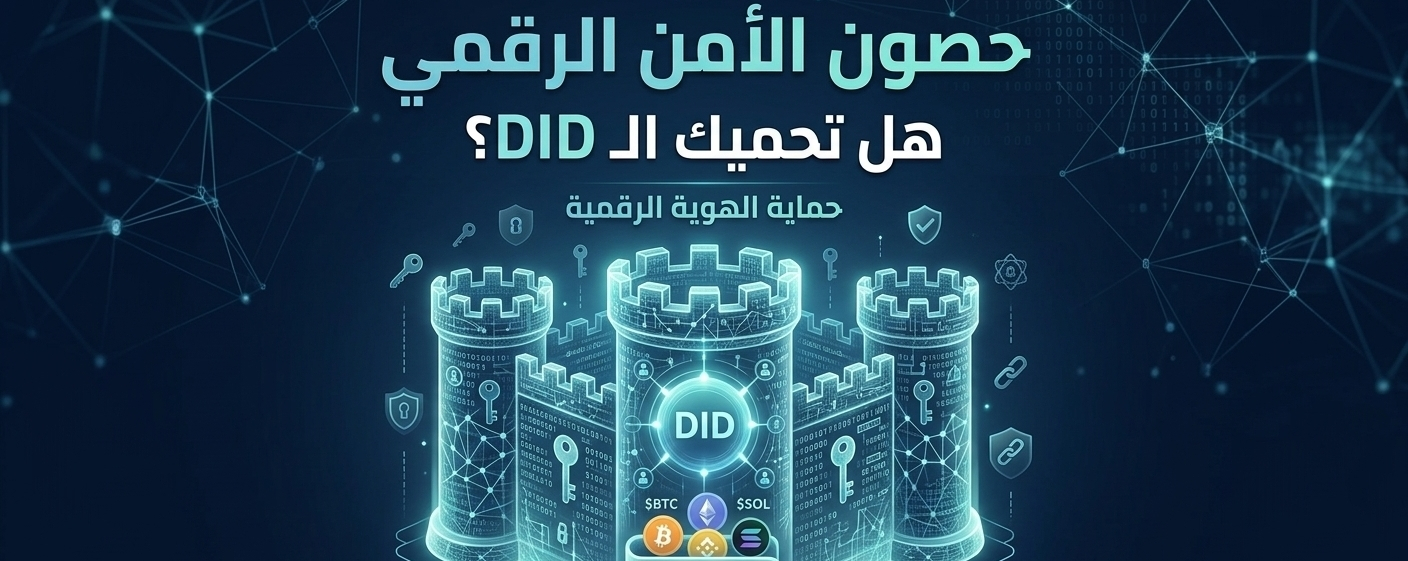
In the world of crypto and digital asset trading, nothing is more valuable than your "private keys" and the security of your data. With the rise of social engineering tactics and hacks on decentralized exchanges that we hear about daily, traditional security measures like passwords or even SMS authentication just aren't enough to safeguard your digital wealth.
From here, Decentralized Identity (DID) emerged as one of the most revolutionary solutions in 2026 to totally redefine the concept of digital security.
1. What is Decentralized Identity (DID)?
In short, it's a system that allows you full control over your identity and data online without relying on a third party (like big tech companies). In this system, your data and identity proofs are securely stored within your digital wallet, and signatures are recorded on blockchain networks like Ethereum $ETH or Binance Smart Chain $BNB.
2. How does DID protect you while trading?
Imagine you want to sign up for a new trading platform or an indicator app. Instead of uploading your ID and national identity card, putting them at risk of leaks in case those servers get hacked, the DID system allows you to prove your identity or financial fitness via 'Zero-Knowledge Proofs'.
This means you prove to the platform that you are a 'real and qualified user' without giving them your personal data to be passed around or stored in massive centralized servers; thus, the risk of a 'single point of failure' disappears.
3. Quick comparison: traditional security vs decentralized security
Traditional system: Your data is stored on a centralized server ⬅️ Easy target for hackers ⬅️ Risk to your digital assets like $BTC.
DID system: Your data is encrypted and distributed ⬅️ Control is solely in your hands ⬅️ Maximum protection against hacks and theft.
In summary:
Protecting your digital assets isn't just about tracking market movements and indicators like RSI; it starts with securing your digital identity. Decentralized Identity (DID) isn't just a tech luxury; it's the first line of defense for traders' funds.
Share your thoughts in the comments: Do you think complete reliance on decentralized identity will completely eliminate fraud in the crypto market? Which coin are you most concerned about its network security right now? $Sol or $ETH?