
OpenLedger keeps showing up in my feed at a time when I barely trust anything wearing the “AI” label anymore. Every cycle reaches this point where the market stops building naturally and starts stitching narratives together out of exhaustion. AI gets attached to everything. Blockchain gets attached to everything. Suddenly every project sounds like it was generated by the same machine trying to predict what investors want to hear next. So when OpenLedger described itself as an AI blockchain focused on monetizing data, models, and agents, I didn’t see innovation first. I saw another claim entering an already overcrowded room.
But I kept looking at it anyway.
Not because the branding impressed me. Honestly, most of the branding around AI crypto projects feels interchangeable now. Clean graphics. Big promises. Words like ownership, coordination, decentralization, intelligence. After a while your eyes stop reacting to it. What caught my attention here was the specific problem sitting underneath the narrative. OpenLedger is not really talking about AI the way most projects do. It’s talking about attribution. About value leakage. About the strange reality that AI systems are feeding on massive amounts of human contribution while the people supplying that value mostly disappear from the equation once the model becomes profitable.
That tension feels real to me.
And it feels bigger than crypto.
For years the internet trained people to give away their data, behavior, writing, opinions, and creativity for free because platforms made participation feel casual. Now AI arrives and suddenly all that information becomes raw material for training systems worth billions. Everyone acts surprised, but the foundation for this was built a long time ago. OpenLedger seems to be looking directly at that imbalance and asking whether contribution inside AI systems can actually become measurable and economically visible instead of silently absorbed into centralized infrastructure.
It sounds ambitious when you say it out loud. Maybe too ambitious.
Because the second you move beyond theory, the complexity becomes obvious. Tracking contribution inside AI systems is not clean. Human influence inside datasets is messy. Attribution sounds simple until you try to calculate who actually deserves value from an output shaped by millions of fragmented inputs layered together over time. This is where a lot of projects start falling apart for me. They describe the ideal version of the system without fully acknowledging how ugly incentives become once money enters the room.
OpenLedger at least seems aware of the mess.
That’s probably why I didn’t dismiss it immediately.
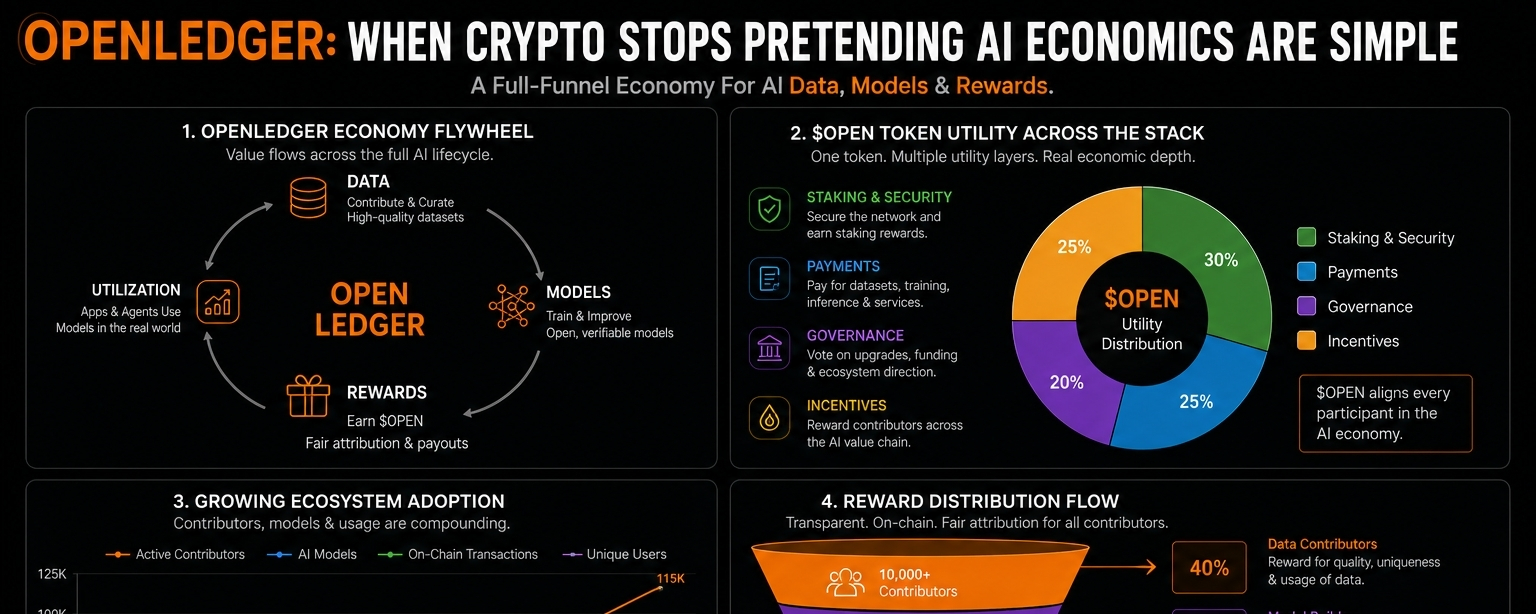
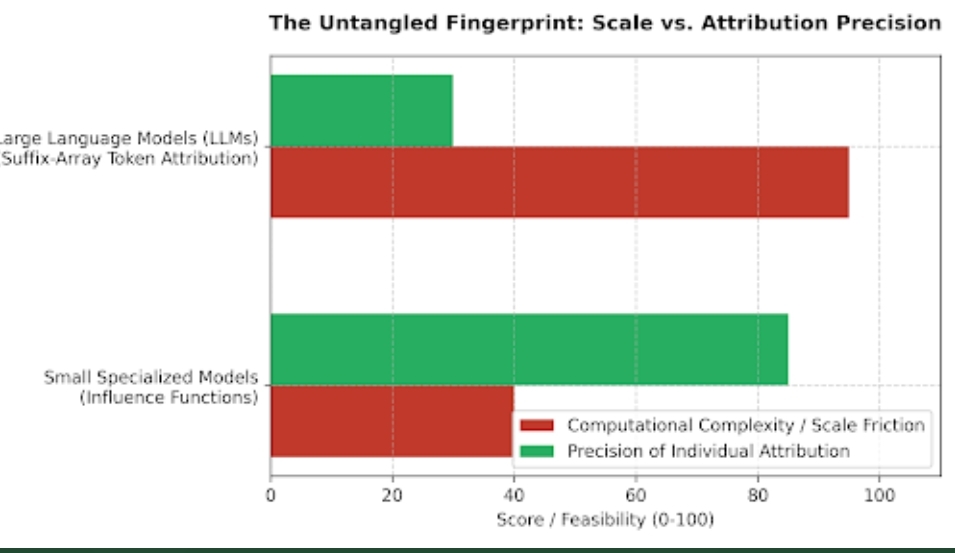
The project talks about building infrastructure where datasets, models, and AI agents become onchain economic participants instead of invisible background resources. In theory, contributors could receive rewards tied to the impact their data has on model behavior. That idea sits somewhere between logical and dangerously difficult. Logical because AI absolutely has an attribution problem. Difficult because measuring influence at scale feels like trying to untangle fingerprints from a storm.
And crypto markets are not exactly patient with difficult infrastructure.
That part matters. A lot.
Useful things fail here constantly. Sometimes because the timing is wrong. Sometimes because speculation moves faster than adoption. Sometimes because markets simply do not reward subtlety. OpenLedger feels subtle compared to the average AI token narrative. It’s less focused on pretending artificial intelligence is magical and more focused on the economics surrounding the systems being built. I actually think that might work against it in the short term because the market usually prefers emotionally simple stories over structurally important ones.
Most traders do not care about attribution systems.
At least not yet.
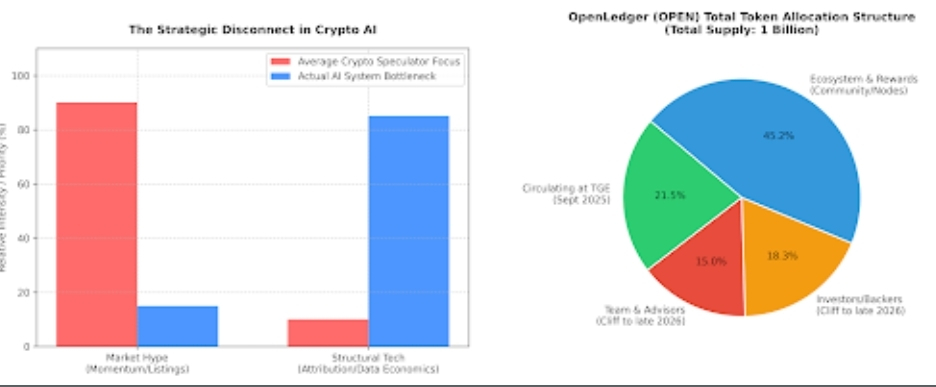
They care about momentum, listings, narratives, volume, hype cycles. That’s the uncomfortable truth sitting under almost every infrastructure project in crypto. You can build something intellectually important and still get completely ignored if speculation decides the story is not exciting enough. OpenLedger feels exposed to that risk more than people probably admit.
And there’s another problem I can’t stop thinking about.
Even if the technology works, human behavior may not cooperate.
People say they care about ownership and fairness, but convenience usually wins until exploitation becomes impossible to ignore. Most users still hand platforms enormous amounts of behavioral data without hesitation because frictionless systems dominate markets. OpenLedger is effectively betting that the AI economy eventually becomes large enough, extractive enough, and financially aggressive enough that contributors start demanding visibility into how their input is being used.
Maybe that happens.
Maybe it doesn’t.
But I understand why the project exists.
That alone separates it from a lot of noise in this sector. Too many crypto projects invent imaginary problems just to justify token mechanics afterward. OpenLedger feels different in the sense that the underlying tension already exists whether the project succeeds or not. AI ownership, data contribution, model attribution — these debates are going to get louder over time because the money involved keeps getting bigger.
The strange thing is I still don’t fully know whether this becomes a major infrastructure layer or just another technically interesting system the market never properly values. I can see both outcomes clearly. The idea itself makes sense. The execution path looks brutal. And crypto has never been particularly kind to projects that require patience, coordination, and behavioral shifts all at once.
So I keep watching it carefully.
Not with excitement. Not with blind skepticism either.
Just with the kind of attention you give something that might actually be trying to solve a real problem instead of manufacturing one for engagement. That feels rarer now than people realize. And maybe that’s why OpenLedger stayed in my head longer than most AI projects do. Not because it looks unstoppable.