


Last weekend, I tried out the Vibecoding demo on the testnet, generating a code package deployment model via AI prompts, and I also experienced EVM bridging. A lot of folks think cross-chain bridging is pretty cool; the AI wrote code that deployed on the testnet and passed PoA verification in a snap, which is basically tokenizing assets and giving the bot a sovereign identity.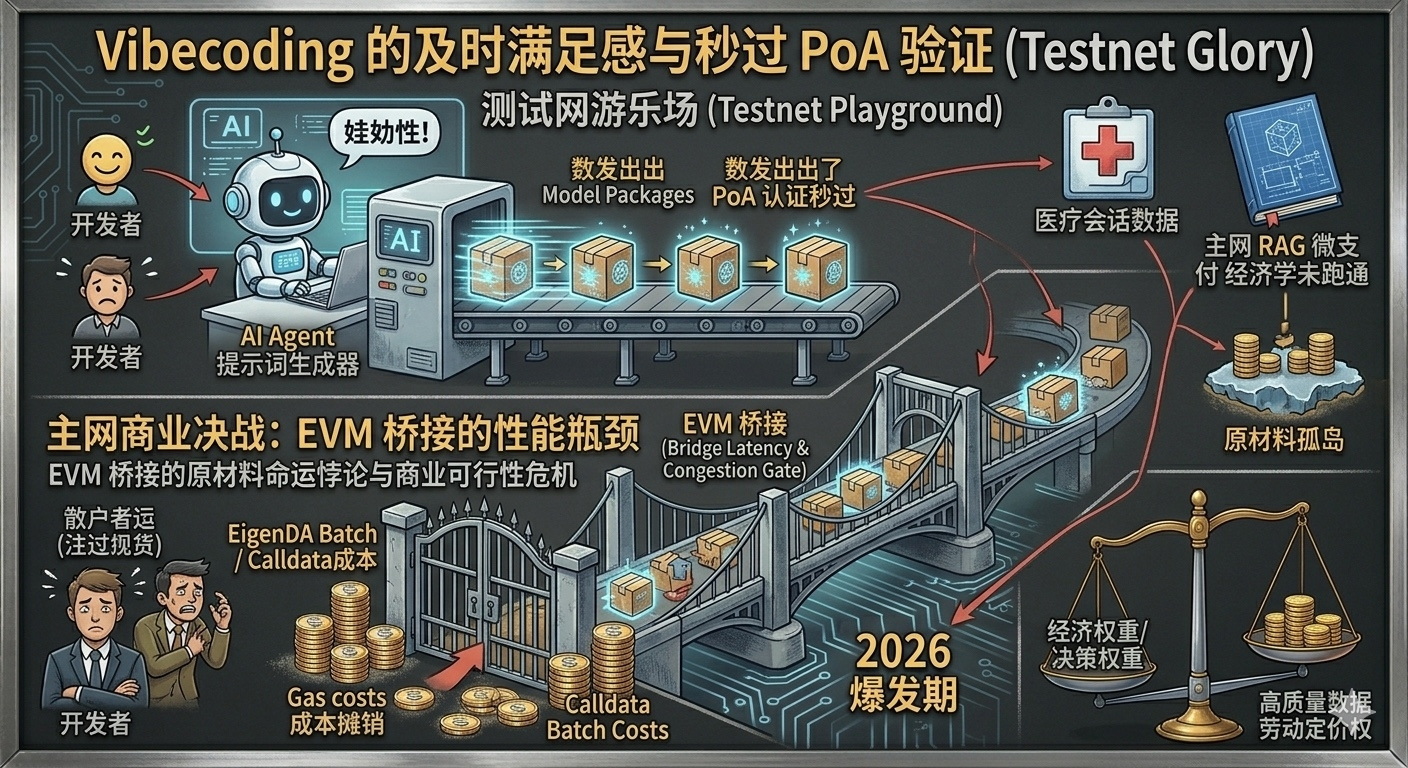
But I've been staring at section 2.4 of the white paper and a very real question popped up: should we bear the cost of EigenDA batch submissions to Ethereum mainnet's calldata when the AI-generated code runs smoothly on the testnet? If the cross-chain bridge has too high of a delay, or if the gas cost for large batch cross-chain transactions is too steep, then the instant gratification and commercial viability of Vibecoding would be completely wrecked.@OpenLedger
I envision a scenario. For instance, if I've gathered a batch of high-quality anonymized medical dialogue data and I use Vibecoding to create an OpenLoRA model package proposal, the data flies through PoA validation on the testnet. But come Q2 in 2026, during the roadmap's explosion phase, if the bridge efficiency still hasn’t been addressed, it could make the activation cost for my high-quality data exorbitantly high.#OpenLedger 
I had to face a choice: either cover the calldata batch costs myself or watch high-quality data get diluted, leading to me getting peanuts while others cash in, even becoming a supplier for a proposal factory where I do the work but others sign off.
Honestly, I think this design has a bit of honesty to it, directly showing the economic weight sliding into decision-making weight. The whitepaper claims it's to ensure community support for model advancement and high quality, but thinking deeper into human nature, it’s essentially handing over pricing power to a group of people who aren’t doing the actual labor. The performance of EVM bridging will determine whether OpenLedger is really a playground for developers or just a secret data material island for big model factories looking to exploit.
I bet my time cost on researching mechanism loopholes instead of going for OPEN, since the mainnet RAG micro-payment economics hasn’t been stress-tested yet. I’ll wait until the bridge efficiency brings down the calldata costs before reevaluating.