

The idea has spread across social media that Bitcoin is falling sharply because Strategy sold 32 BTC, recorded on CryptoQuant on May 31. It was a symbolic sale: around $2.5M at $77,135 per BTC.
Psychologically, the data is negative because Strategy is one of the largest corporate holders of Bitcoin. But one thing is the narrative impact, and another is the real cause.
Can a 32 BTC sale really explain a decline of this magnitude?
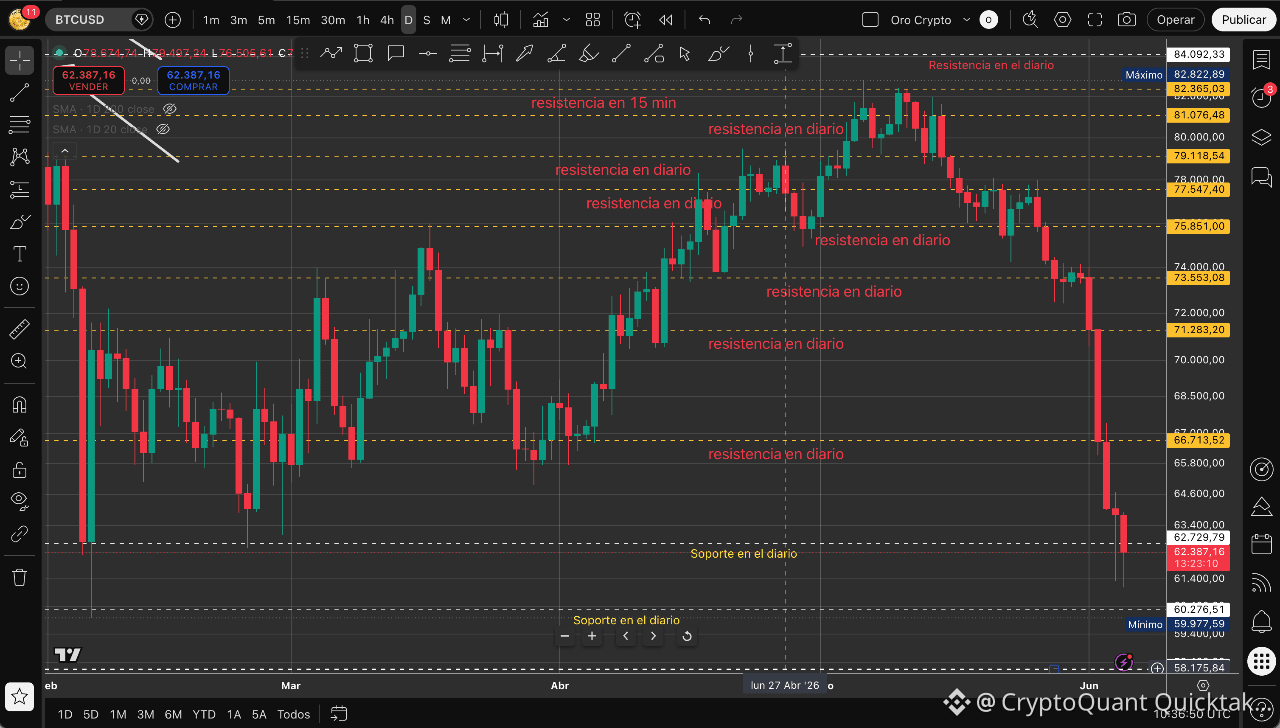
Bitcoin has been in an aggressive downtrend for 11 days since May 26. From $78,000, BTC lost structure, reached levels close to $60,000, and is now trading near $62,500: a 19.87% decline.
The technical structure is clear: BTC is close to losing the $62,729 support. This is bearish; if it breaks, price could move toward $61,980, where support is fragile, and if that area also fails, it could open the path toward $58,175
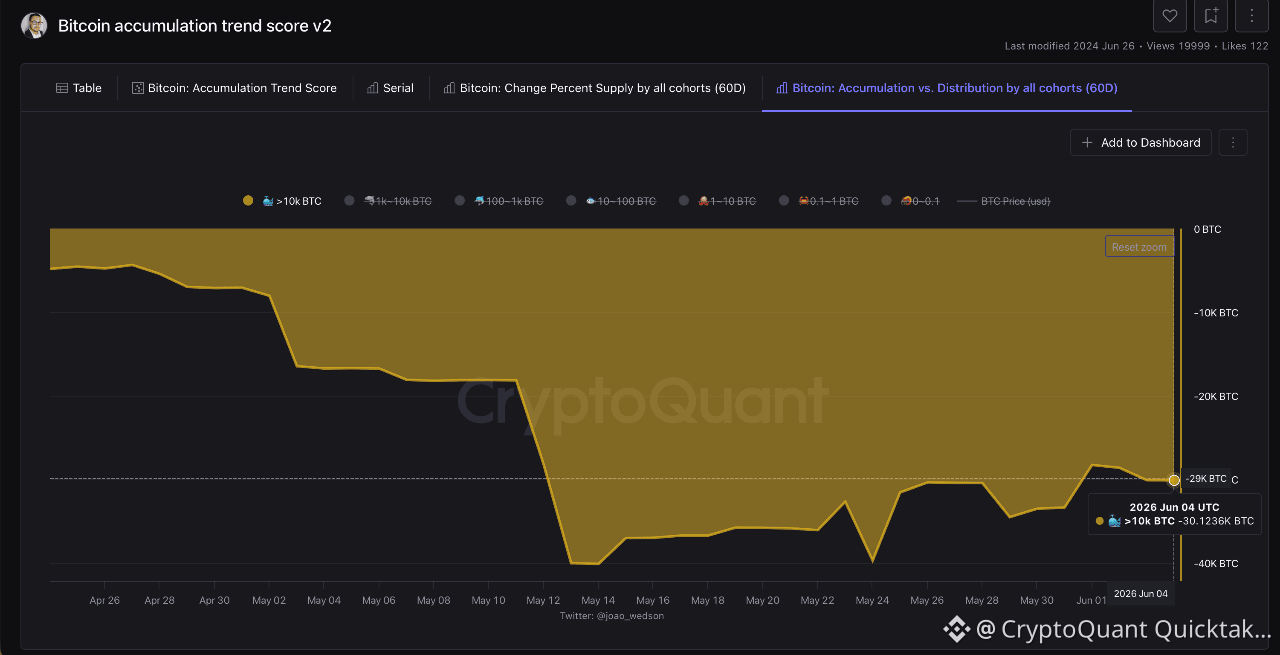
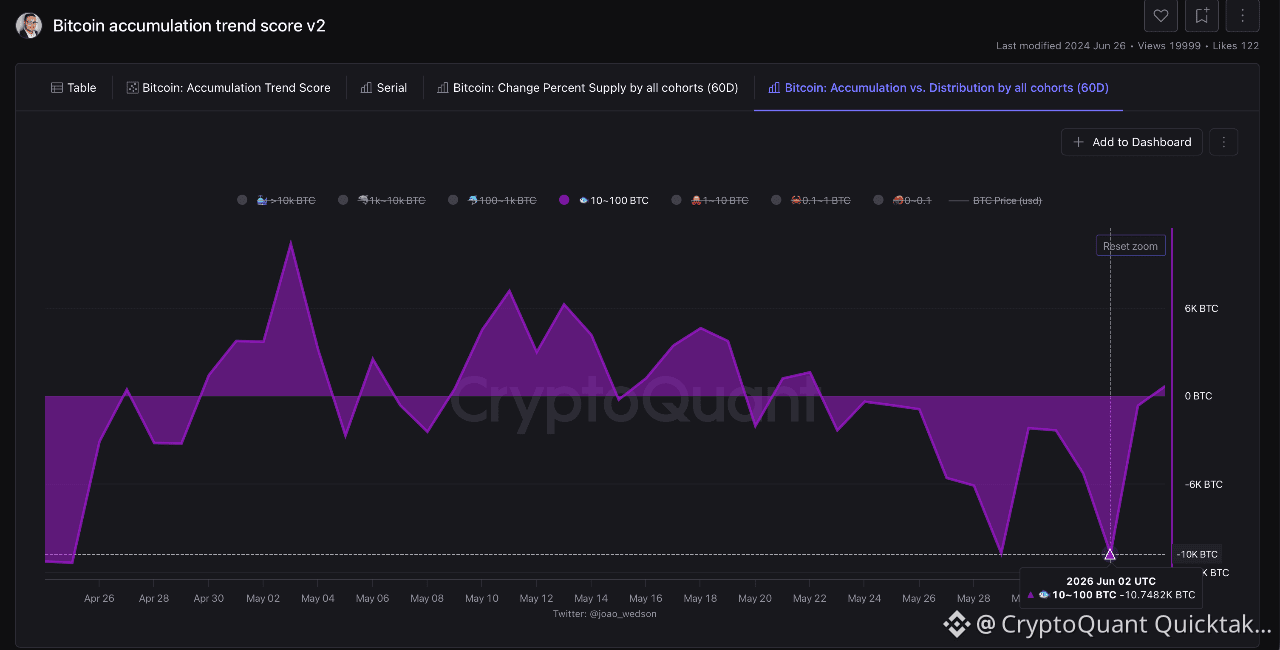
From May 26 to June 4, these cohorts sold 447,332 BTC: the +10,000 BTC cohort sold 309,792 BTC; the 10 to 100 BTC cohort sold 45,220 BTC; the 1 to 10 BTC cohort sold 71,951.59 BTC; and the 0.1 to 1 BTC cohort sold 20,361 BTC
Statistical cohorts do not identify specific entities, but they show net distribution by holding ranges and structural selling pressure in spot
The central point is that this decline has been intensified by spot selling since May 26, although the price decline and the broader trend had already been developing since May 11
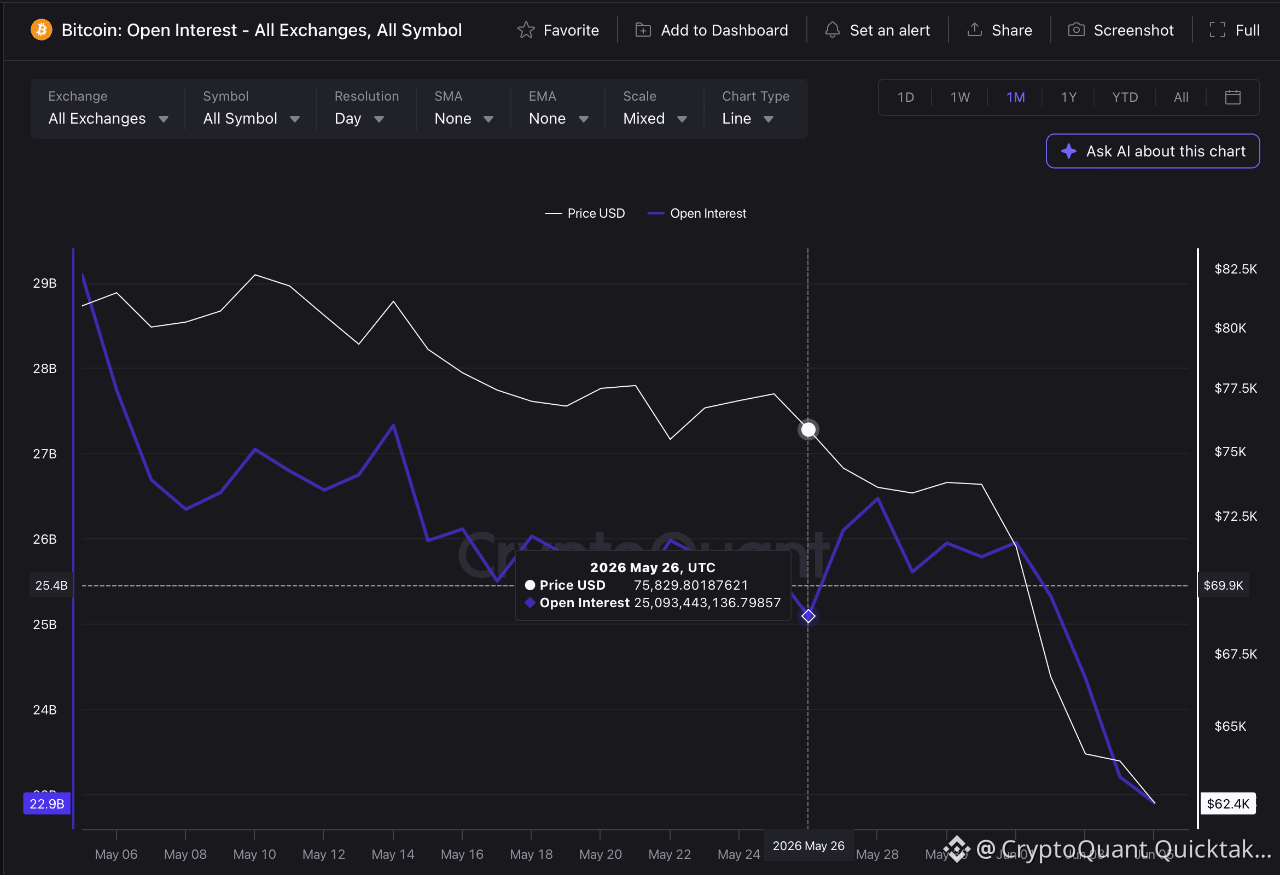
In addition, derivatives show risk reduction: Open Interest fell from $25.093B to $22.903B, a reduction of $2.190B (-8.73%). This worsens the decline: price had been supported close to 90% by futures. If futures exposure is now being reduced while spot is also selling, the risk of a sharp BTC breakdown increases.
Therefore:
Strategy may have affected sentiment, but it did not drive the downtrend. Bitcoin is falling because several statistical cohorts were already distributing, while leverage is gradually being closed
By Carmelo Alemán
On-Chain Analyst | CryptoQuant Verified.
Written by Carmelo_Alemán