
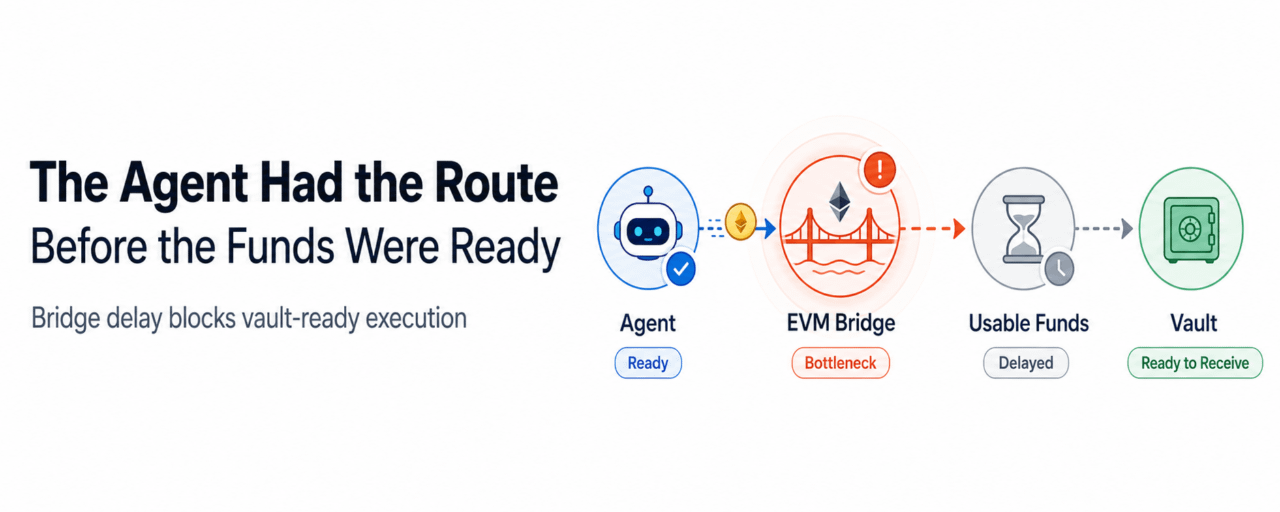

I’m staring at the automation trace and the stupid thing has done everything right except the one part that matters for execution: OctoClaw sees the live setup, maps the ERC-4626 vault deposit route, tags the asset path through the EVM Bridge, and the actual deposit still cannot fire because the bridged balance has not become usable on the destination side yet.
Not failed. Worse. Waiting.
The instruction is already there while the money is still in transit state. Route ready on the agent side, vault path resolved, setup still live, but the balance variable the deposit logic needs is not reflecting the asset in the execution lane. Somewhere in the stack the asset “exists,” but it is not reachable by OctoClaw at the point where the route wants to use it. That difference sounds small until the market window is the thing being automated. If the agent says move into the structured vault position now, and now depends on the bridge settlement state catching up, then the agent is not really executing the trade. It is producing a correct instruction and then standing around while cross-chain latency decides whether the instruction is still worth anything.
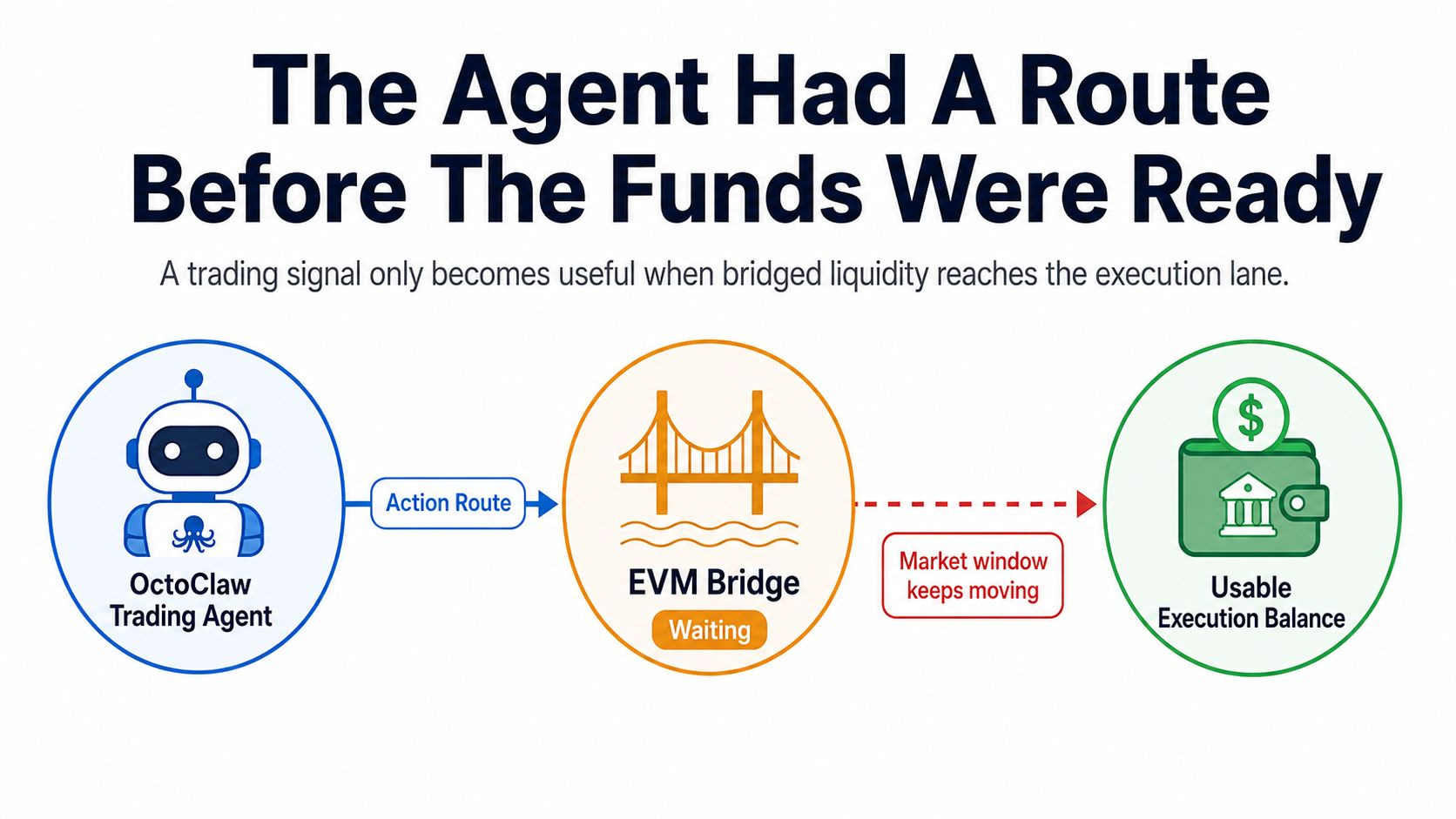
The annoying part is this is not a signal-quality bug. I can debug a bad signal. I can tighten a rule, change the trigger, adjust the route, rerun the agent, whatever. This is uglier because the trading logic can be correct, the ERC-4626 vault can be the correct target, the deposit path can be the one I actually wanted, and the whole pipeline still stalls at the bridge-to-balance handoff because “asset moved” is not the same state as “asset available to this execution call.” The EVM Bridge has completed enough of the story for the UI or route planner to act optimistic, but the destination-side balance has not settled into the form the deposit call needs, so the pipeline is sitting in this half-ready state where the agent looks early and the funds look late.
At 10:03 this is not theoretical. OctoClaw catches the weak move, builds the route around that exact condition, and the timing assumption behind the route is that the asset can be pushed into the vault while the setup is still live. Then the bridge settlement lags. The usable balance arrives after the decision point, or the asset lands but is not reflected in the deposit path yet, or the token form is technically present but not the one the vault route can consume without another step. The market does not care which of those backend states is responsible. The candle moved. The order book changed. The route that was correct at 10:03 starts decaying while the bridge finishes turning cross-chain movement into destination-chain usability.
This is why the EVM Bridge stops feeling like plumbing in an agent stack. For a human user, waiting a bit for funds to arrive is annoying but normal. For an automated trading agent, settlement latency becomes part of the strategy surface. The agent can only act on liquidity that is reachable at the moment the action is supposed to happen. “Value exists somewhere in OpenLedger ($OPEN)” is not enough. “The asset is reflected in the correct balance state, in the correct token form, inside the lane OctoClaw can touch, before the ERC-4626 deposit route goes stale” is the actual requirement, and that requirement is much less forgiving than the clean route diagram makes it look.
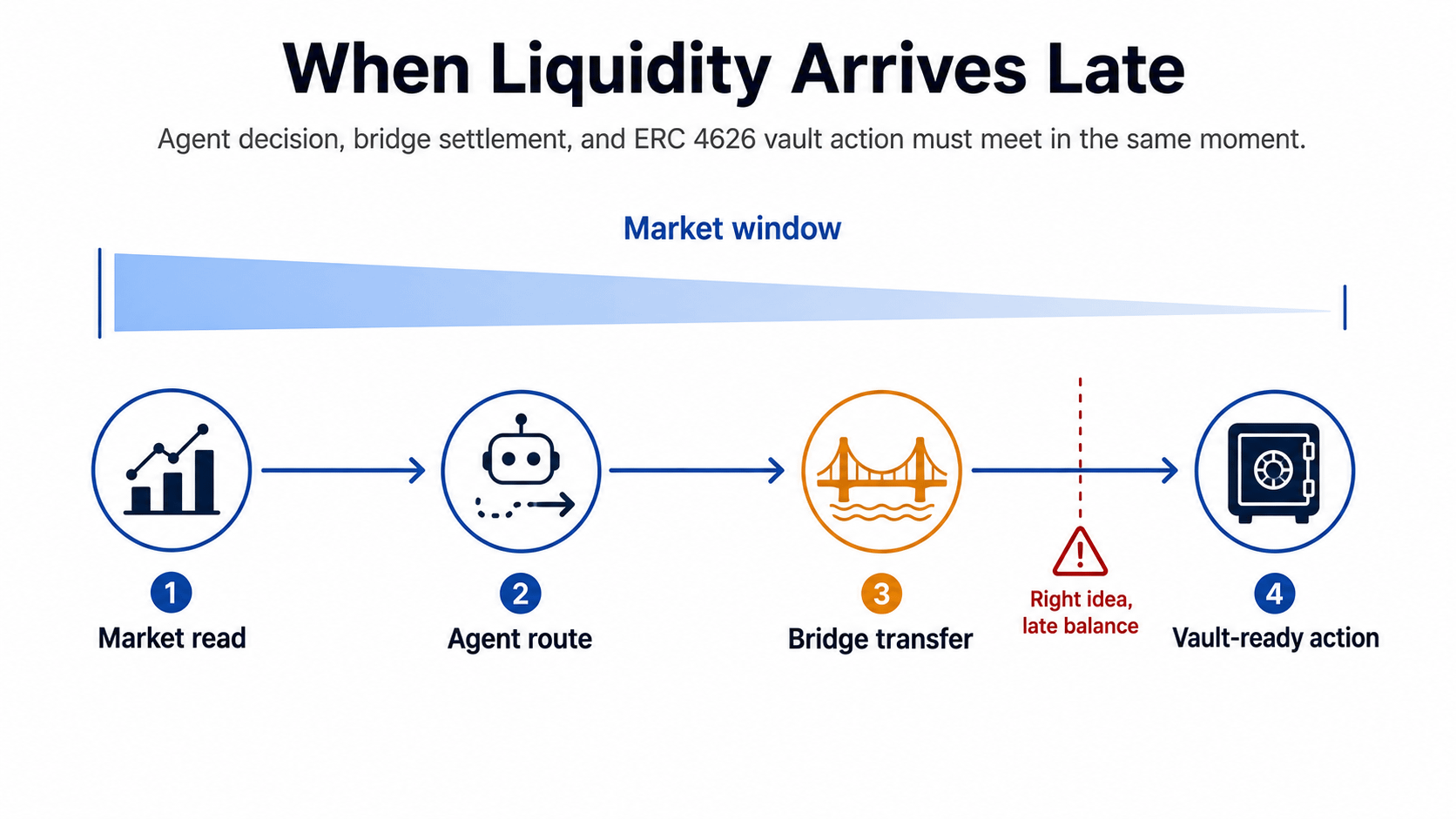
The vault side makes the delay more obvious because ERC-4626 does not care that the agent has a good idea. Deposit logic needs the asset in the expected form before shares, position accounting, and any later redemption timing even matter. If the balance is still effectively on the wrong side of the execution boundary, the vault is just a valid destination with nothing usable behind the call. That is the part that kept bothering me. The stack can split into components that all look individually fine. OctoClaw sees the route. The bridge is moving the asset. The vault can receive deposits. OpenLedger gives the agent enough structure to plan the flow. Then the live run still bottlenecks on whether the balance is actually executable at the exact moment the route fires.
A lot of agent talk skips this because it treats “found the route” and “executed the route” like they are adjacent states. They are not, not when cross-chain settlement sits between them. A correct instruction generated before the bridged funds are usable is just a pending action with a clock attached. And the clock matters more in trading than people want to admit, because the best version of the setup may only exist for a few minutes, sometimes less. If the bridge finishes after the move has already cooled, the agent did not capture the opportunity. It documented the fact that the opportunity existed while the money was unavailable.
So now the thing I care about is not whether OctoClaw can find the vault path. It can. I care whether the route can prove the balance is already usable before it marks the action as ready, because otherwise the cleanest agent output in the world just becomes another queue item waiting behind asynchronous state.
Correct instruction sitting dead while the 10:03 window cools off.