
A Deep Dive Into Plasma XPL and the Architecture Behind Sustainable Execution
Blockchain history is often told as a story of acceleration. Faster blocks. Higher throughput. Cheaper fees. Each generation promised to move quicker than the one before it. Yet somewhere along that journey, an uncomfortable realization emerged. Speed alone was not solving the real problem. In many cases, it was hiding it.
Plasma XPL appears at that exact moment of realization. Not as a reaction to market noise, but as a response to years of structural pressure building inside decentralized systems. It is not a project born from asking how fast blockchain can go. It is born from asking how long blockchain can last.
This difference matters more than it seems.
From the outside, scaling looks like a technical issue. From the inside, it is deeply philosophical. Who do users trust. Where does security live. What happens when systems fail. And perhaps most importantly, how can people participate without needing to understand every mechanism beneath the surface.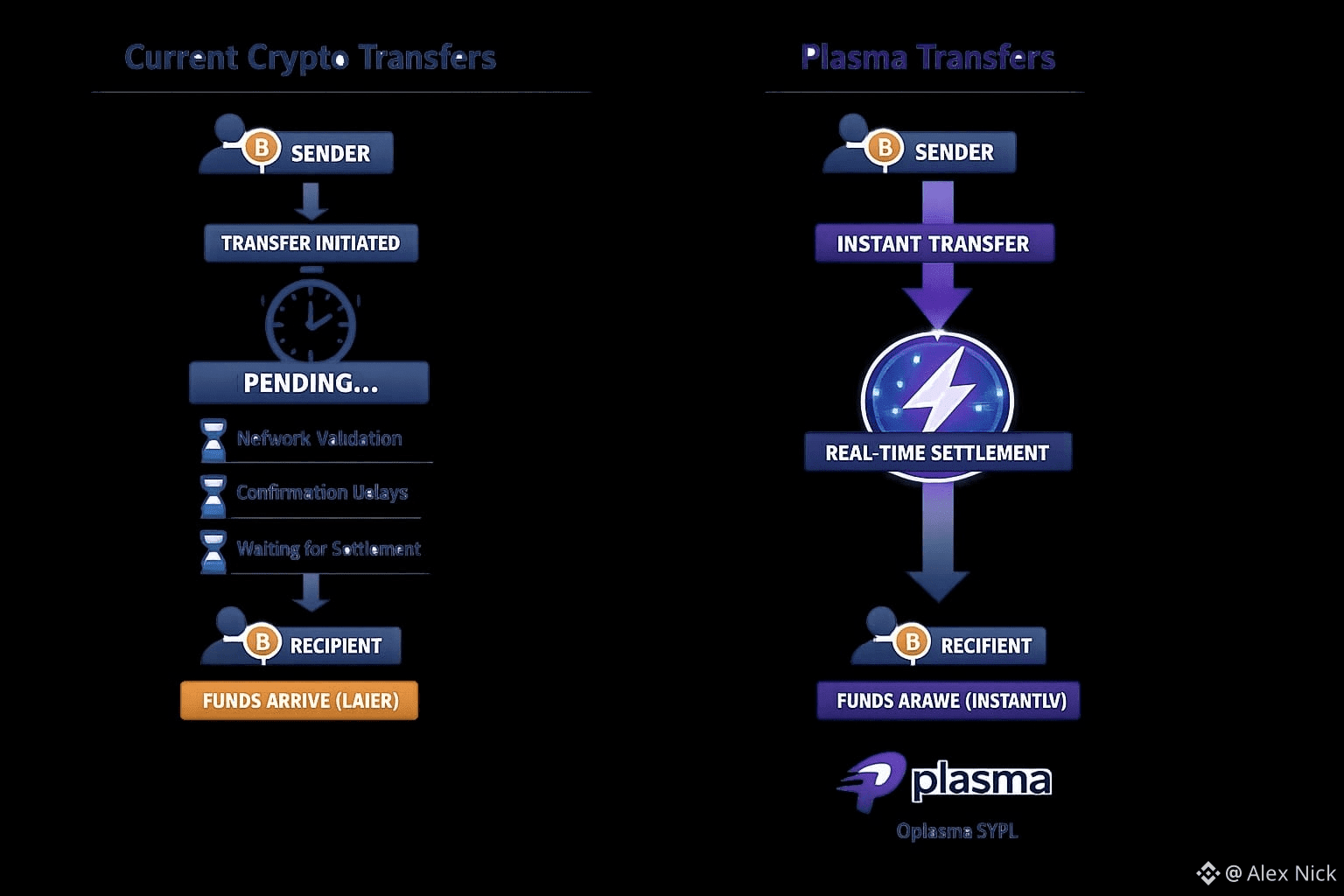
Plasma XPL is shaped by these questions.
The Early Blockchain Dream and the Limits It Revealed
The earliest blockchains solved a problem humanity had never solved before. They allowed strangers to agree on truth without a central authority. Bitcoin proved this with extraordinary elegance. Ethereum extended it by allowing programs to execute autonomously.
But success created pressure.
As more people used these networks, the costs of global consensus became impossible to ignore. Every transaction required validation by thousands of nodes. Every application competed for limited space. Fees surged. Simple actions became expensive. Participation narrowed.
Developers realized that decentralization at scale carried a cost that no one had fully accounted for.
The question was not whether blockchains worked. They clearly did. The question was whether they could grow without becoming unusable.
This tension triggered years of experimentation.
Sidechains attempted to move activity away from main networks. Rollups compressed transactions. Channels reduced interaction frequency. Many ideas worked partially, but each introduced new assumptions.
Long before most of these models matured, Plasma had already proposed an alternative.
The original Plasma concept suggested that activity could occur off the main chain while security remained anchored to it. Users could transact freely while retaining the ability to exit if something went wrong.
The theory was strong. The execution was premature.
Early Plasma systems required constant monitoring. Exit processes were complex. Tooling was immature. The idea was ahead of the ecosystem.
Plasma XPL is what happens when that idea returns in a world that finally understands why it was needed.
Plasma XPL as an Evolution, Not a Revival
Plasma XPL does not attempt to copy early Plasma implementations. Instead, it absorbs the philosophy while discarding the fragility.
The central belief remains simple. Users should never be forced to choose between speed and sovereignty.
Execution can happen elsewhere. Security must always remain verifiable.
Plasma XPL reframes Plasma not as a mechanism, but as an architectural mindset.
Instead of assuming perfect behavior from execution environments, it assumes imperfection. Systems fail. Nodes disconnect. Operators make mistakes. Networks experience stress.
The question becomes what happens next.
Plasma XPL is designed so failure does not equal loss.
Execution environments handle interaction and computation. Periodically, cryptographic commitments anchor state to a secure settlement layer. These commitments create a permanent reference point for truth.
If execution behaves correctly, users enjoy fast, low friction interaction. If execution fails, users retain the ability to recover assets and state through the settlement layer.
This recoverability defines the system.
Rather than preventing failure at all costs, Plasma XPL ensures failure is survivable.
Architecture Built on Responsibility Separation
One of the most important ideas inside Plasma XPL is responsibility separation.
Execution is responsible for speed.
Settlement is responsible for finality.
Verification is responsible for truth.
Each layer has a clear role.
When all responsibilities exist in one place, systems become brittle. Congestion in execution slows settlement. Security compromises affect usability. Complexity multiplies.
Plasma XPL avoids this by isolating failure domains.
Execution environments can evolve rapidly without threatening the integrity of the settlement layer. Settlement layers remain minimal, stable, and conservative. Verification bridges the two.
This mirrors how resilient systems are built outside blockchain. Large scale networks survive because failures are contained rather than global.
We’re seeing this same principle guide modern blockchain architecture, often described as modular design.
Plasma XPL fits naturally into this shift.
Recoverability as the Foundation of Trust
Trust in decentralized systems does not come from believing nothing will go wrong. It comes from knowing what happens when something does.
Plasma XPL treats recoverability as the foundation of trust.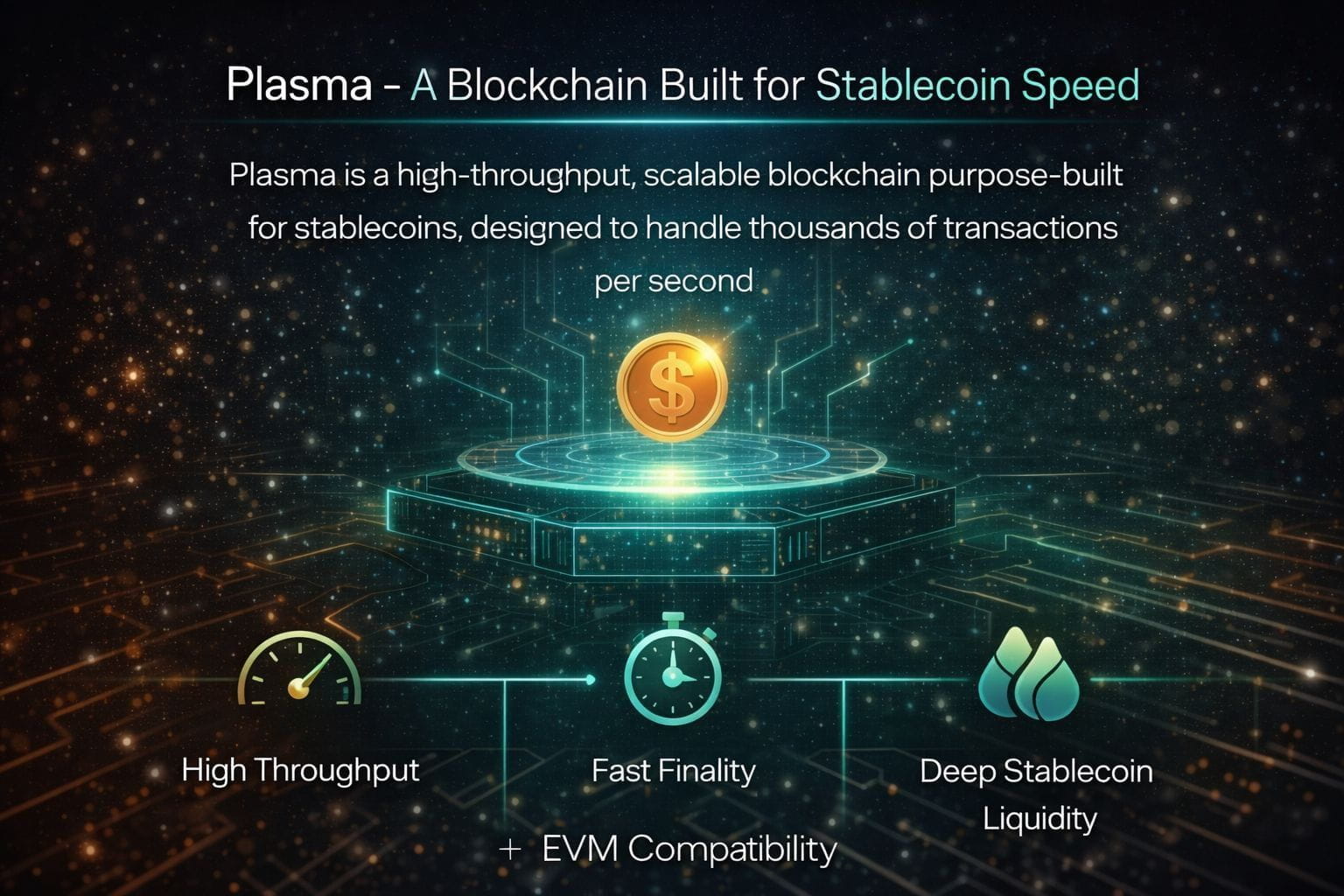
If execution operators behave maliciously, users must be able to prove ownership. If software fails, funds must not disappear. If networks halt, exits must remain possible.
This philosophy restores one of blockchain’s original promises. Self custody without dependence.
I’m noticing that many modern systems emphasize performance metrics while underestimating psychological security. Users participate confidently only when loss feels impossible without consent.
Plasma XPL focuses precisely on that emotional layer.
Safety is not marketing. It is design.
Why Plasma XPL Targets Interaction Heavy Environments
Not all blockchain activity looks the same.
Some use cases involve infrequent high value transfers. Others involve continuous interaction. Gaming, micropayments, social systems, digital coordination tools.
These environments produce enormous volumes of small actions.
Base layers struggle under this pattern. Global consensus is inefficient for constant updates.
Plasma XPL is built specifically for these interaction heavy environments.
Execution layers process activity rapidly. Users experience responsiveness similar to traditional applications. Settlement layers ensure long term correctness.
This allows applications to behave like living systems rather than transaction queues.
We’re seeing a gradual shift in blockchain away from purely financial activity toward experience driven usage. Identity updates. Content creation. Persistent worlds.
Plasma XPL aligns naturally with this direction.
The Role of XPL in the Network
The XPL token acts as the coordination mechanism within the ecosystem.
It aligns incentives between participants who operate execution environments and those who rely on them. Honest participation is rewarded. Dishonest behavior carries economic consequences.
XPL is not positioned as a speculative centerpiece. It exists because decentralized systems require incentive alignment.
This distinction matters.
When tokens exist without functional necessity, value becomes detached from usage. When tokens are embedded in system behavior, relevance grows organically.
Plasma XPL appears to follow the second path.
Usability as a Security Layer
One of the most critical lessons from early Plasma models was this. Security that requires constant user attention does not scale.
People do not monitor networks daily. They do not understand challenge windows. They do not want to manage exit logic.
Plasma XPL addresses this reality directly.
Monitoring is automated. Safety mechanisms operate beneath the interface. Users interact with applications, not protocols.
This is not about simplifying blockchain. It is about making decentralization practical.
Usability becomes part of the security model.
When users cannot misuse a system accidentally, the system becomes safer.
Plasma XPL in the Context of Modern Scaling Approaches
Plasma XPL does not compete with rollups or sidechains. It complements them.
Rollups focus on data compression and validity proofs. Sidechains prioritize independence. Plasma XPL focuses on recoverable execution anchored to settlement truth.
Each approach solves a different problem.
Plasma XPL occupies the space where interaction frequency is high and absolute finality speed is less critical than user confidence.
This specialization allows it to coexist rather than compete.
In a modular future, no single scaling solution dominates. Systems interoperate.
Plasma XPL is built for that reality.
Development Philosophy and Long Term Discipline
Infrastructure rewards patience.
Plasma XPL development emphasizes correctness over expansion. Stability over velocity. Verification over novelty.
This approach may appear slow in speculative markets, but it aligns with the nature of infrastructure.
Systems intended to last years cannot be rushed.
I’m seeing Plasma XPL treat time as a design constraint rather than an enemy.
That mindset often determines longevity.
The Human Side of Scaling
Scaling is not purely technical. It is emotional.
When users fear losing assets, they hesitate. When systems feel unpredictable, adoption stalls. When complexity overwhelms, trust erodes.
Plasma XPL reduces this friction by ensuring that users always retain agency.
There is always a fallback. Always a proof. Always a way home.
This psychological safety encourages participation.
People explore when they feel protected.
That behavioral shift may be one of Plasma XPL’s most underestimated strengths.
Where Plasma XPL May Be Heading
As blockchain applications grow more interactive, demand for execution environments will increase.
Users want responsiveness without compromise. Developers want scalability without surrendering decentralization.
Plasma XPL sits precisely between these needs.
Future development may introduce deeper tooling, improved abstraction, and closer integration with application frameworks. Execution environments may specialize further. Verification may become more efficient.
Yet the foundation remains unchanged.
Speed without surrendering control.
That principle does not age.
A Quiet Path Forward
Not all meaningful technology demands attention.
Some of the most important systems operate silently beneath everything else.
If Plasma XPL succeeds, it may never dominate conversation. Users may not know its name. Developers may rarely mention it.
Applications will simply feel smoother. Interaction will feel natural. Ownership will feel secure.
That invisibility is not weakness.
It is maturity.
Blockchain’s future will not be defined by who shouts the loudest, but by who builds systems people can rely on without thinking.
Plasma XPL is building toward that future.
A future where scaling is not a gamble, trust is not assumed, and decentralization becomes something people live with rather than struggle through.

