

This is a well-known topic in the community, this cycle won't have been the retail cycle, and their return will ultimately never have happened.
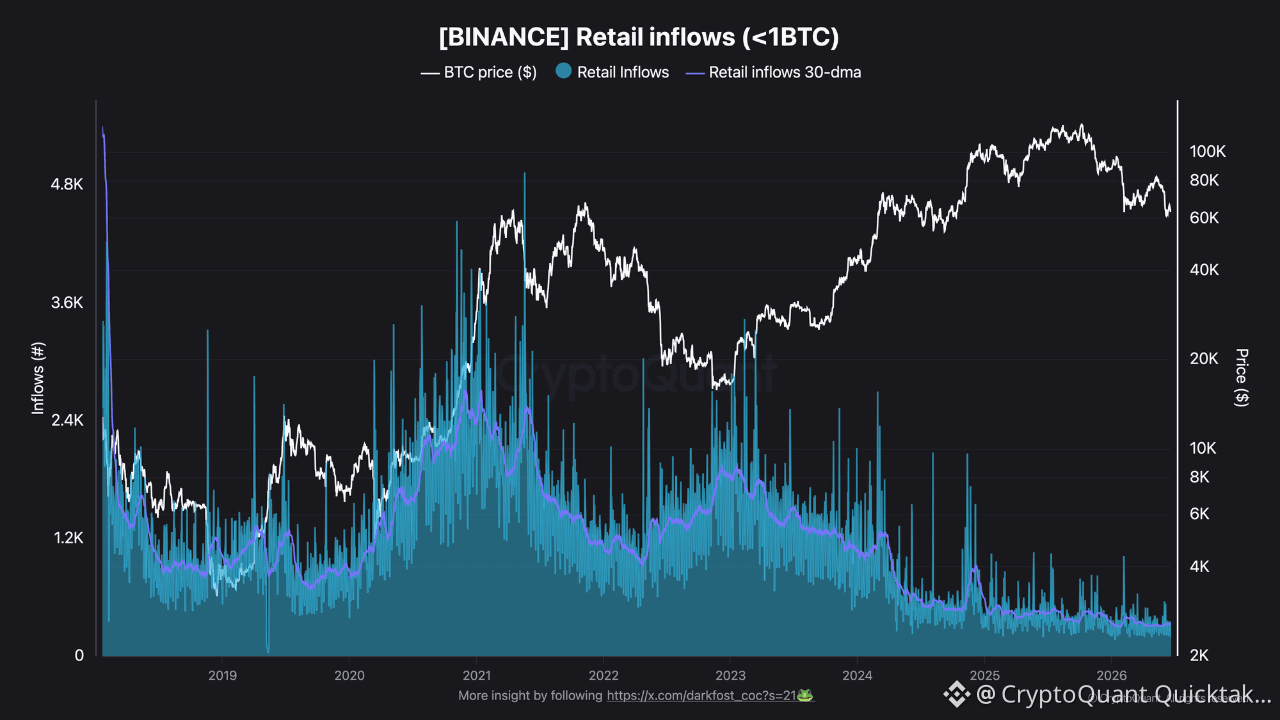
To capture this drop in market participation, this chart tracks inflows under 1 BTC on Binance, the platform most accessible and widely used by this cohort, and which represents the largest trading volumes.
The observation is striking when compared to past cycles.
Today these inflows on Binance are hitting all-time lows since the platform's existence, with the monthly average of retail inflows at 329 BTC per day.
In 2021, at the peak of the cycle, this average inflow on Binance was 2690 BTC, with a single-day peak recorded at 4900 BTC in May.
In 2018 it was even more significant, with a monthly average of 3700 BTC and a daily record of 10,400 BTC on January 4th.
There are several reasons that could explain this, while keeping in mind that Binance's spot volumes remain dominant on the market:
- Some of this retail chose to gain exposure elsewhere than Bitcoin this cycle.
- The arrival of spot Bitcoin ETFs as a vehicle for exposure has managed to capture many investors and pull them out of the crypto market.
- Some retail investors may now have a much longer-term outlook, or are still waiting for better BTC performance.
Other contributing factors could likely be found as well, but it's clear that the selling pressure these retail inflows on Binance used to represent is far from the level seen in previous cycles.
Every top failed to trigger a clear increase in activity from these participants, suggesting this cohort could be going extinct in the BTC market and that its makeup continues to evolve (institutionalization).
Written by Darkfost