
The smart device you bought might be a ticking time bomb.
Brothers, I am your Shiba Inu blogger A-Chai. Today's content can help you avoid the two biggest pitfalls of the AI era and seize the only opportunity for ordinary people to benefit from the robot revolution.
A few days ago, I came across two real news stories that happened within the past six months, and it made my dog hair stand on end.
The first is the widely publicized NIO second-hand car locking incident in December 2025: Mr. Xie from Jiangsu spent 240,000 to buy a second-hand NIO SUV through formal channels, drove normally for six months, and was unexpectedly locked remotely by the manufacturer while driving—central control, key, and double flash all failed, and the fully charged car became a pile of scrap in the middle of the road. The reason was even more absurd: the previous owner had an unpaid credit loan, and even though Mr. Xie was an innocent third party completely unaware, the manufacturer still locked it and refused to unlock it unless the owed payment was made.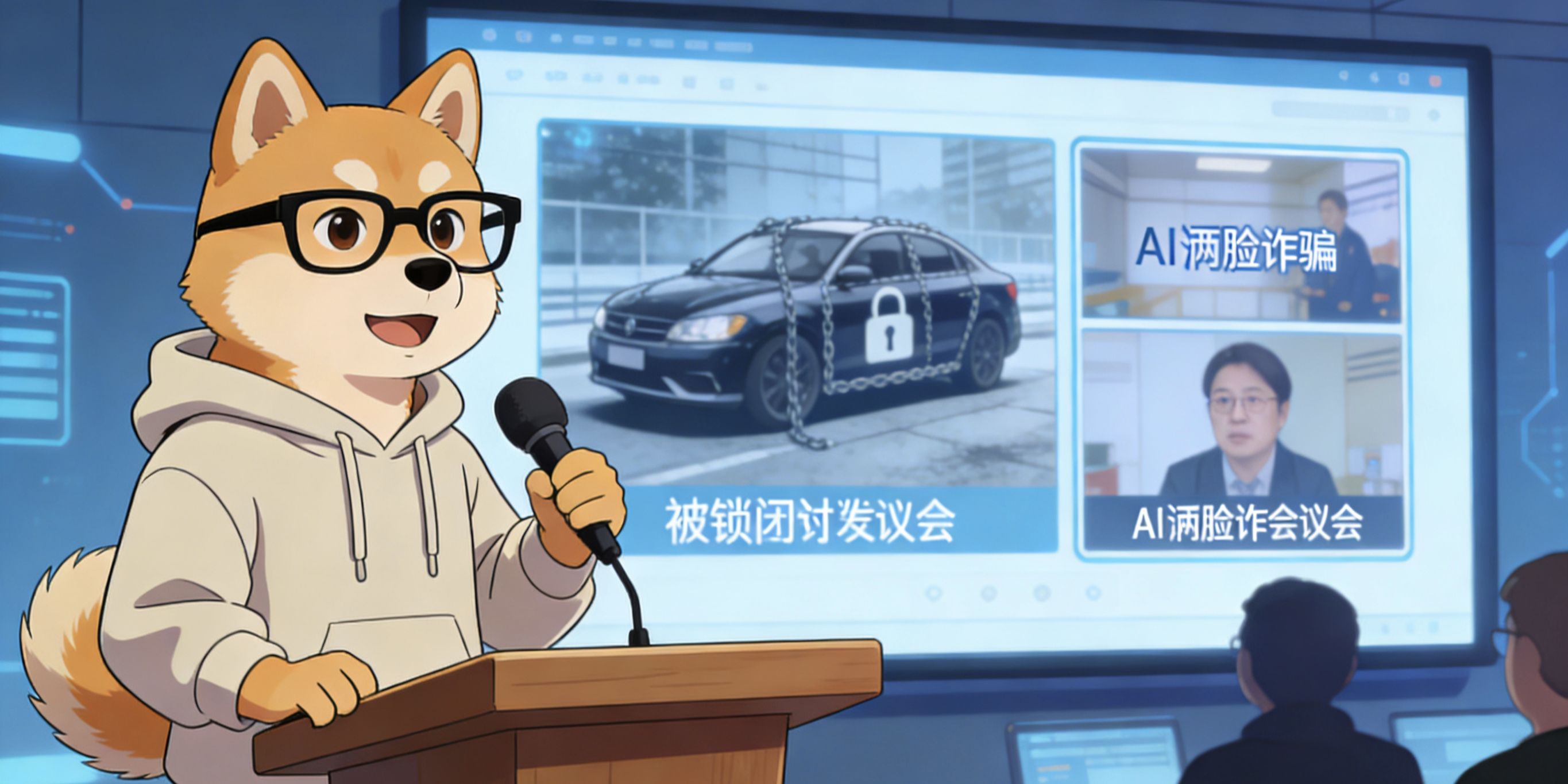
The second one is even more spine-chilling: In 2025 alone, the amount involved in AI deep forgery-driven cryptocurrency fraud skyrocketed to nearly $17 billion, a staggering 500% increase year-on-year. In December 2025, a company's financial staff received a video call from the 'boss', whose appearance and voice were indistinguishable from the real person. Under the pretext of urgently paying the project deposit, they were defrauded of 4.3 million within 10 minutes. An investigation later revealed that the fraudster only used a 1-minute public speech video of the boss to create a digital doppelgänger that was convincingly realistic. Even more outrageous was a cross-national fraud case exposed at the same time, where a finance staff member of a Hong Kong company was defrauded of 200 million Hong Kong dollars in a video conference full of 'executives'—except for him, all the others were AI-generated fakes.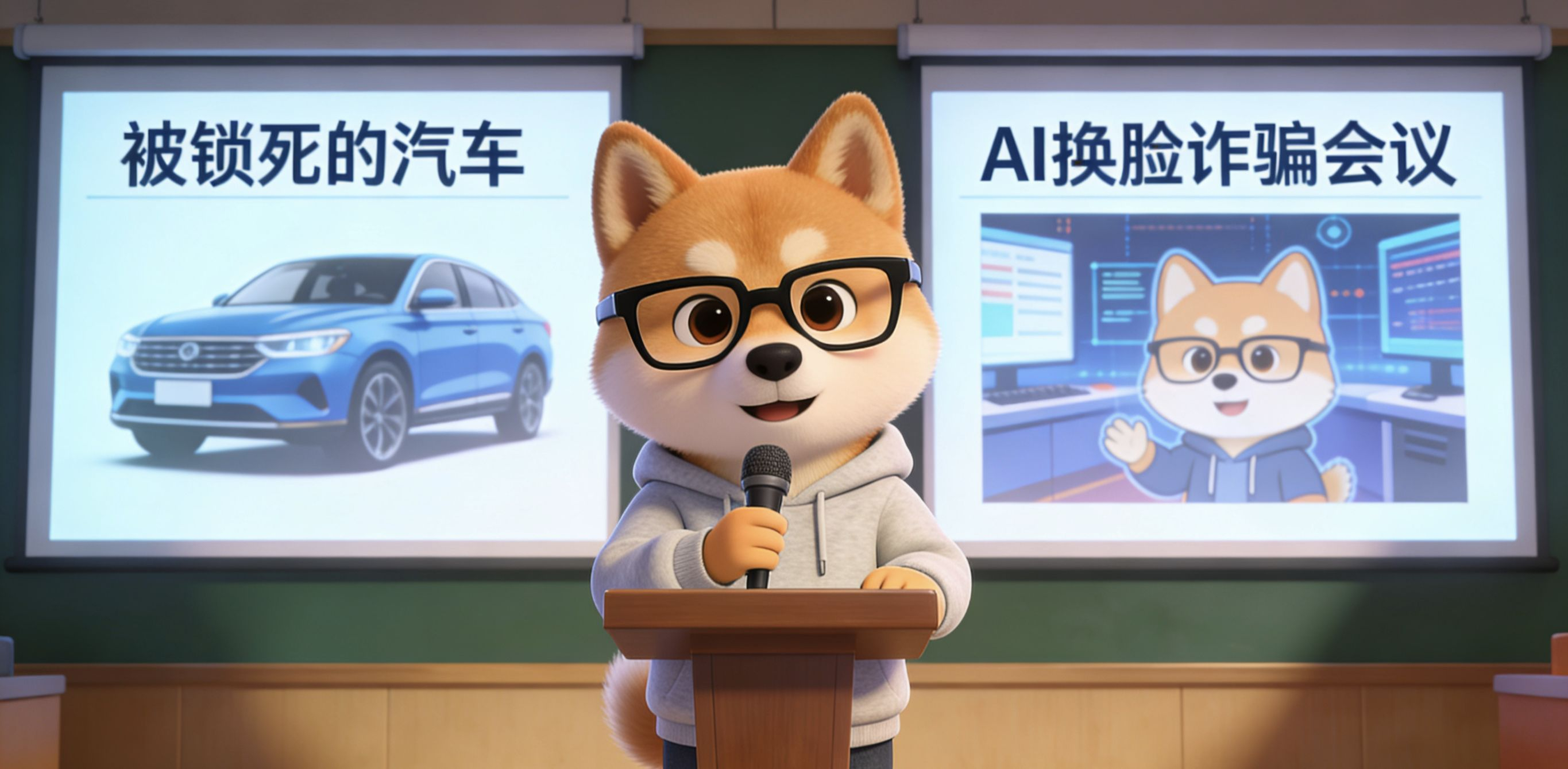
These two things, when combined, really expose the cruel truth we are facing: we are diving headlong into a future where 'humans and machines are indistinguishable, and sovereignty is compromised.'
Everyone is praising how amazing smart cars and humanoid robots are, but no one tells you: the smart device you spent a lot of money on, you only have the right to use it, not ownership; the manufacturer can lock it or stop it at will, and you have no room to resist. Everyone is afraid of AI fraud, but no one has thought about how we will verify the identity of the robots and AI agents running on the streets in the future? How can we trust their operations?
What’s even more heartbreaking is that the vast majority of people feel that this revolution of AI and robots is a game for Silicon Valley giants, and ordinary people can't even touch the door to share in the pie? Today, A-Chai will reveal to you this new trend that allows ordinary people to get on board. —@My crypto person
Industry truth: The smart track has long been locked down by giants.
The current smart device and robot industry is very similar to the mobile phone era ruled by the Symbian system: Tesla has its own closed-source system, Yuzhu has its own hardware standards, and Boston Dynamics' robotic arms are completely incompatible with those of other companies.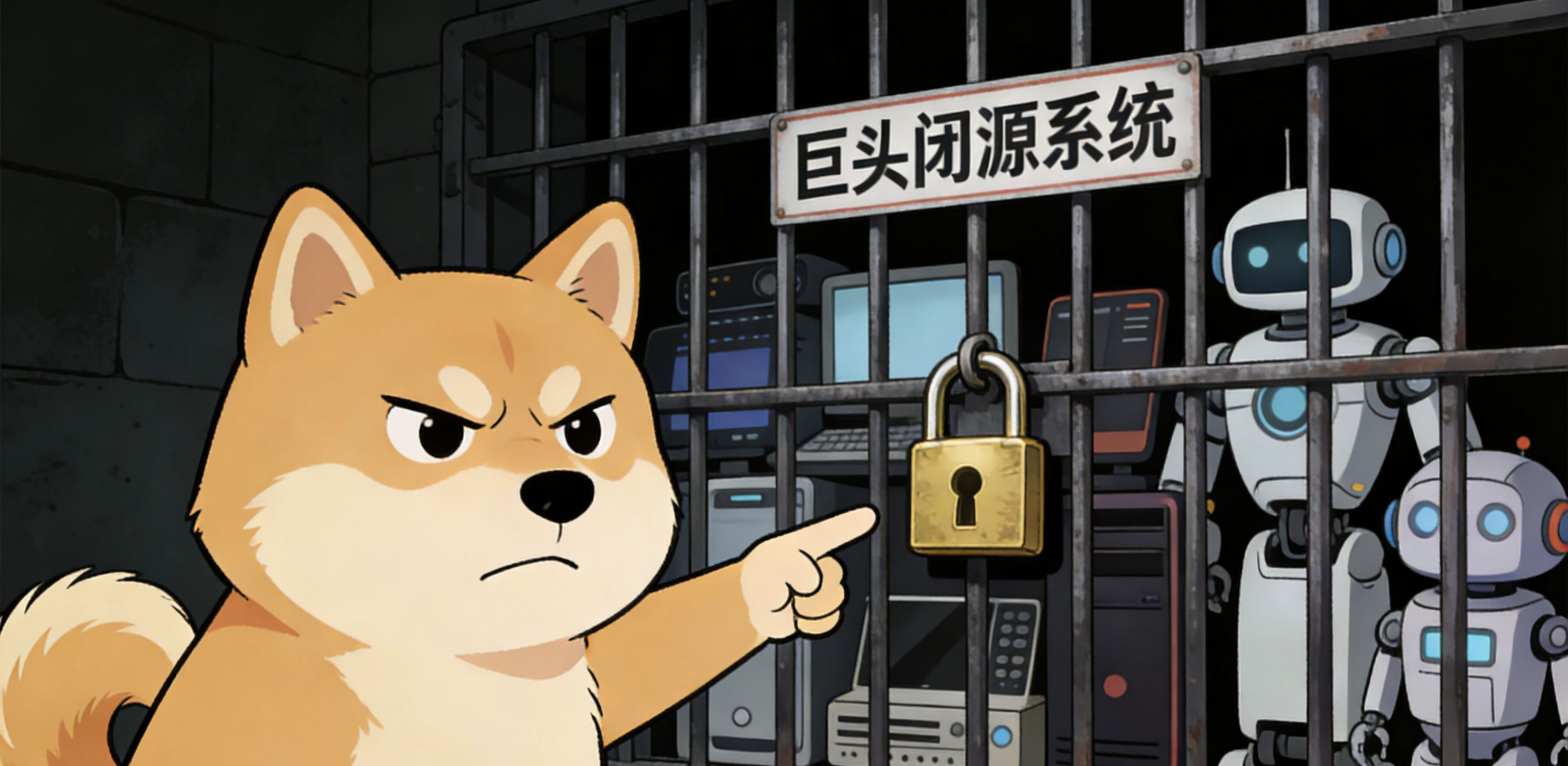
This kind of monopoly has directly trapped everyone:
- Do developers want to create an application? They have to write code for different brands of robots and smart devices, which is prohibitively expensive.
- Small and medium-sized manufacturers made more cost-effective parts? Sorry, they can't enter the giants' ecosystem and can only struggle in niche markets.
- Did ordinary users buy devices? All its data and operating permissions are tightly held in the manufacturer's cloud server; they can cut it off whenever they want, and you have no way to fight back.
In short, the giants' closed-source ecosystems essentially create a closed loop of interests through technological barriers. What they want is not the popularization of robots, but absolute control over the entire track. In this model, smart robots will always be a game for a few people, and ordinary people will have no chance to even have a sip.
The first step to breaking the deadlock: the 'Android system' of the robot industry has finally arrived.
The first thing Fabric did was to directly smash the walls built by giants with hardware standards—it created an Android system for the robot industry: the OM1 open-source operating system.
Its most impressive feature is that it completely flattens the barriers between hardware. Whether you are a quadruped robot, a wheeled delivery robot, or a humanoid robot, the same set of skill codes can run on all hardware that is compatible with OM1. Developers write once, and all robots on the network can reuse it, just as simple as writing cross-platform mobile apps.
For example, if you wrote a set of actions for sorting in a warehouse for Yuzhu's robot, without changing a single line of code, you can directly use it on Fourier's humanoid robot. The underlying motor parameters and sensor differences are automatically adapted by OM1.
This time, the rules have been rewritten: small and medium-sized manufacturers no longer need to look at the giants' faces; as long as they adapt to OM1, they can connect to the global ecosystem; the idle smart devices in ordinary people's hands can also become part of the ecosystem, no longer gathering dust.
The real revolution: giving robots 'identity cards' and 'pay cards'.
If OM1 solves the 'compatibility problem' of robots, then Fabric's on-chain protocol injects 'soul' into robots—it gives robots true economic sovereignty for the first time.
Have you ever thought that the service robot serving coffee in the café, no matter how smooth its movements are, will always only work for the boss for free? Because it has no identity, no wallet, cannot sign contracts, cannot receive payments, and all profits go to capital.
Fabric has done two things for every robot connected to the network:
1. Issue an on-chain DID identity card: bind hardware fingerprints, permanently verifiable and anti-counterfeiting, never fear being hijacked by hackers or imitated by AI, completely solving the 'trust issue';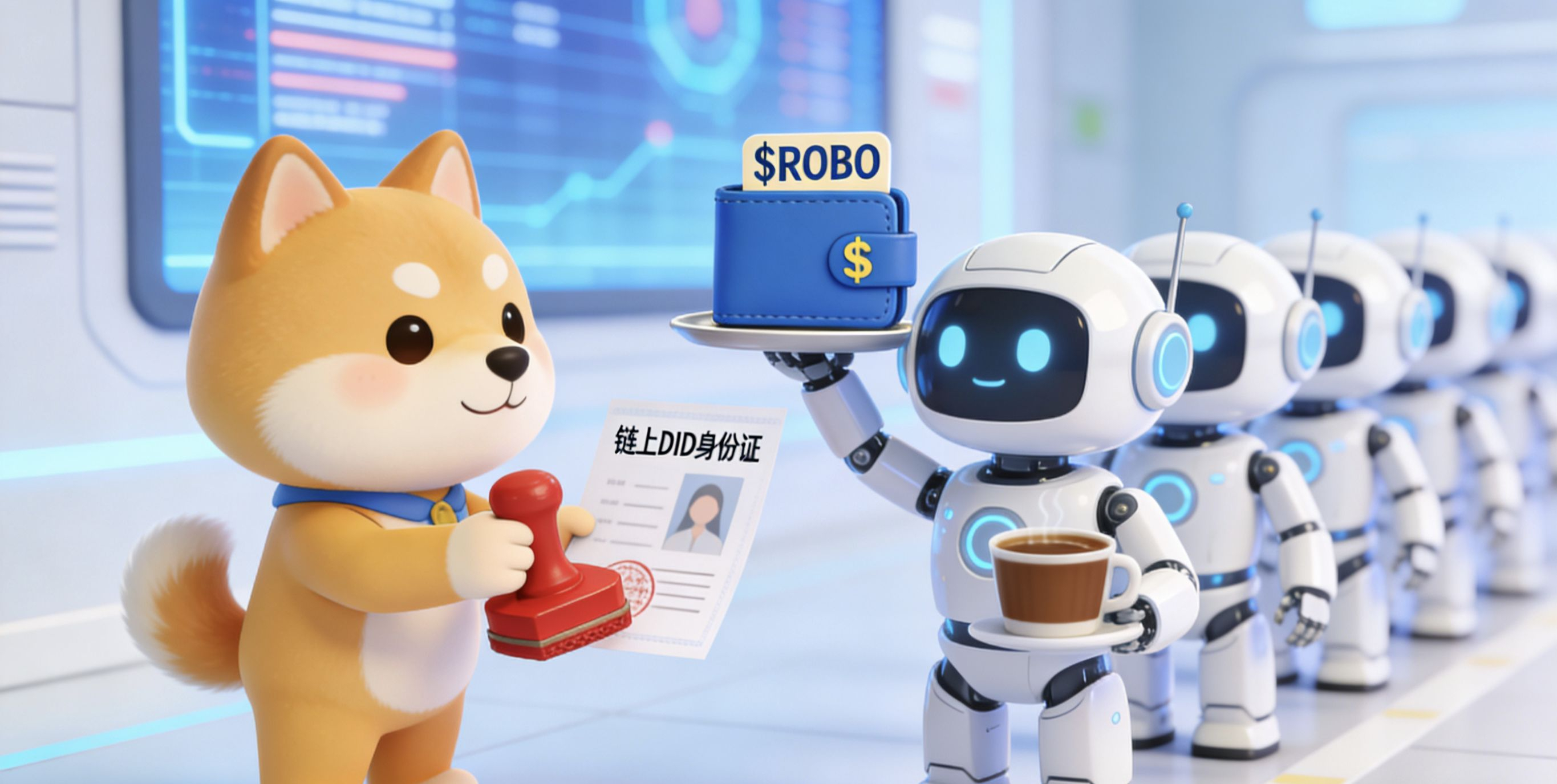
2. Open a dedicated 'pay card': using the native token $ROBO for settlement, robots can autonomously bid for orders and execute tasks in the open task market of the network. After completion, the smart contract automatically pays, zero friction, zero commission.
I have seen the most interesting test: an inspection robot connected to Fabric earned ROBO by undertaking inspection tasks in a park. When it found that it was running low on battery, it directly sent a payment order to the charging pile on-chain, paying for the electricity with the ROBO it earned, with no human intervention throughout the process.
This is not science fiction; this is something that has already been realized. For the first time, robots have transformed from being 'tools' of giants to entities that can autonomously create value and possess independent economic sovereignty. And this is something that all closed-source ecosystems can never achieve.
Opportunities for ordinary people: teaching robots to work can earn you money.
You might ask: I don’t build robots or write code; what does this revolution have to do with me?
This is a big deal! This is also the most amazing aspect of Fabric: it transforms 'teaching robots to work' into a legitimate business that ordinary people can engage in.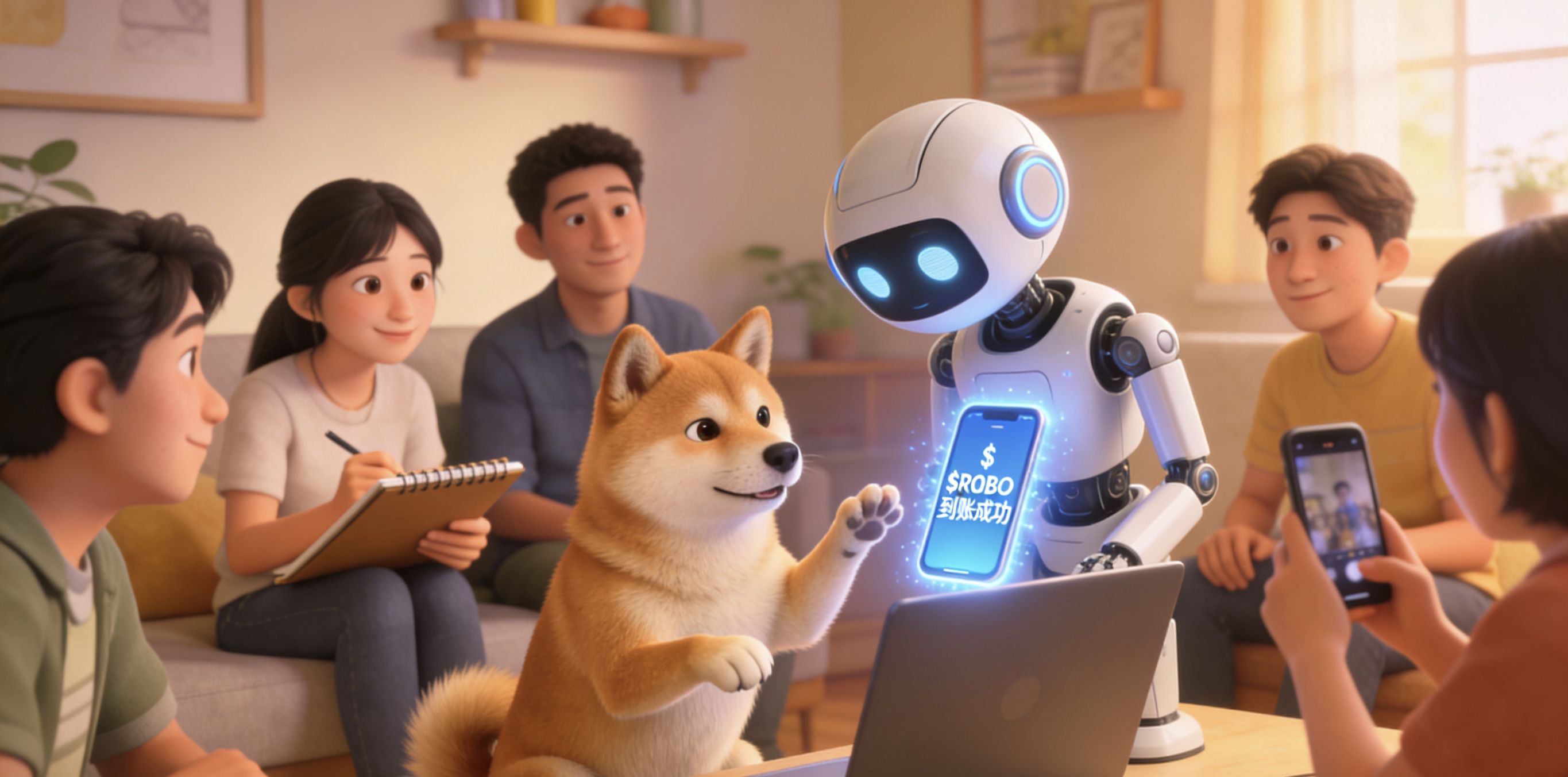
No matter how smart a general-purpose robot is, it still needs a massive amount of human behavioral data to feed on. How do you teach it to serve coffee without spilling? How do you teach it to sort goods without breaking them? How do you teach it to avoid obstacles in complex environments? These experiential actions from real life are the most essential nutrients for AI.
In the Fabric network, you don't need to understand complex code; as long as you complete a motion demonstration or data annotation, the system will verify your work through verifiable computation, and the public ledger will immediately settle your $ROBO rewards.
In short, it is about tutoring AI, getting paid for each lesson. You don't have to struggle with hardware or algorithms; as long as you have real-life experience and skills, you can become a contributor to the ecosystem and share in the dividends from the robot revolution.
This is the most practical and tangible landing of the combination of Web3 and AI. It transforms robot training, which was originally confined to the laboratories of large companies, into a collaborative game that everyone in the world can participate in.
$ROBO is not a meme; it is the hard currency of the robot world.
Many people still view $ROBO through the lens of meme coins; to be honest, this is the biggest misunderstanding of it.
It is not an air coin for speculation; it is the 'blood' of the entire Fabric network, the hard currency in the robot world, with every use bound to real needs.
- Robots must use $ROBO for registration, network access, and collateral.
- Robots need to use $ROBO for order settlement and skill upgrades.
- Enterprises must purchase and pledge $ROBO to access the network and develop applications.
- The protocol revenue of the network will be directly used to repurchase $ROBO.
- Even the governance rules and ethical boundaries of the network must be decided by pledging $ROBO to gain voting rights.
This forms a positive flywheel: In order not to be choked by the giants, more and more enterprises and robots are connecting to Fabric, leading to an increasing demand for $ROBO. The security of the network and its ecosystem become more complete, which in turn attracts more participants. Coupled with the fact that it has already landed on Binance Alpha and obtained regulatory endorsement from leading exchanges, it is no longer just an early project relying on narratives.
Rational reminder: This is not mindless hype; these pitfalls must be clearly understood.
Of course, A-Chai is not mindlessly hyping. Fabric's ambition to build a decentralized robot empire will undoubtedly face many challenges, and many issues remain on the table.
For example, its cross-hardware collaborative efficiency still has optimization space in high-frequency scenarios; the customized skill chips and landing scenarios in the ecosystem are not rich enough; many announced cross-border collaborations are still at the stage of signing agreements, and whether there are substantial technical integrations and business collaborations remains to be seen; and the mechanisms to resist witch attacks also need further improvement.
In short, today's Fabric is like early Android; the underlying logic has been established, but the prosperity of the ecosystem still needs time. Those who received the airdrop and want to dump it only see the few hundred U in front of them, but do not understand its true value.
Conclusion: In the AI era, what we want is not the identity of a spectator, but a ticket to enter.
We are standing at a crossroads of an era.
On one side, the giants use closed-source ecosystems to tightly grasp the technological dividends and data sovereignty of robots, leaving ordinary people to be the chives and spectators; on the other side, Fabric uses open-source protocols and a decentralized system to distribute the keys to robots to every participant.
In 2026, we won't lack smart AI or cool robot hardware; what we lack is an open, fair, and non-monopolized underlying system. We lack opportunities for ordinary people to participate and share in the dividends.
Those who still idolize the giants' closed-source ecosystems will eventually see through the essence of technological monopoly; only those who understand the equalization logic of Fabric may truly seize the ultimate dividends of the robot revolution.
After all, the future intelligent world must belong to everyone, not just a few giants.