I did not really think about what it means to join something in games for a time. It always felt straightforward. You enter a guild, your name. From that point on you are inside the guild. The system recognizes you. That recognition becomes your identity. It is simple almost automatic.
While looking deeper into how guilds work in Pixels that idea started to feel a bit too clean.
Because here joining a guild is not a step. It is layered.
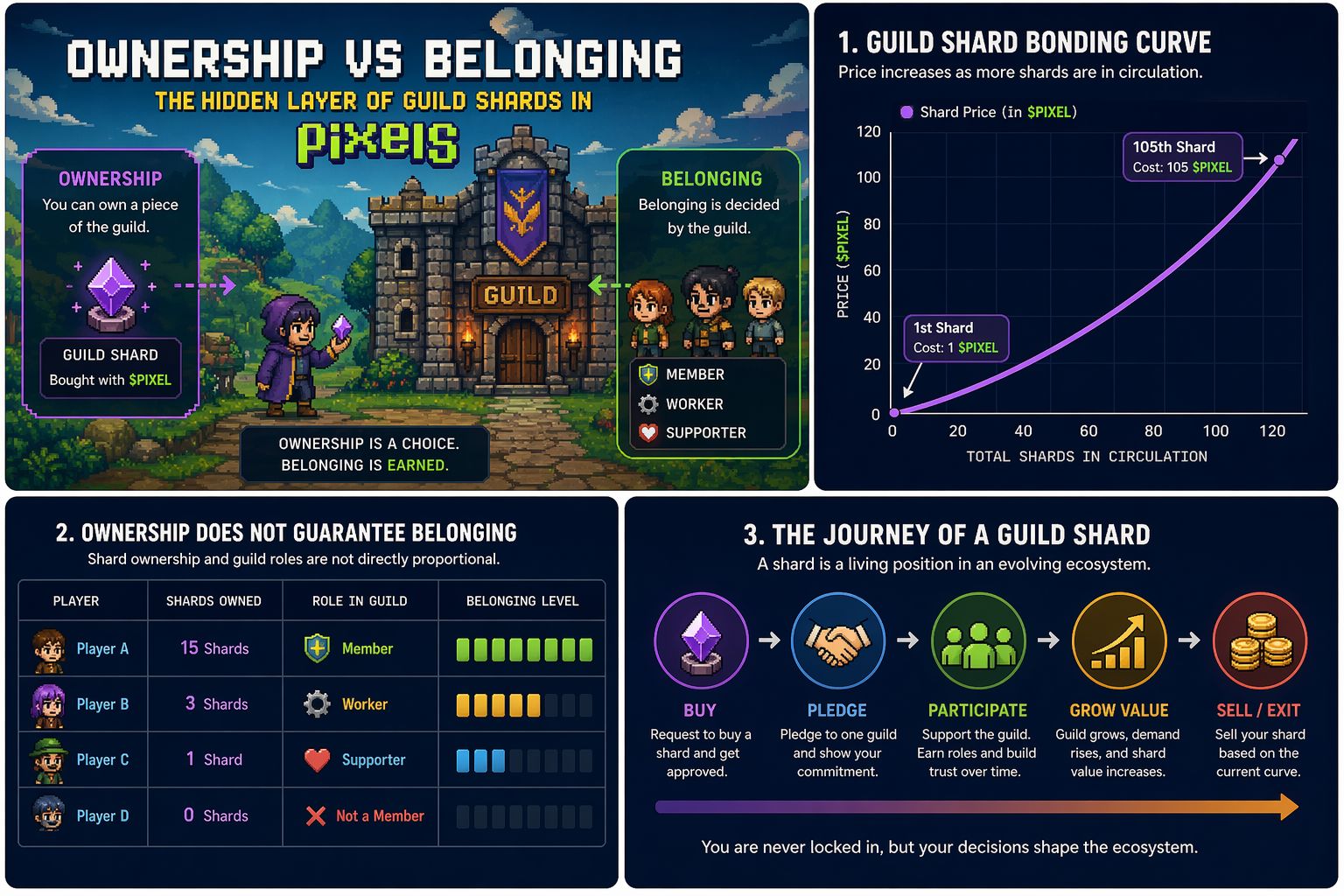
At the surface you can purchase a Guild Shard. It looks like entry or at least the beginning of it. You spend PIXEL you hold a piece of the guild. It feels like that should mean something concrete.. It does not. Not in the way most systems would define it. Ownership of a Guild Shard does not automatically translate into belonging to the guild. You can hold a Guild Shard. Still remain outside the actual structure of the guild.
That separation feels small at first. It quietly changes everything.
In digital environments systems try to merge financial input with social position. If you invest you gain access. If you contribute you move closer to the center. Pixels does not reject that idea entirely. It slows it down. It introduces friction not in the form of cost. In the form of human decision.
After purchasing a Guild Shard even after pledging it to a guild your role in the guild is not guaranteed. The guild leaders still decide whether you become a member of the guild a worker in the guild or simply remain a supporter of the guild. That decision sits outside the transaction itself. It belongs to people in the guild not code in the guild.
That creates a subtle tension between what you own and where you stand in the guild.
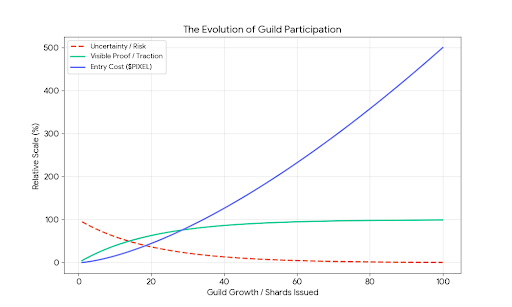
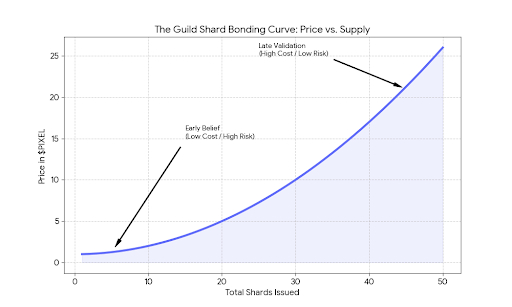
The bonding curve attached to Guild Shards adds another layer to this dynamic. The first Guild Shard costs nothing. Just 1 PIXEL.. Each additional Guild Shard becomes more expensive rising step by step as more people enter the guild. On paper it is a pricing model for Guild Shards. In practice it reflects something human: early belief in the guild versus late validation of the guild.
Those who arrive early in the guild are not just paying less for a Guild Shard; they are taking on uncertainty about the guild. They are choosing to support the guild before it is fully formed. Later participants in the guild pay more for a Guild Shard. They do so with more information more visible proof that the guild has traction. The curve does not just price access to the guild. It quietly measures confidence in the guild over time.
Yet even with that financial progression in the guild the system refuses to guarantee social integration into the guild.
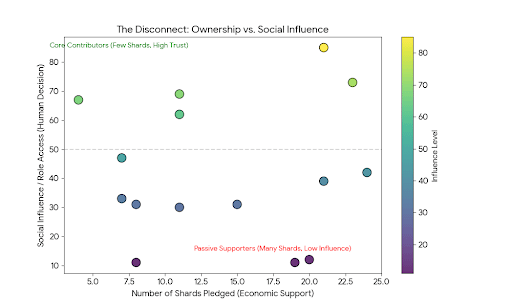
You can imagine two players in the moment in the guild. One player holds Guild Shards having entered early in the guild and accumulated positions along the curve. Another player holds Guild Shards maybe arriving later in the guild.. When it comes to roles inside the guild the difference might not follow the same logic. Influence in the guild trust in the guild and responsibility in the guild are not strictly proportional to ownership of Guild Shards.
That disconnect is where the system starts to feel less like a game mechanic and like a reflection of real-world structures in the guild.
Because outside of games like Pixels, ownership and belonging have never been the thing in a guild. You can invest in a company without working. You can support a community without being recognized by it. You can hold value without holding influence in the guild. Pixels does not simplify these relationships in a guild. It preserves them.
The act of pledging a Guild Shard brings another dimension into focus in the guild. You can only pledge to one guild at a time. That limitation seems mechanical. It introduces something deeper: commitment to the guild. In a space where switching sides is often effortless this constraint forces a decision in the guild. It asks you to choose where your support is directed in the guild even if that support does not immediately grant you status in the guild.
It is an action in the guild but it carries weight in the guild.
Then there is the ability to sell Guild Shards in the guild. Guild Shards are not attachments to the guild; they can be released back into the system priced again along the same curve that defined their entry into the guild. If a guild grows the value of a Guild Shard rises. If momentum slows in the guild the curve reflects that in the guild. The Guild Shard becomes less like an asset in the guild and more like a position within a moving structure in the guild.
This introduces a relationship between players in the guild and communities in the guild. You are not locked in to the guild. You are also not detached from the guild. Your decisions in the guild. When to enter the guild when to support the guild when to leave the guild. Interact with a system in the guild that responds in real time.
It is easy to see this as another economic loop in the guild. Buy low sell high repeat in the guild.. That interpretation feels incomplete in the guild.
Because what is actually being traded in the guild is not just value in the guild. It is proximity to something that is still evolving in the guild. A guild is not an entity in the guild; it is a process in the guild.. Holding a Guild Shard means placing yourself somewhere within that process in the guild even if your role in the guild is not fully defined.
That ambiguity is what makes the system in the guild feel different in the guild.
It does not tell you what your position in the guild means in the guild. It leaves space between ownership of a Guild Shard and identity in the guild between support of the guild and recognition in the guild. And in that space in the guild something interesting happens in the guild: players in the guild are no longer participants following clear rules in the guild. They become interpreters in the guild trying to understand where they stand in the guild and what their actions in the guild actually represent.
Course this design in the guild also carries risk in the guild.
If many players in the guild remain at the level of ownership of a Guild Shard without transitioning into meaningful roles in the guild the system in the guild can start to feel distant in the guild. The Guild Shards exist in the guild the curve moves in the guild transactions happen in the guild.. The connection between the economic layer in the guild and the social layer in the guild weakens in the guild. Value circulates in the guild. Meaning becomes harder to locate in the guild.
If that gap grows too wide in the guild the system in the guild could start to feel fragmented in the guild.
If it holds in the guild. If guilds actively shape their communities in the guild assign roles with intention in the guild and create clear pathways between support of the guild and participation in the guild. Then something more cohesive can emerge in the guild. A structure in the guild where economic signals and human decisions reinforce each other in the guild than drift apart in the guild.
That is where the idea of a guild in Pixels starts to change in the guild.
It stops being a group you join in the guild and becomes something closer to a living system in the guild. One where value in the guild trust in the guild and identity in the guild move at speeds in the guild intersecting in ways that are not always predictable in the guild.
Maybe that is the quiet shift happening here in the guild.
Not a dramatic reinvention in the guild not a break from what came before in the guild but a subtle rebalancing in the guild. A reminder that being part of something in the guild is not always defined by what you hold in the guild and that support of the guild does not always guarantee belonging in the guild.
Because in the end in the guild holding a piece of a guild is clear in the guild. You can see it in the guild measure it in the guild trade it in the guild.
But knowing whether you truly belong in the guild. That is something the system, in the guild does not decide for you in the guild.