Pixels: A Web3 Game Trying to Break the Usual Cycle
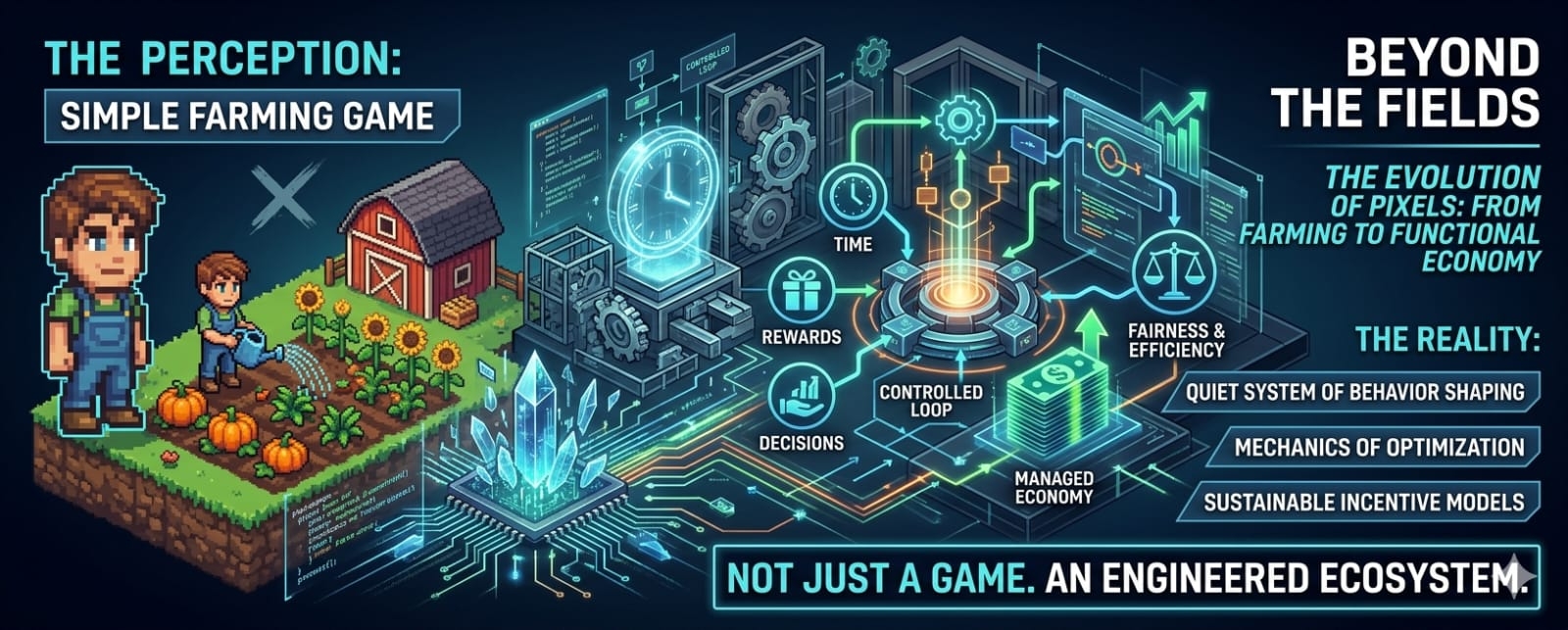
Most Web3 games tend to follow a very predictable pattern. They launch with a lot of hype, attract users through rewards and incentives, grow quickly for a short time and then slowly start fading once those rewards lose their appeal.
It’s a cycle we’ve seen again and again.
Pixels is interesting because it feels like it actually understands that pattern and is trying, at least in theory, to move away from it.
Instead of relying purely on short-term excitement, the focus seems to be shifting toward something more stable. Something that can keep players engaged even when the “easy reward” phase is no longer the main attraction.
The Core Problem in Web3 Gaming
A lot of Web3 games run into the same issues:
Most players join for rewards, not the actual gameplay
Early engagement is strong, but it doesn’t last
In-game economies often fail to stay balanced
Once rewards weaken, activity drops sharply
Growth usually turns into a rise-and-fall cycle
So even when a project gets attention, keeping it alive is the real challenge.
Where Pixels Feels a Bit Different
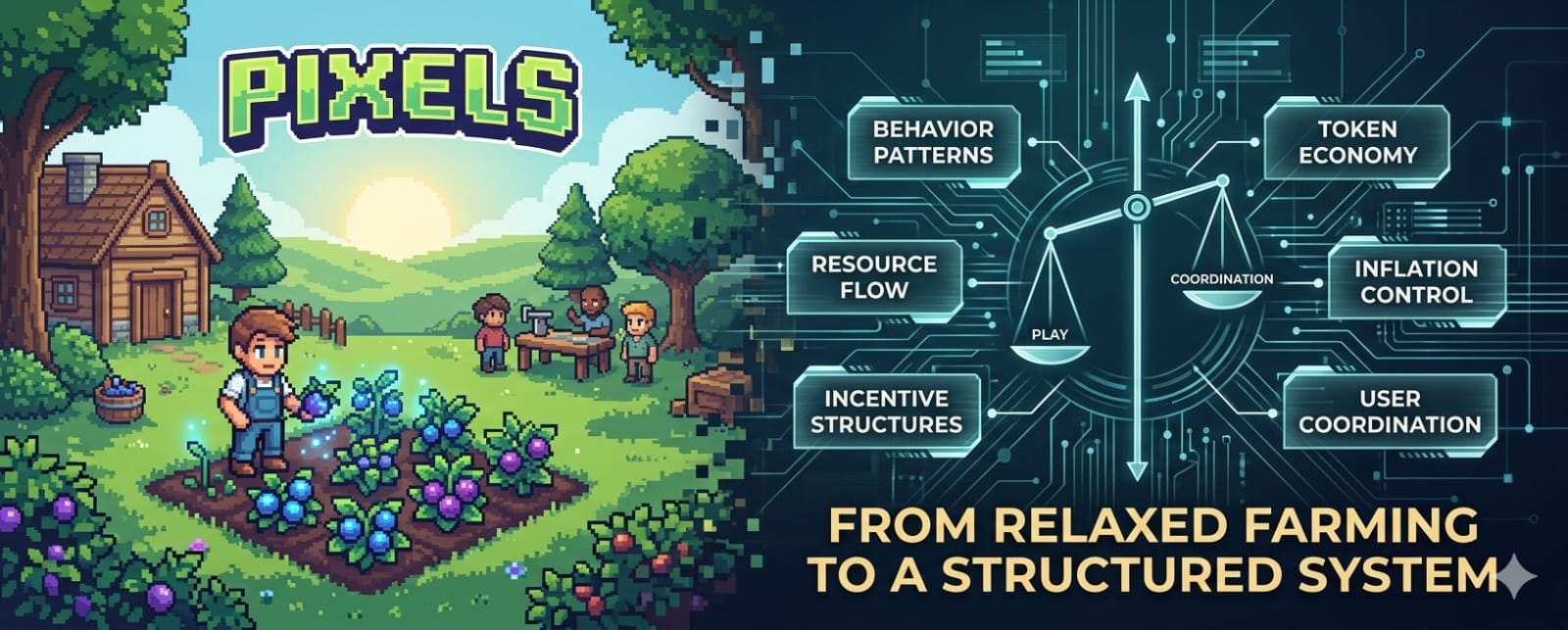
Pixels doesn’t present itself as a perfect solution, but it does seem to be adjusting its direction.
The focus is slowly shifting toward:
keeping players engaged for longer periods
building a more stable in-game economy
linking rewards more closely with actual gameplay
reducing reliance on hype-driven growth
encouraging real activity instead of pure farming behavior
At the center of it all is $PIXEL , which is being positioned as more than just a reward token it’s meant to help connect different parts of the ecosystem.
The Bigger Idea Behind It
What makes Pixels worth noticing isn’t the idea that it has everything figured out. It clearly doesn’t.
It’s more about awareness.
It seems to recognize a simple truth in Web3 gaming:
Projects usually don’t fail because nobody notices them they fail because they can’t maintain interest once the hype fades.
Pixels looks like it’s trying to build something that still holds up after that initial excitement disappears.
But the Real Test Is Still Ahead
Almost every project talks about sustainability in the beginning.
The real difference shows up later, when:
rewards are no longer enough to attract users
players become more selective
hype naturally slows down
only the actual system keeps things going
That’s usually the stage where projects either collapse or evolve.
Pixels is still in that in-between phase.
Final Thought
Right now, Pixels doesn’t feel like a finished success story. It feels more like a project trying to grow out of the usual Web3 gaming cycle.
Whether it actually manages to stay strong in the long run is still uncertain.
But the direction is what makes it interesting.
Because if it works, it won’t just be another game in the cycle it could be one of the few that actually moves beyond it.