

Don't get me wrong, I'm not some extreme privacy advocate; I'm just disgusted by the current AI scene—whatever junk you feed it, it gobbles up, and who knows when it might spill your private chats or even your dirty laundry in public. OpenLedger claims they can clean up this mess. I took a peek at their white paper and found their logic quite interesting, but I wouldn't dare to call it a magic bullet.
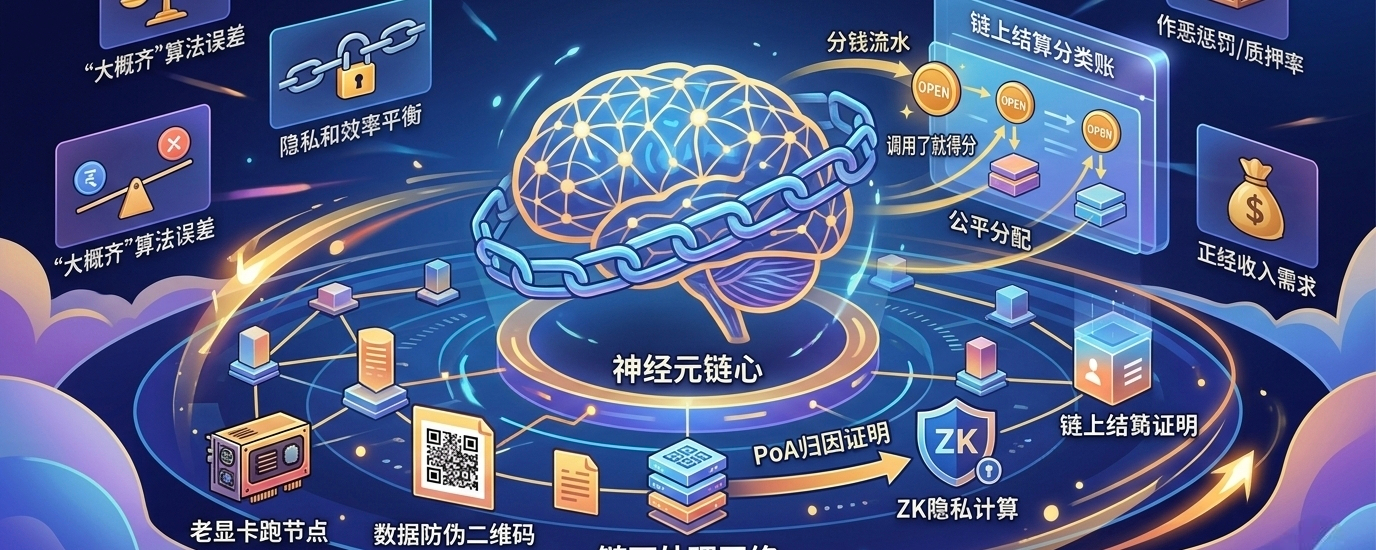
Let's chat first@OpenLedger about the sweet spots in this game. The current AI giants are basically 'cyber scavengers', frantically crawling the web for data, completely ignoring whether it's infringing or if there's any sensitive info involved. What OpenLedger is trying to do is like putting a layer of 'bulletproof glass' over the data. What I value most is their approach of integrating cryptography and zero-knowledge proofs (ZK). This isn't just some gimmick; the core logic is 'I can prove this batch of data is high quality and mine, but I don't have to show you the data itself in full view.' It's like going to an internet cafe to prove you're over 18; the machine just scans your face and gives a green light, no need to shout out your ID number and home address. This 'black box' operation that doesn't touch the raw data sounds way better than those projects that just shout about 'data sovereignty.'
But we also need to stay grounded and not get fooled by the fancy jargon of tech geeks. Do you really think slapping on 'privacy computing' and 'blockchain' will launch you into the stratosphere? It’s like trying to sprint a hundred meters in a heavy bomb-proof suit. AI training demands data throughput measured in PBs, and the computational overhead and latency of zero-knowledge proofs are nothing compared to the massive AI models, it's like using a bike to haul coal. If the cost of processing and encrypting a single piece of data is higher than the data itself, then this system is just a beautiful piece of art, completely useless for practical work.
However, if you take a closer look at their architecture, it’s not that rigid after all. They don’t have to shove all that heavy and slow verification into the expensive chain; instead, they’ve created a layered system. Filtering and encrypting the heavy lifting happens off-chain, then they just throw the lightweight 'proof result' onto the chain for a stamp. It’s like customs inspection; you don’t move the containers into the office to check each one, instead, you verify at the dock and just hand over a stamped receipt in the end. This kind of compromise in design does alleviate some performance issues, making me feel they understand real-world challenges, not just coding in an ivory tower.
However, reason tells me that this is still miles away from actual implementation. Let me point out a few worries I have: First, how do we prevent witch attacks? Since it’s decentralized data provision, there will surely be bots flooding the system to fake rewards. How do we identify these ‘water army’ members at low cost? Second, where's the balance between privacy and efficiency? Once we deal with extremely complex video or multi-modal data, can this encryption verification still keep up? Third, and most critically, who’s actually buying in? If the traditional AI big players aren’t convinced, and it’s just a bunch of Web3 folks hyping each other up, then this economic model is bound to collapse sooner or later.
In short, I think OpenLedger has chosen a tough path, trying to use cryptography to rein in the wild surge of AI with data controls. It looks great on paper, but reality is a different story. Whether it can succeed, I don't care how many partnership PRs are posted on Twitter; I’m fixated on three hard metrics: Are there real external data buyers entering the market? Is there a real penalty mechanism for fake data? And what’s the actual latency in processing massive data? The rest is just for show.
This is just my rambling after finishing the whitepaper these past two days. If you watch it, consider it a way to kill time. If you really want to put your money in, don’t say I didn’t warn you, make sure you understand those boring mechanisms first and protect your capital. DYOR.