
 The real tragedy of most Web3 games isn't that they’re boring—it’s that they’re basically designed to self-destruct. They launch with a massive bang, attract a crowd with the promise of easy money, and then inevitably collapse once the reward pool dries up. Most developers treat their game economy like a marketing campaign, but Pixels is treating its economy like an actual ecosystem.
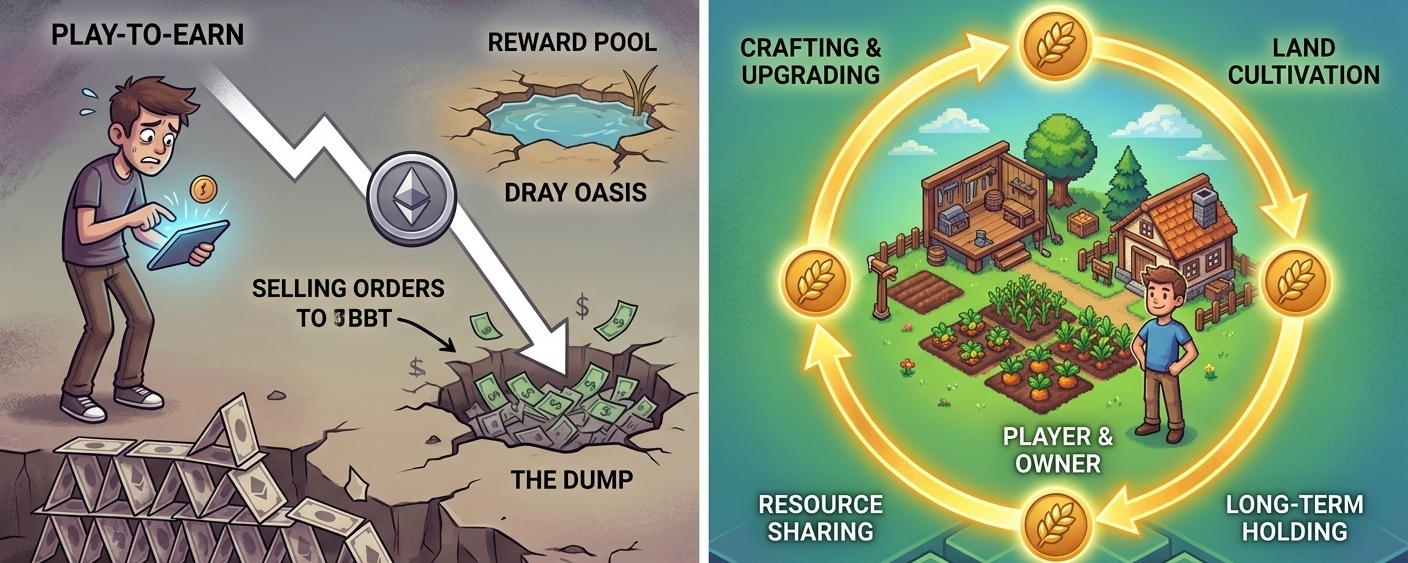
In a typical "play-to-earn" setup, value flows in a straight line: you play, you get a token, and you dump it on the market. It’s purely extractive. But Pixels introduced a bit of necessary friction. Instead of letting value leak out of the game, they’ve built loops that force it back in. When you’re crafting, upgrading land, or maintaining assets, you’re not just playing a game; you’re feeding the system. This shift from a linear economy to a circular one is the reason they don't need a constant influx of new "exit liquidity" just to keep the lights on.
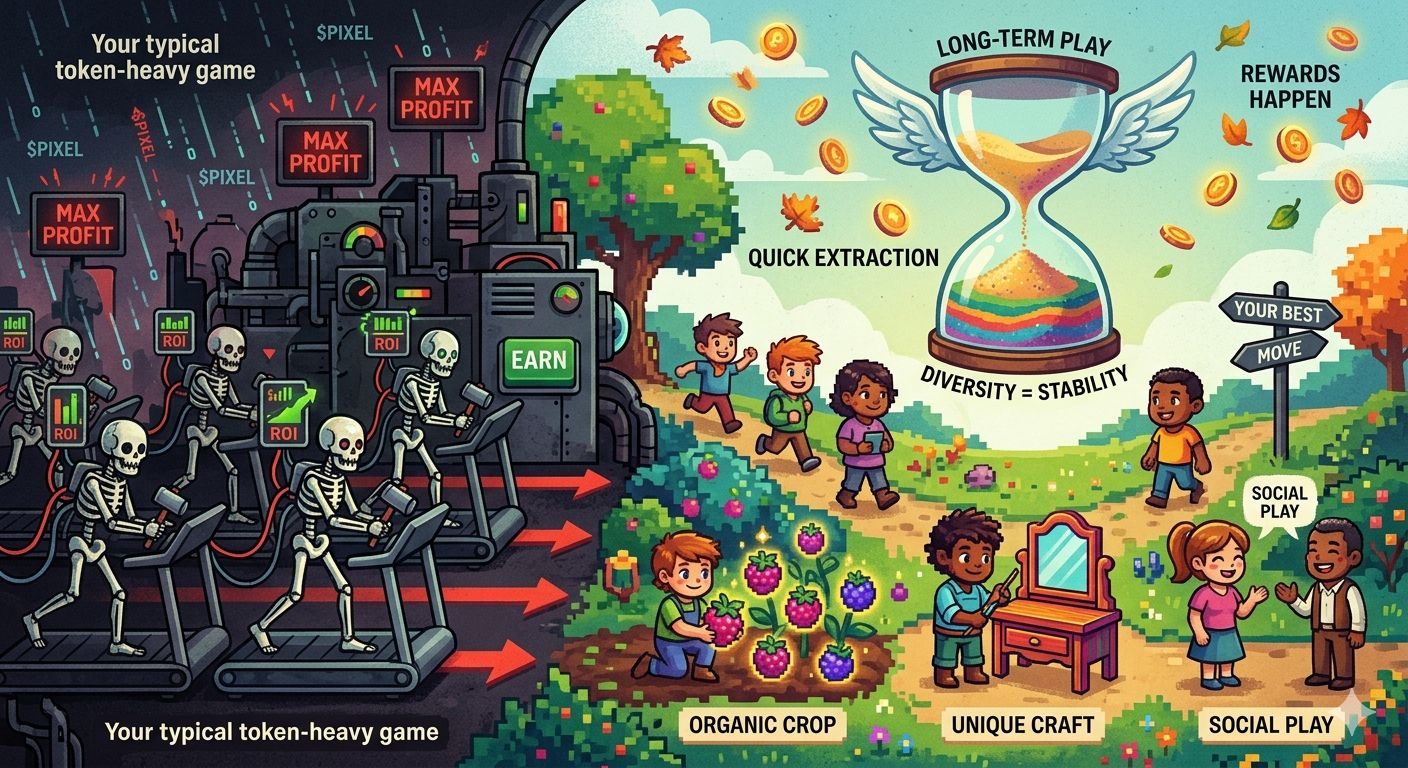
They also stopped trying to fake scarcity. Usually, devs just put a hard cap on items, which feels arbitrary and annoying to players. Pixels uses functional scarcity—limits dictated by actual time and effort. It feels organic. It stops players from asking why the game is "nerfing" them and starts making them ask how they can position themselves better.
Even the "meta" stays fresh because the system is designed to be a moving target. In most games, a strategy gets solved in a weekend and everyone does the exact same thing until the rewards are bled dry. In Pixels, the equilibrium moves. As player behavior shifts, the advantages of certain activities change, which prevents the economy from being steamrolled by repetition.
Ultimately, it changes how people act. When an economy looks like a house of cards, players act like looters—they grab what they can and run. But when a system feels stable, people actually settle in. They stop looking for the "sell" button and start thinking about their assets as something worth holding. Pixels isn’t bulletproof, but by prioritizing balance over hype, they’ve finally given Web3 gaming a model that can actually survive the long haul.
