
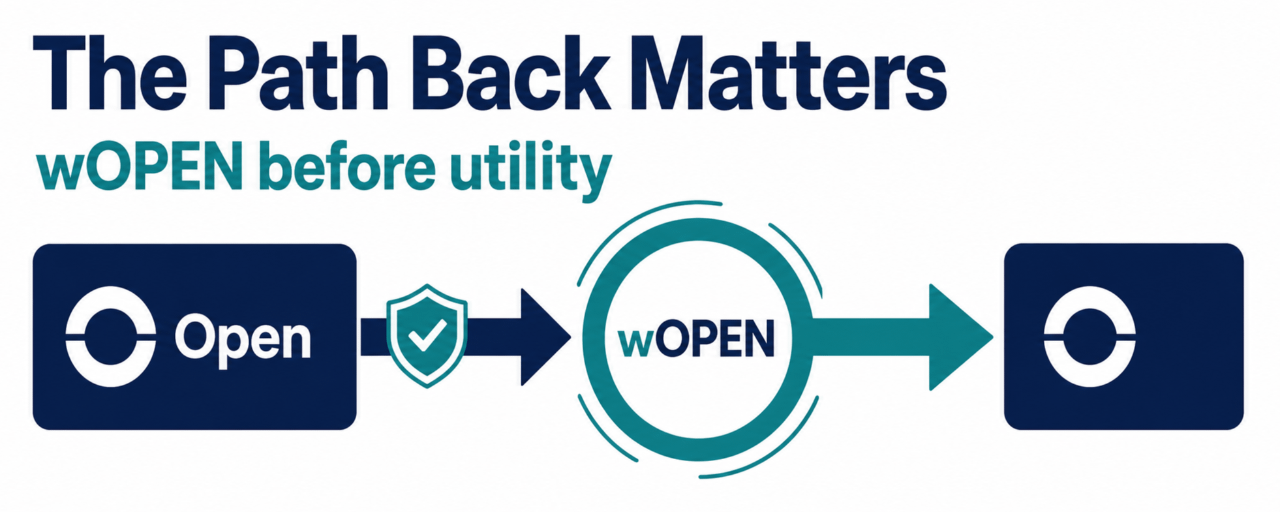

The first wOPEN line I would have circled was 1:1. Native Open is deposited, wOPEN is minted, and withdrawal burns that wrapped balance to return native Open. Read quickly, the route feels settled. The native amount has a matching wrapped representation, and the holder has a stated path back out.
I nearly let the ratio finish the check for me.
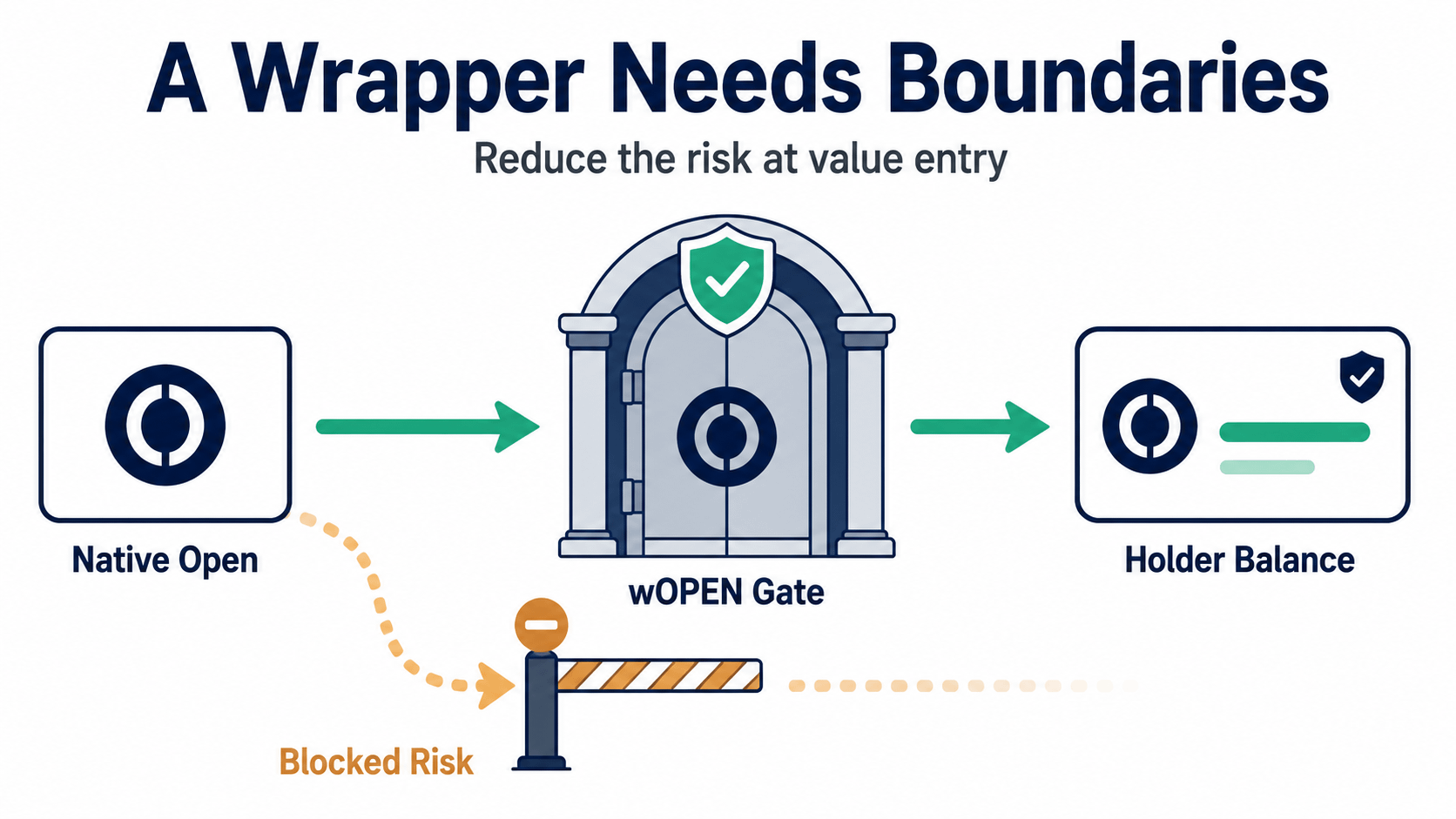
Then the incoming-transfer handling became the part I could not skip. In wOPEN, incoming transfers with empty message data are handled through a receive function. OpenLedger connects that choice to reducing the attack surface of a permit-style vulnerability associated with fallback-based handling in an earlier wrapped-token pattern.
That detail does not sit at the end of the route. It sits at the point where the wrapped balance begins.
A holder arrives with native Open, not wOPEN. Deposit is the step where that direct balance moves into the wrapper and the holder receives the token they will later depend on for withdrawal. If I read only the ratio and the burn step, I have already jumped over the moment that created the wrapped claim in the first place.
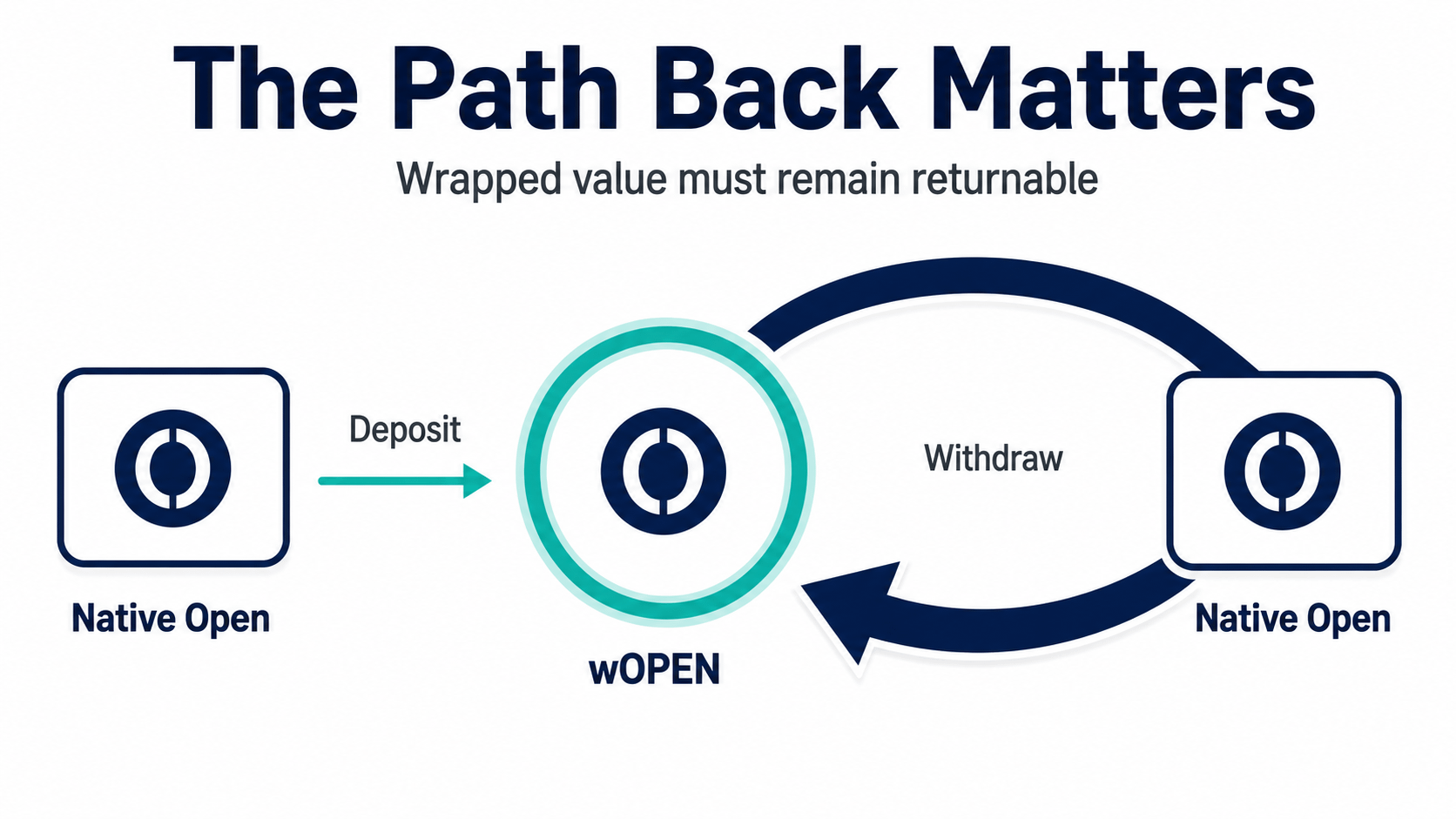
Before seeing the receive-function detail, I was evaluating wOPEN from the comfortable side. Withdrawal is simple to recognise as the important protection. Burn the wrapped token, get native Open back. It gives the route a visible finish and makes the 1:1 label look like enough information to judge the loop.
The incoming-transfer detail changed that order. It is attached to native Open entering before the holder has a wOPEN balance to burn. That is the handoff where the holder stops holding the native asset in the same form and starts depending on the wrapper to preserve what the minted balance is supposed to mean.
The deposit and withdrawal statements still belong together. One creates wOPEN and the other removes it in exchange for native Open. But they are not the same moment from the holder's side. Withdrawal is the requested return. Deposit is the point where the holder first gives the contract native Open and receives the wrapped claim instead.
That is why this specific implementation detail caught me harder than the ratio. The ratio is tidy once the wrapped balance exists. The receive-function choice belongs to the step before that balance is available to reassure anyone. It made the entry route visible as its own check, instead of leaving it hidden inside a clean two-arrow diagram.
I can now read “deposit mints” differently. It is not only the start of a convenient wrapped balance. It is the action that places native Open into the route being trusted. When OpenLedger identifies a change to incoming-transfer handling at that exact point, I would not pass over it just because the exit description looks clear.
The burn-to-withdraw path still matters to me. A wOPEN balance is only meaningful to a holder if it can return native Open through the stated withdrawal route. But I would reach that question after checking the deposit handoff, not before it.
The 1:1 line tells me what wOPEN is meant to represent. The deposit handling is the detail that stopped me from treating that representation as the whole check.