Newton Protocol (NEWT) is a modern blockchain platform built to make AI-powered automation safe, open, and easy to check. Its main goal is to solve a major problem in decentralized finance (DeFi): allowing AI tools or automated programs to carry out blockchain tasks without users giving up control of their money. Instead of depending on centralized bots or unknown services, Newton Protocol provides a decentralized system where every action is checked with cryptographic proof before it is approved. This lets users automate blockchain activities while keeping full ownership of their assets and lowering security risks.
The project was developed by the team behind Magic Labs and is now supported by the Magic Newton Foundation. Magic Labs became popular for its wallet technology, which made it easier for millions of people to enter Web3 without using traditional crypto wallets. Newton takes that idea further by creating an open network where users, developers, companies, and AI agents can work together safely. The foundation wants to make trusted automation and programmable compliance available across many blockchain networks.
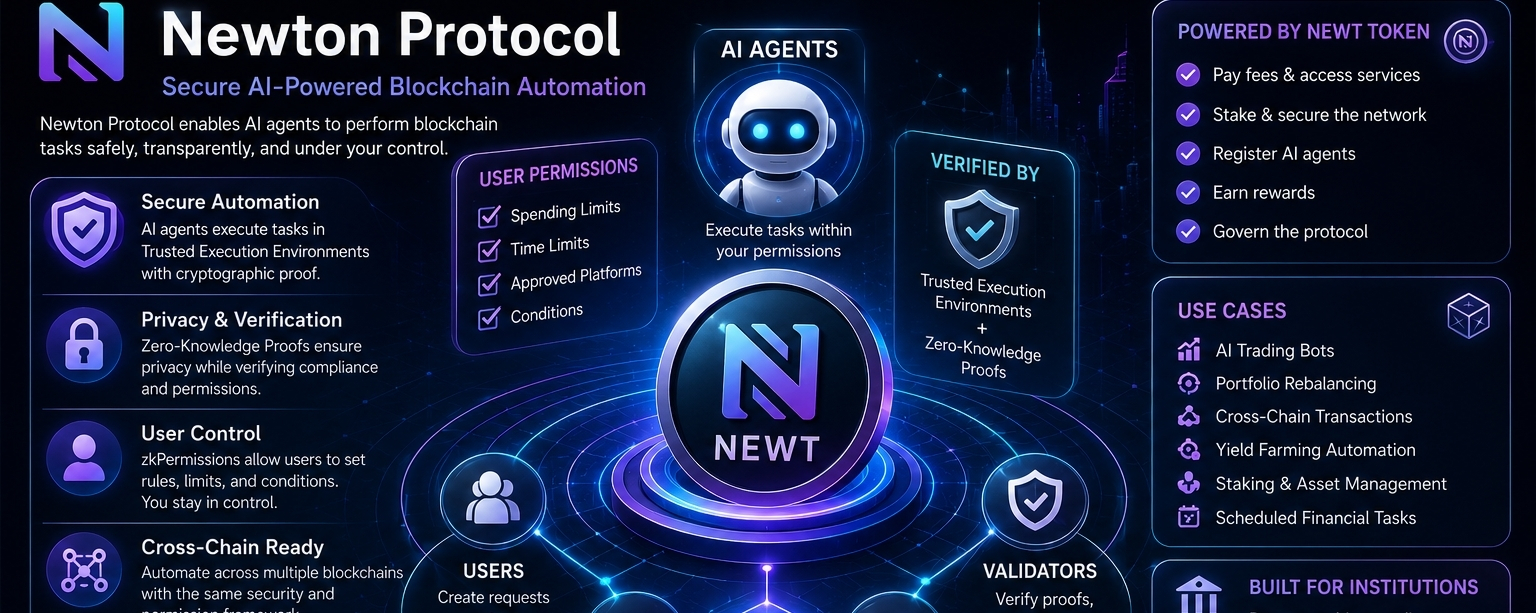
At the heart of Newton Protocol is a secure rollup and a policy engine. Developers can create simple rules that control how digital assets move. These rules can include spending limits, identity checks, transaction conditions, risk protection, or legal requirements. Every transaction is checked against these rules before it is completed. This turns compliance into an automatic process that works directly on the blockchain while keeping user data private.
One of Newton Protocol's biggest strengths is its use of Trusted Execution Environments (TEEs). These are protected hardware areas where AI agents perform important tasks without exposing user information or allowing anyone to change the software. After finishing a task, the system creates cryptographic proof showing that the correct software was used exactly as planned. This greatly lowers the risks found in many centralized automation services.
The protocol also combines Zero-Knowledge Proofs (ZKPs) with TEEs. Zero-Knowledge technology allows the network to prove that every action followed the required rules without revealing private information. Users can confirm that AI agents respected all their permissions while keeping personal financial details hidden. This balance between privacy and openness is one of Newton Protocol's most important features.
Newton also introduces zkPermissions, a smart permission system. Instead of giving private keys to bots or outside services, users decide exactly what an AI agent can do. These permissions may include spending limits, time limits, approved platforms, or certain market conditions. Users can change or remove these permissions whenever they want, giving them complete control over their assets.
The Newton ecosystem has four main groups. Users create automation requests and set permissions. Developers build AI agents using the Newton SDK and publish them for others to use. Operators run these AI agents in secure environments and provide proof that every task followed the rules. Validators protect the network, verify the proofs, and keep the blockchain secure through staking. Each group has a clear job and receives rewards for helping the network.
Newton Protocol supports many types of blockchain automation. AI agents can rebalance investment portfolios, carry out trading strategies, move assets between different blockchains, stake tokens, improve yield farming positions, or complete scheduled financial tasks. Since every action follows user-approved permissions, this system is much safer than using normal trading bots or centralized platforms.
Another key advantage is cross-chain support. Today, many users work with different blockchain networks, making asset management difficult. Newton allows AI agents to perform tasks across supported blockchains while keeping the same high level of security. Developers can create apps that connect with different DeFi platforms without making users manage every blockchain separately.
The protocol is also built for businesses and financial institutions. Banks, stablecoin projects, and Real World Asset (RWA) platforms often need to follow regulations before handling transactions. Newton allows these organizations to add compliance rules directly into the transaction process. Instead of checking transactions later, the rules are applied before they are completed, making blockchain technology more suitable for regulated financial services.
Artificial intelligence is becoming more important in decentralized finance, but AI systems need clear limits to avoid mistakes or misuse. Newton provides these limits through programmable rules and cryptographic proof. AI agents can perform useful financial tasks while staying within user-approved conditions. This creates a safer environment for automated financial services and supports the growing AI economy.
Developers also benefit from Newton through standard APIs, SDKs, and an on-chain service list. They can build AI agents, set execution rules, and connect AI models with decentralized applications. Since all services follow common standards, developers can build apps more easily, and users can quickly discover and use automation services.
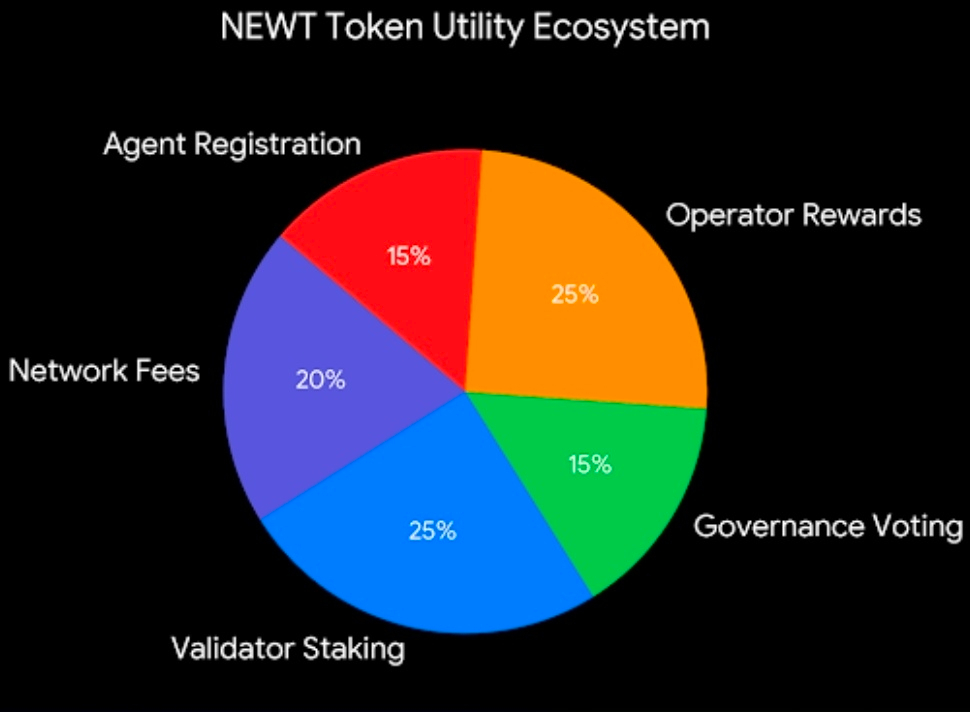
The NEWT token powers the whole ecosystem. It is used to pay service fees, reward operators, support staking, register AI agents, take part in governance, and help secure the network. Users spend NEWT when creating or changing permissions. Operators may lock NEWT as collateral before running automation tasks, while validators stake NEWT to protect the network and earn rewards. In the future, token holders will also vote on upgrades and important decisions.
According to the project's token plan, NEWT has a maximum supply of 1 billion tokens with no planned inflation. This fixed supply is designed to keep the economy stable and encourage long-term participation. The token also supports community rewards, staking programs, ecosystem grants, and governance activities.
Newton Protocol also focuses on transparency. Every approved transaction creates a receipt that anyone can verify. Users, businesses, and regulators can check that automation followed the required rules without seeing private information. This makes AI-powered financial services more trustworthy and encourages wider use by institutions.
The protocol solves several long-standing problems in DeFi. Many users still depend on risky Telegram bots, centralized automation services, or wallet-sharing methods that expose private keys. Newton removes this risk by allowing safe task delegation through programmable permissions instead of giving away wallet control. Users always keep ownership of their assets while enjoying advanced automation.
Looking ahead, Newton Protocol hopes to become a key foundation for AI-powered blockchain applications. As AI agents become more common, the need for secure automation, programmable compliance, and trusted verification will continue to grow. By combining Trusted Execution Environments, Zero-Knowledge Proofs, decentralized validation, and flexible permission rules, Newton creates a system where AI, decentralized finance, stablecoins, and tokenized real-world assets can work together safely. Its long-term goal is to make blockchain automation as reliable as traditional financial systems while protecting decentralization, openness, and user control.