There’s a quiet assumption hiding behind almost every conversation about AI in finance.
If the model is smart enough, everything else will work itself out.
I'm not convinced that's true.
The next generation of AI won't spend most of its time answering questions. It will move assets, rebalance portfolios, claim staking rewards, manage liquidity, and execute strategies while people are asleep. That sounds incredibly convenient until something unexpected happens.
And unexpected things always happen.
Financial markets have never rewarded blind confidence. They reward preparation. Every experienced trader knows that protecting capital matters just as much as growing it. The same principle should apply to autonomous AI.
Giving an AI unrestricted wallet access because it produced good results during testing feels a bit like handing the keys of a warehouse to someone because they organized the front office well. The two responsibilities aren't remotely the same.
That difference keeps developers awake at night.
A small software bug rarely stays small once real money enters the picture. One incorrect market signal, one faulty oracle update, or one overlooked edge case can dramatically expand the blast radius of a single automated decision.
The AI might be doing exactly what it believes is correct.

That doesn't necessarily mean it should be allowed to execute it.
Traditional finance figured this out decades ago. Banks don't rely solely on trust. Every transaction moves through layers of authorization, compliance checks, approval limits, and operational controls before funds leave an account.
Those safeguards aren't there because people expect failure every day.
They're there because eventually, something goes wrong.
Blockchain changed how value moves across the internet, but it didn't automatically solve governance. A private key proves ownership. It doesn't explain whether a transaction should happen in the first place.
That's a much harder problem.
It's also one that becomes impossible to ignore once AI agents begin operating continuously across decentralized markets.
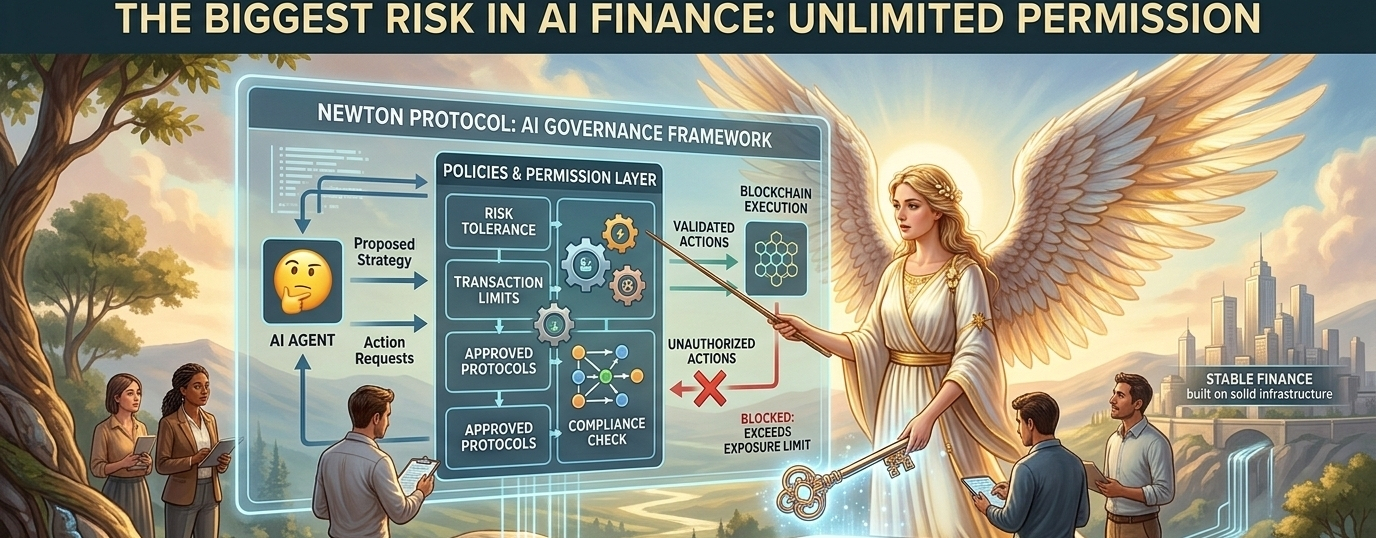
This is where @NewtonProtocol takes an approach that feels more like infrastructure than marketing.
Instead of assuming intelligence deserves unlimited authority, it introduces programmable policies that sit between an AI agent and capital. Every proposed action can be checked against predefined rules before execution ever reaches the blockchain.
That sounds simple.
In practice, it changes the entire security model.
Imagine an AI responsible for managing treasury funds across multiple DeFi protocols. Without boundaries, a faulty strategy could accidentally allocate far more capital than intended. With policy-based controls, that same transaction could be rejected automatically because it exceeds predefined exposure limits.
The model still thinks.
The policy decides whether it acts.
That separation matters more than people realize.
Good infrastructure often looks boring from the outside. Users don't celebrate reliable permission systems the way they celebrate new AI models. Yet history shows that the unsexy plumbing usually becomes the foundation everyone depends on later.
The internet didn't become reliable because websites looked better.
It became reliable because invisible infrastructure quietly matured underneath everything else.
AI finance will probably follow the same path.
The projects attracting the most attention today may not be the ones defining tomorrow's standards. Long-term adoption usually belongs to platforms that reduce operational risk instead of simply increasing capability.
That's one reason governance deserves more attention than raw intelligence.
As autonomous systems become more capable, they'll interact with blue-chip protocols, institutional capital, and increasingly complex financial products. At that scale, permission isn't just another feature it becomes part of the product itself.
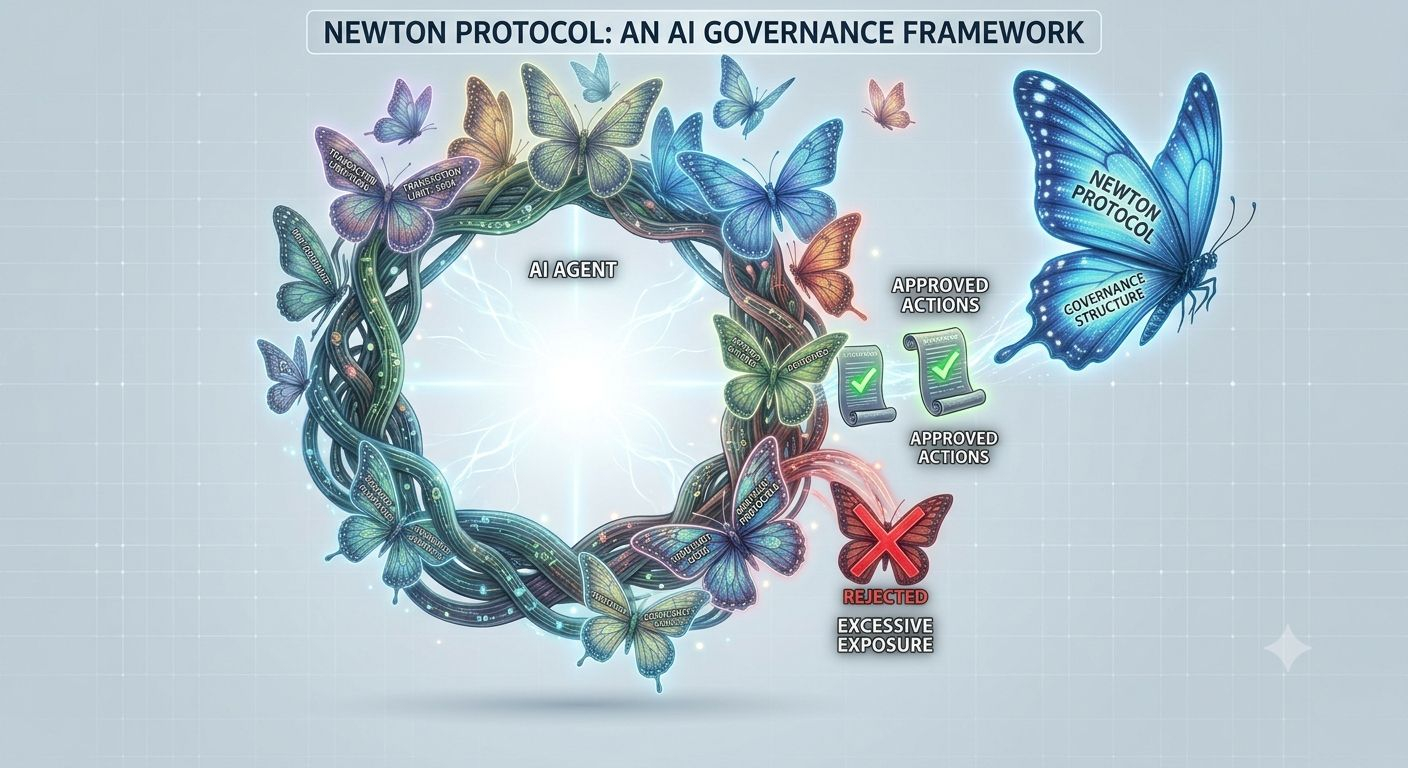
Every unnecessary privilege expands risk.
Every carefully designed boundary reduces it.
@NewtonProtocol appears to recognize that trust isn't something users should assume. It should be enforced through transparent, programmable rules that remain consistent regardless of how sophisticated AI becomes.
Technology will continue evolving.
Models will become faster, cheaper, and better at reasoning.
None of that changes a simple reality.
The most valuable AI in finance won't be the one that can do everything.
It will be the one that always knows where its authority ends.
Because in autonomous finance, intelligence opens the door.
Clear permissions make sure nothing dangerous walks through it.