
As blockchain technology continues to evolve, one challenge remains consistent: making decentralized applications easier, safer, and more efficient for everyday users. Many people are interested in Web3, but interacting with multiple wallets, signing transactions, managing permissions, and navigating different protocols can still feel complicated. This is where projects focused on improving the user experience can make a meaningful impact.
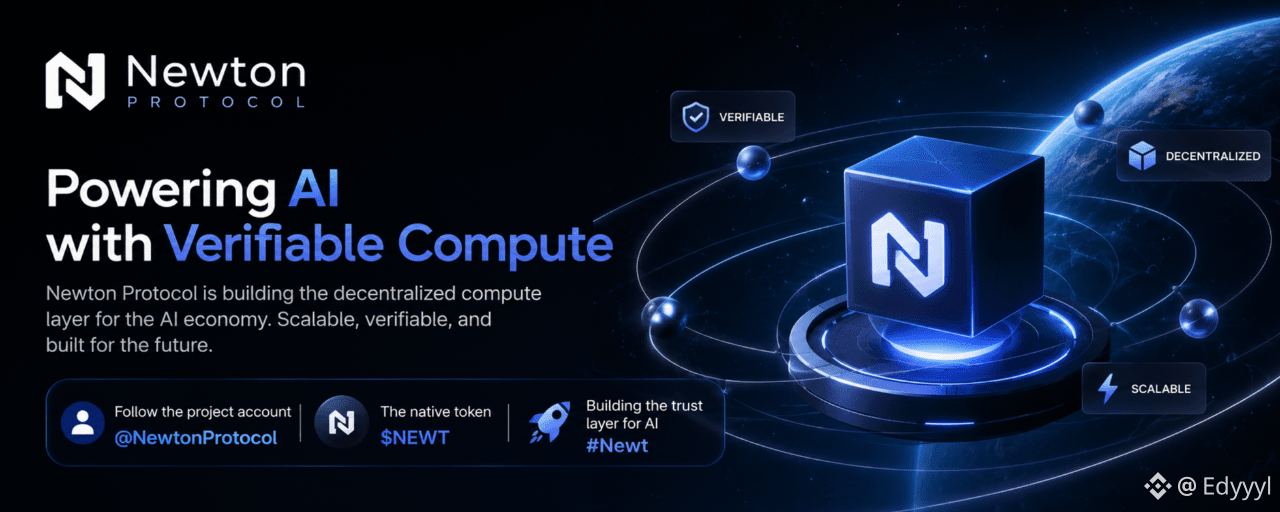
I've been following @NewtonProtocol with interest because its vision centers on making on-chain interactions more intelligent and streamlined. Rather than expecting users to manually complete every repetitive task, the protocol explores how automation can help reduce complexity while keeping users in control of their assets and decisions. If this approach continues to mature, it could make blockchain technology more accessible to both experienced crypto participants and newcomers.
Automation has become an important theme across the technology industry. In traditional software, automated workflows have improved productivity for years. In Web3, however, automation introduces additional requirements such as transparency, security, and verifiable execution. Any automated action involving digital assets needs to be trustworthy, easy to audit, and designed with user protection in mind. Building systems that satisfy these expectations is a significant technical challenge.
Another aspect that stands out is the importance of interoperability. The blockchain ecosystem is no longer limited to a single network. Users frequently move between different chains, decentralized applications, and digital assets. Solutions that can simplify these interactions while maintaining security may help lower the barriers that currently discourage wider adoption. A better user experience often encourages greater participation from developers, creators, and businesses alike.
The role of the community should not be overlooked either. Strong ecosystems are built through continuous feedback, open development, and active contributors who test new features, report issues, and share ideas. Communities help projects evolve beyond their original roadmap by identifying practical use cases that development teams may not have anticipated. This collaborative process is one of the strengths of open blockchain ecosystems.
The token $NEWT is another component worth watching as the Newton ecosystem develops. Utility tokens can play an important role in supporting participation, governance, incentives, and ecosystem growth when designed thoughtfully. As the network expands and additional applications are introduced, it will be interesting to see how $NEWT contributes to the overall ecosystem and encourages broader engagement among users and developers.
Of course, every emerging blockchain project faces challenges. Delivering reliable infrastructure, maintaining strong security standards, attracting developers, and achieving meaningful adoption all require sustained execution over time. Long-term success depends not only on innovative ideas but also on consistent delivery, transparency, and responsiveness to community feedback. These are factors I consider when evaluating any project in the crypto space.
Looking ahead, I believe the future of Web3 will be shaped by platforms that make decentralized technology simpler without sacrificing openness or user ownership. Reducing friction while preserving security is one of the most important goals for the industry, and it's encouraging to see projects exploring different ways to achieve that balance.
I'll continue following @NewtonProtocol to see how its ecosystem develops, how new features are introduced, and how the community grows around the platform. The evolution of blockchain depends on practical innovation, and every step toward a more intuitive user experience helps move the industry forward. Wishing the team continued progress as they build the ecosystem around $NEWT and expand the possibilities for decentralized automation and user-friendly Web3 experiences.