

Storage has traditionally been seen as a secondary consideration for nearly all of blockchain’s its early models use a replicated database to store transactional data to support executed transactions, but basically it serves its own purpose as part of the transaction execution mechanism, early blockchains assumed that it would be better to replicate all of the data in the blockchain throughout the network and, while this has worked well enough on small blockchains, as blockchains evolved to support actual applications, the limitations of this model could no longer be ignored, costs of storing the data would increase, speed of the system would decrease, and developers would simply begin moving their important data off chain. Walrus is taking a different approach than traditional onchain storage by assuming that the storage mechanism will have an independent functional purpose, separate and distinct from the purpose of executing the transactional data in the blockchain.
Why On chain Storage Struggles at Scale
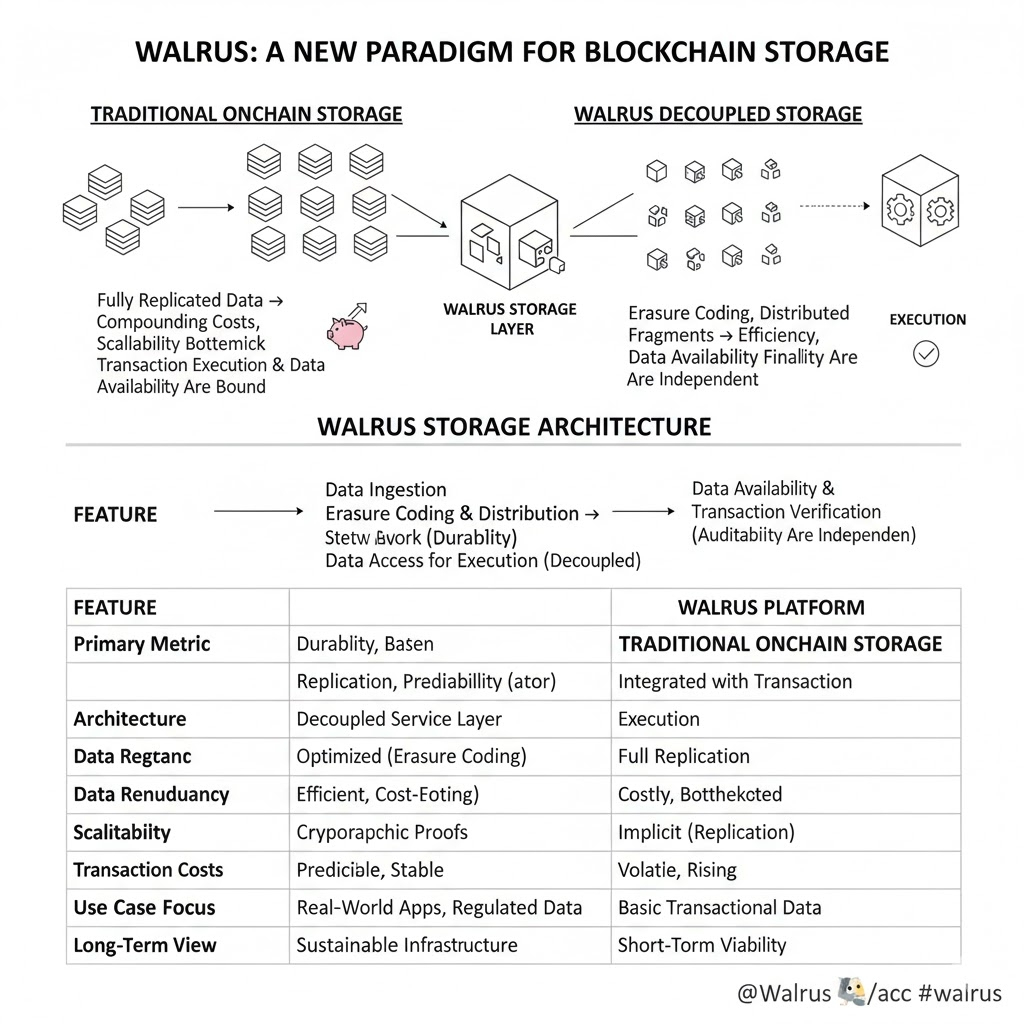
With traditional on chain storage, data is stored in a fully replicated manner, which allows increased confidence regarding the accuracy of the data, but also creates compounding costs for the network as the data volume continues to grow. As the volume of data stored in the storage system increases, so too does the aggregate overhead of storing the data, energy consumption, and operational complexity associated with storing the data. Data from multiple sources show a rapid and steady rise in on chain storage fees over the past few years, especially for blockchains that are frequently used to store large amounts of persistent data. The current pricing environment for on chain storage represents an inherent structural dysfunction. Applications have an increasing need for data to operate effectively, yet the infrastructure necessary to support that need is becoming increasingly difficult to scale as the volume of data grows. What used to be viewed as a secure method of protecting the integrity of data that had been written to the blockchain has become a bottleneck for growth and scalability.
Walrus and How it Disrupts Storage and Definitions of Services
Walrus disrupts storage to be a fully defined service layer, with its own characteristics, motivations and constraints, on top of which a user can execute transactions without the service being globally replicated and available wherever that transaction occurs. Whereas, in traditional execution systems, any given transaction would be supported by a globally replicated copy of all data required to be accessed at the time of execution of that transaction, Walrus defines data availability to be totally independent of transaction finality. Therefore, unlike traditional execution systems, which typically bind execution to a defined storage location, Walrus decouples data availability from transaction finality, thereby allowing optimized storage to focus solely on durability and efficiency and for execution systems to concentrate on data computation and state change.
By allowing storage to define its own constituency space, Walrus provides a platform that allows users to conceptualize their data as independent from the means of execution, similar to how most traditional infrastructures currently bifurcate databases and application logic due to the same constraint on transaction finality at the time of the transaction.
Eliminating Duplication and Maintaining Reliability
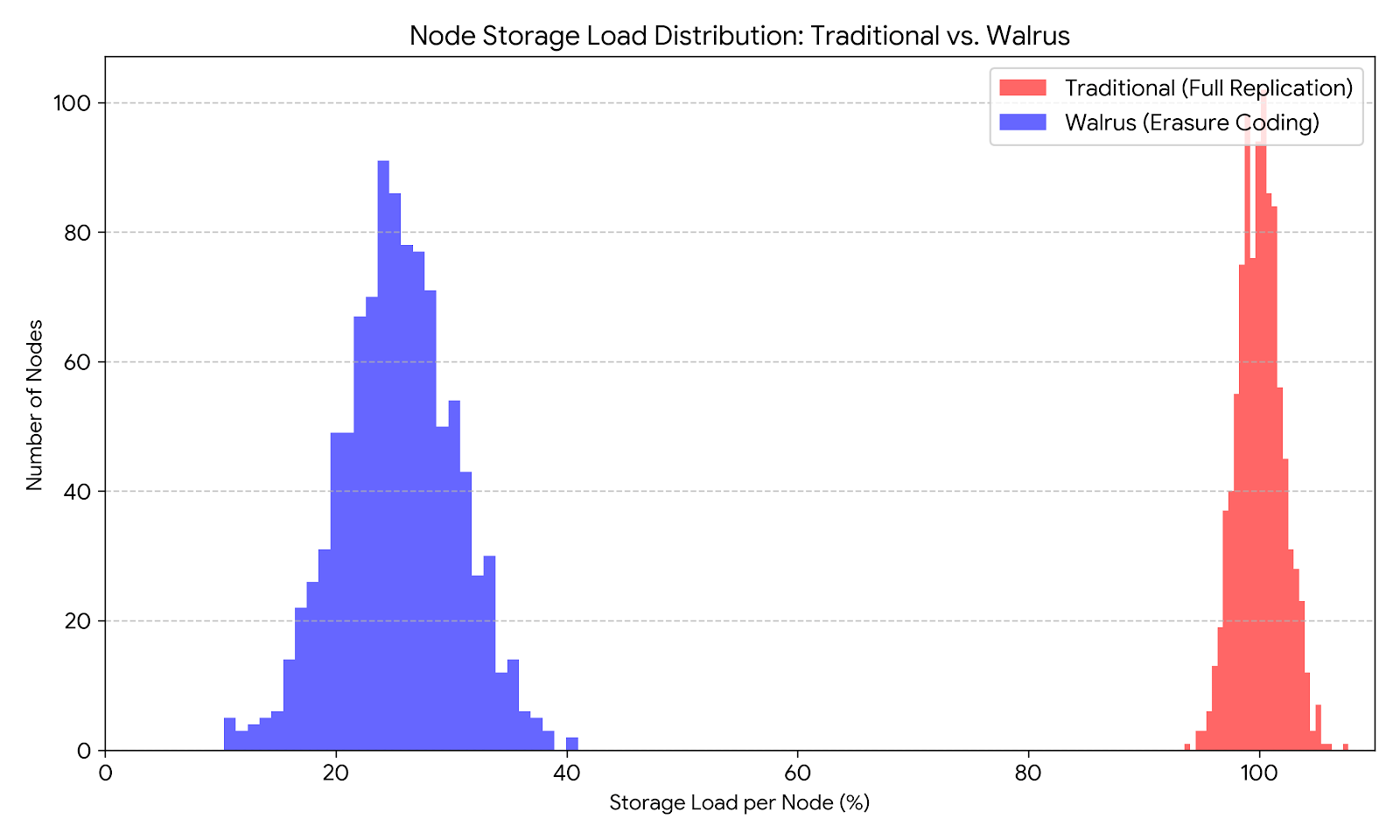
Central to Walrus' model is its premise that endless duplication is not a necessary means of ensuring the reliability of the stored data. By utilising technologies such as erasure coding to break up typically large data files into smaller pieces and distribute them over multiple nodes, it is possible to reconstruct a data file from only a select number of those pieces or fragments. Thus, large amounts of data remain accessible, even if a portion of the underlying infrastructure fails. The advent of Walrus as a sustainable storage service provider marks a significant progression towards removing the burden of the traditional redundant multiple copies.
Measurable and Predictable Operational Characteristics
Infrastructure is functional when it can be reported on and/or verified through processes. Walrus provides such assurance through cryptographic evidence of verified, continuous verification of the existence and availability of data. This allows operators to independently verify that the data they require exists and is being made available in a timely fashion, rather than relying upon unseen processes. As a result, there is a clear audit trail for all activities related to the retention of the record over an extended period of time. The level of transparently provided by Walrus is what differentiates on chain storage from being experimental to being an integral part of any regulated environment where accountability and traceability are a necessity.
Institutional Perception of This Design
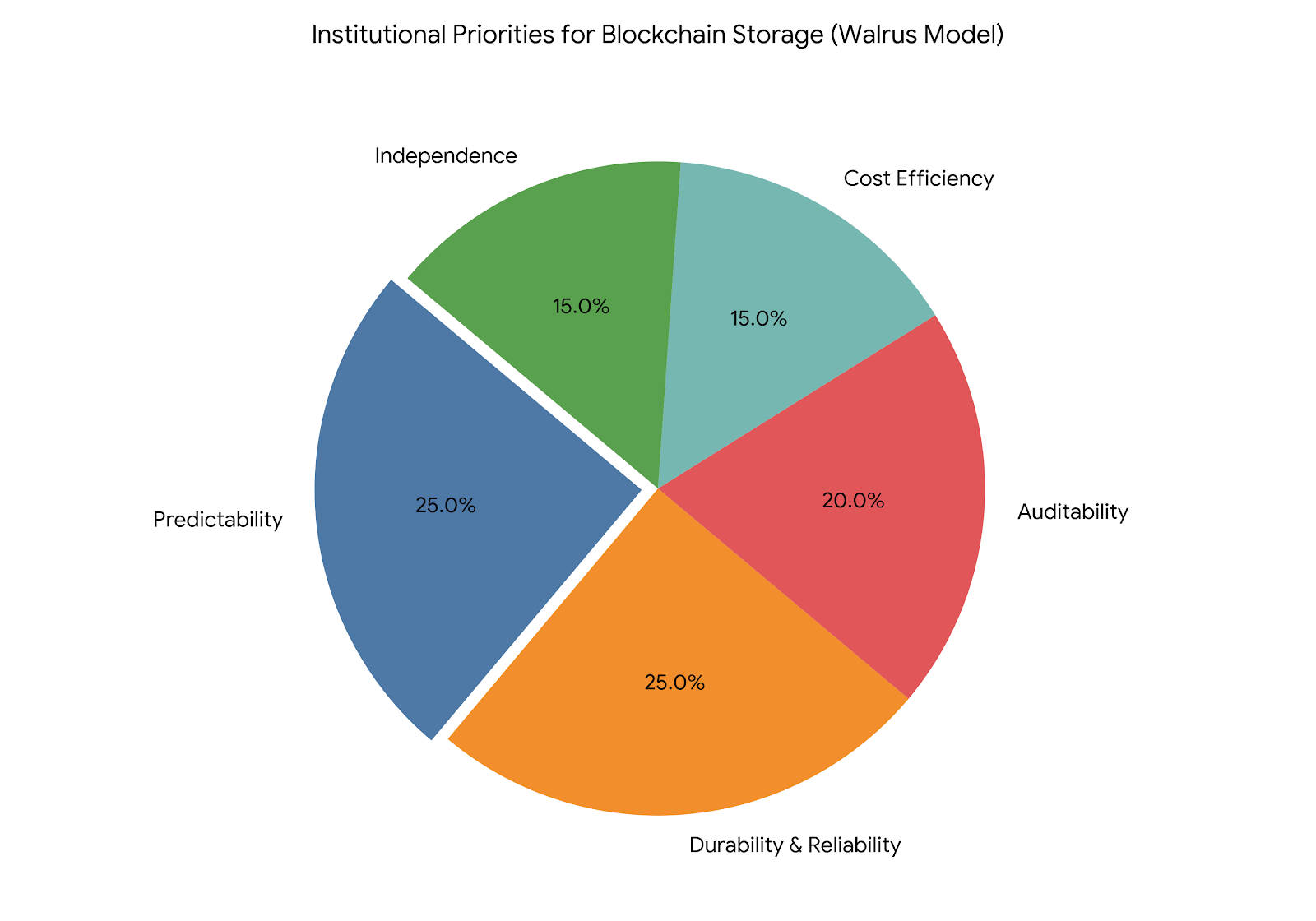
Institutions do not evaluate infrastructure solely on the basis of short term performance, they want predictability, they want the ability to predict their long term costs and the potential for expending operational funds. There are many replication based storage structures that provide inconsistent results in estimating the cost of operating and managing compliance risk. Walrus provides a more stable storage experience, by significantly reducing the amount of duplication and the degree to which any duplication exists in a storage system, it creates storage systems with predictable performance/behaviour over time. Therefore, the predictable nature of Walrus storage systems will facilitate the integration of blockchain based storage systems with current governance, compliance and risk management structures and processes.
Larger Sized Industry Maturity
Walrus not just demonstrates maturing as an industry but embodies changing perceptions of how the blockchain technology community thinks about design. Moving beyond throughput, the focus of the entire industry has shifted to durability, clarity, and usefulness for the long term. Temporary storage is not an adequate solution to address use cases that rely on infrastructure functioning well in the future. Infrastructure must function quietly until an entity returns to use the storage, regardless of the interest that may have existed at the time of original usage. Walrus is a pricing expression of this more mature view of decentralized systems, as it positions storage in the foundational service layer.
This is a necessary evolution for the infrastructure community. A well designed, unobtrusive infrastructure is often indistinguishable from a user's view due to its reliability. When storage systems are developed with attention and focus, they create more comfort and faith from users. Technologies that require ongoing attention to remain functional will have limited value to their users.
Walrus transforms on chain storage into an actual infrastructure product by providing independence, structure and intent for use over time. By reducing redundancy through efficient data transfers, improving auditability and providing for predictable use practices, Walrus has the ability to enable storage to grow in line with real world applications rather than work against them. As the blockchain community continues to make the transition from being experimental to being commonplace, approaches like Walrus will distinguish the differences between systems that collapse under their own weight and systems that are built to last.

