

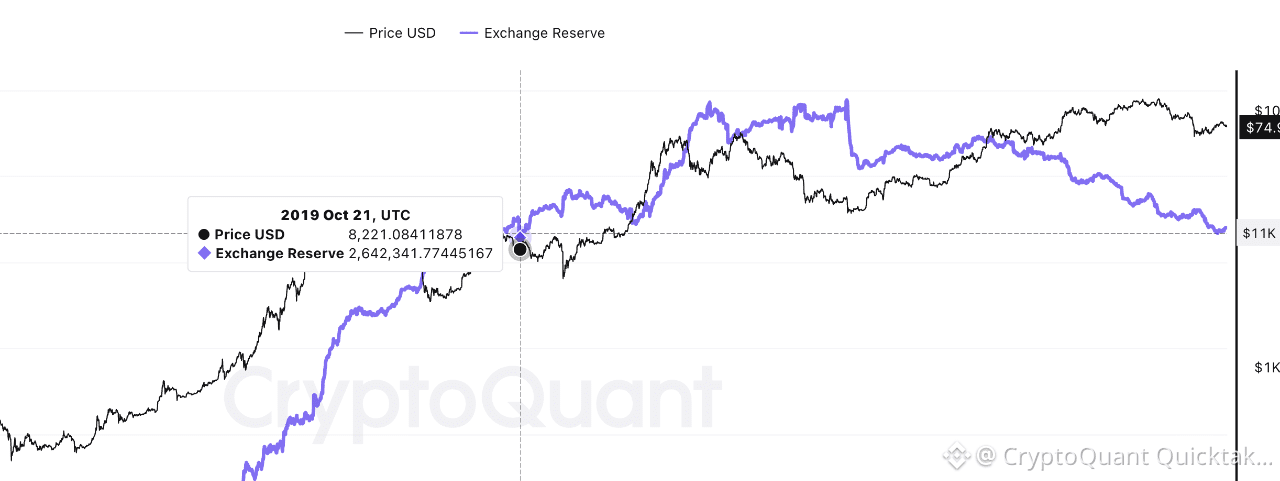
Bitcoin's Exchange Reserve - All Exchanges has fallen to 2,666,753 BTC. The last time this metric stood at this level was August 31, 2019, when BTC was trading at $9,430. Today, BTC trades near $77,300: approximately 8x higher at the same exchange inventory reading.
The 2019 reference is the only comparable data point, but the reserve level alone does not capture the full picture. CryptoQuant's Bull-Bear Market Cycle Indicator tells a different story for each moment:
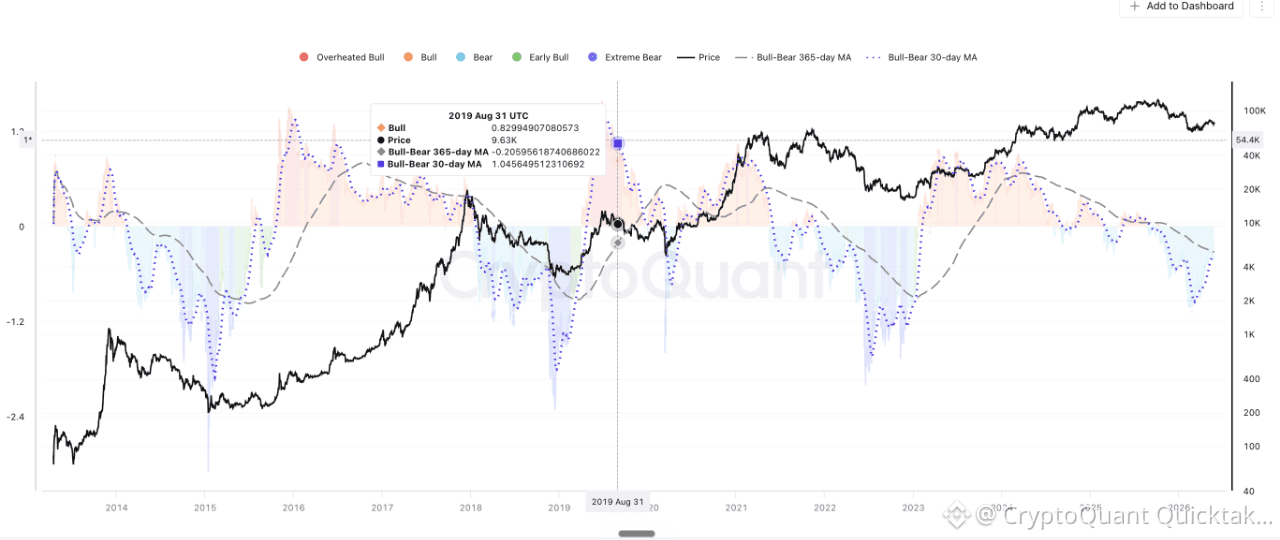
August 31, 2019:
• Indicator: +0.83 (Bull zone)
• 30-day moving average: +1.045
• 365-day moving average: -0.206
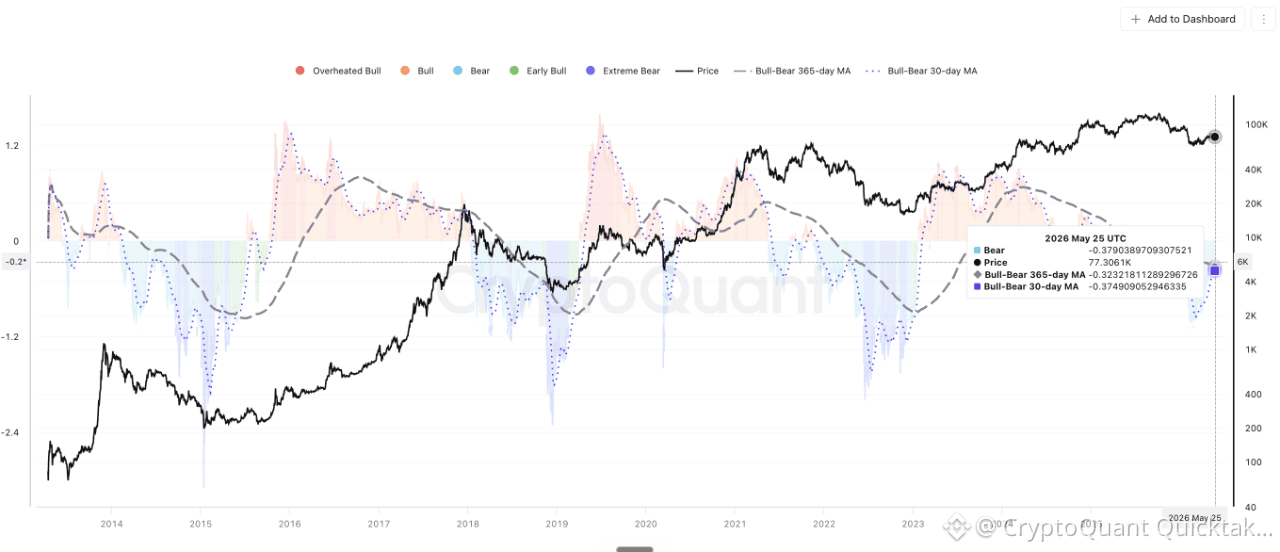
May 2026:
• Indicator: -0.379 (Bear zone)
• 30-day moving average: -0.375
• 365-day moving average: -0.323
A declining Exchange Reserve means BTC is leaving exchange wallets, reducing the inventory available for immediate sale. Supply constraints alone do not drive prices higher: demand must meet the reduced available supply. In 2019, the bullish cycle structure provided that demand context. In 2026, the Bull-Bear Indicator does not yet confirm it. One structural variable that has changed: spot BTC ETFs, approved in January 2024, represent a source of demand that did not exist in August 2019. Exchange Reserve has kept declining throughout the entire ETF era. That structural buyer changes the demand equation. Whether it is sufficient to bridge the gap between supply constraint and demand confirmation is what the current setup is testing.
Written by thechessONCHAIN