
Bitcoin followed the decline of risk assets, with fears about oil supply generating inflation warnings in the U.S., while $70,000 becomes new resistance for the price of BTC.

Bitcoin BTC $345,693 approached $66,000 at the Wall Street open this Friday, while analyses classified U.S. inflation trends as “objectively unsustainable.”
Tightening in oil causes turbulence in the U.S. bond market
Data from TradingView showed the continuation of losses in the price of BTC, approaching 4% on the day and threatening to turn March into the sixth consecutive month of Bitcoin 'decline'.
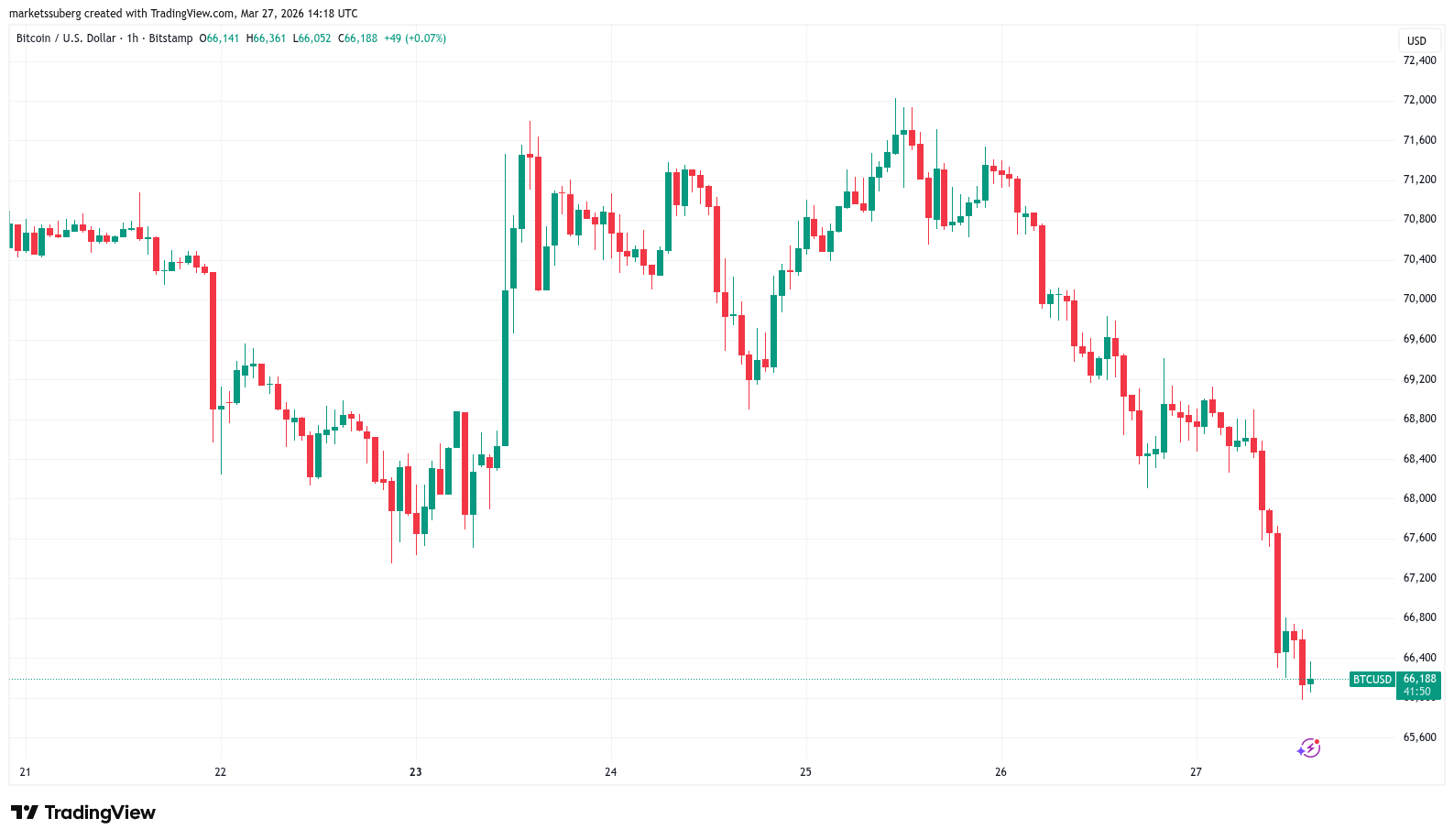 One-hour chart of BTC/USD. Source: Cointelegraph/TradingView
Macro headlines boosted the weakness of risk assets. U.S. stocks opened lower after Iran closed the Strait of Hormuz, raising concerns about global oil supply.
With the war between the U.S. and Iran extending into April, markets showed pressure across all segments, including U.S. Treasury bonds.
The U.S. bond market is in serious trouble today, warned the analysis resource The Kobeissi Letter in a post on X.
Kobeissi highlighted that the yield on 10-year Treasury bonds reached the highest levels since the start of the war, creating a major challenge for the Federal Reserve amid attempts to control inflation while labor market conditions deteriorate.
“In less than a month, markets went from discussing rate cuts to increases, with the base scenario indicating a Fed pause for the next 18 months,” he added.
“It's worth remembering that the Fed had been cutting rates because the labor market was weak, and it remains weak. However, inflation expectations have become an even bigger problem than the labor market. This is objectively unsustainable.”
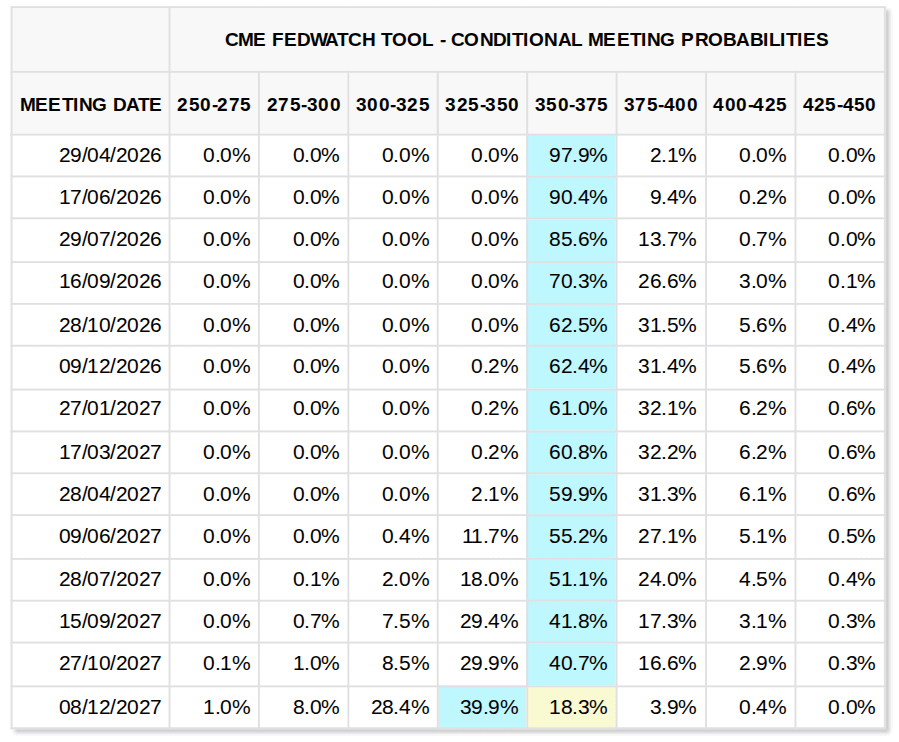 Probabilities of the Federal Reserve's target rate (screenshot). Source: CME Group FedWatch Tool. Macro headlines boosted the weakness of risk assets. U.S. stocks opened lower after Iran closed the Strait of Hormuz, raising concerns about global oil supply.
With the war between the U.S. and Iran extending into April, markets showed pressure across all segments, including U.S. Treasury bonds.
The U.S. bond market is in serious trouble today, warned the analysis resource The Kobeissi Letter in a post on X.
Kobeissi highlighted that the yield on 10-year Treasury bonds reached the highest levels since the start of the war, creating a major challenge for the Federal Reserve amid attempts to control inflation while labor market conditions deteriorate.
“In less than a month, markets went from discussing rate cuts to increases, with the base scenario indicating a Fed pause for the next 18 months,” he added.
“It's worth remembering that the Fed had been cutting rates because the labor market was weak, and it remains weak. However, inflation expectations have become an even bigger problem than the labor market. This is objectively unsustainable.”
Probabilities of the Federal Reserve's target rate (screenshot). Source: CME Group FedWatch Tool. Macro headlines boosted the weakness of risk assets. U.S. stocks opened lower after Iran closed the Strait of Hormuz, raising concerns about global oil supply.
With the war between the U.S. and Iran extending into April, markets showed pressure across all segments, including U.S. Treasury bonds.
The U.S. bond market is in serious trouble today, warned the analysis resource The Kobeissi Letter in a post on X.
Kobeissi highlighted that the yield on 10-year Treasury bonds reached the highest levels since the start of the war, creating a major challenge for the Federal Reserve amid attempts to control inflation while labor market conditions deteriorate.
“In less than a month, markets went from discussing rate cuts to increases, with the base scenario indicating a Fed pause for the next 18 months,” he added.
“It's worth remembering that the Fed had been cutting rates because the labor market was weak, and it remains weak. However, inflation expectations have become an even bigger problem than the labor market. This is objectively unsustainable.”
Probabilities of the Federal Reserve's target rate (screenshot). Source: CME Group FedWatch Tool. Macro headlines boosted the weakness of risk assets. U.S. stocks opened lower after Iran closed the Strait of Hormuz, raising concerns about global oil supply.
With the war between the U.S. and Iran extending into April, markets showed pressure across all segments, including U.S. Treasury bonds.
The U.S. bond market is in serious trouble today, warned the analysis resource The Kobeissi Letter in a post on X.
Kobeissi highlighted that the yield on 10-year Treasury bonds reached the highest levels since the start of the war, creating a major challenge for the Federal Reserve amid attempts to control inflation while labor market conditions deteriorate.
“In less than a month, markets went from discussing rate cuts to increases, with the base scenario indicating a Fed pause for the next 18 months,” he added.
“It's worth remembering that the Fed had been cutting rates because the labor market was weak, and it remains weak. However, inflation expectations have become an even bigger problem than the labor market. This is objectively unsustainable.”
Probabilities of the Federal Reserve's target rate (screenshot). Source: CME Group FedWatch Tool. Macro headlines boosted the weakness of risk assets. U.S. stocks opened lower after Iran closed the Strait of Hormuz, raising concerns about global oil supply.
With the war between the U.S. and Iran extending into April, markets showed pressure across all segments, including U.S. Treasury bonds.
The U.S. bond market is in serious trouble today, warned the analysis resource The Kobeissi Letter in a post on X.
Kobeissi highlighted that the yield on 10-year Treasury bonds reached the highest levels since the start of the war, creating a major challenge for the Federal Reserve amid attempts to control inflation while labor market conditions deteriorate.
“In less than a month, markets went from discussing rate cuts to increases, with the base scenario indicating a Fed pause for the next 18 months,” he added.
“It's worth remembering that the Fed had been cutting rates because the labor market was weak, and it remains weak. However, inflation expectations have become an even bigger problem than the labor market. This is objectively unsustainable.”
Probabilities of the Federal Reserve's target rate (screenshot). Source: CME Group FedWatch Tool. Macro headlines boosted the weakness of risk assets. U.S. stocks opened lower after Iran closed the Strait of Hormuz, raising concerns about global oil supply.
With the war between the U.S. and Iran extending into April, markets showed pressure across all segments, including U.S. Treasury bonds.
The U.S. bond market is in serious trouble today, warned the analysis resource The Kobeissi Letter in a post on X.
Kobeissi highlighted that the yield on 10-year Treasury bonds reached the highest levels since the start of the war, creating a major challenge for the Federal Reserve amid attempts to control inflation while labor market conditions deteriorate.
“In less than a month, markets went from discussing rate cuts to increases, with the base scenario indicating a Fed pause for the next 18 months,” he added.
“It's worth remembering that the Fed had been cutting rates because the labor market was weak, and it remains weak. However, inflation expectations have become an even bigger problem than the labor market. This is objectively unsustainable.”
Probabilities of the Federal Reserve's target rate (screenshot). Source: CME Group FedWatch Tool
As reported by Cointelegraph, oil prices have a significant impact on U.S. inflation trends, while markets also raised recession expectations for 2026.
Inflation expectations have worsened so much that the market is already behaving as if an emergency rate hike by the Fed is imminent, added Kobeissi founder Adam Kobeissi.
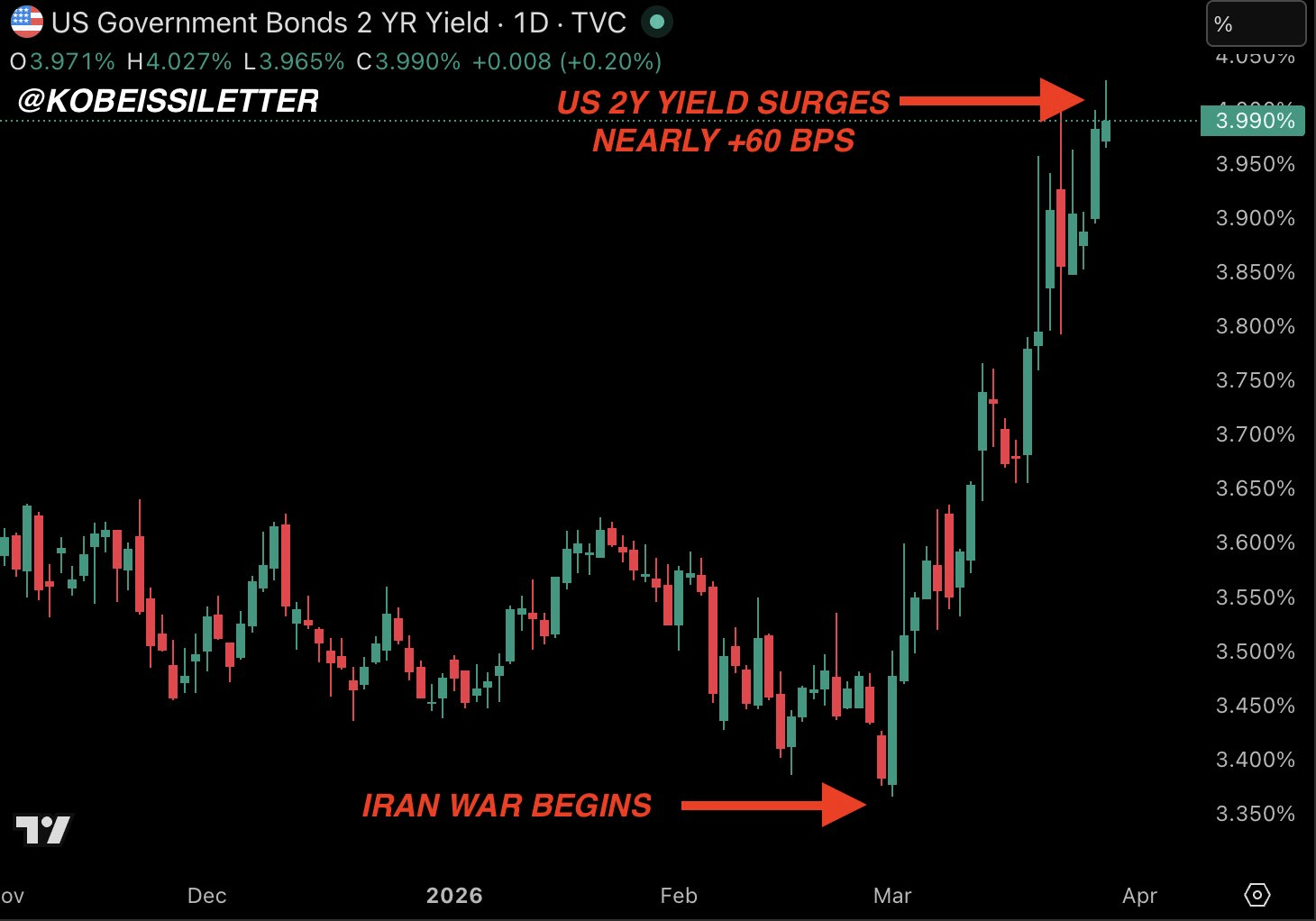 Two-year U.S. Treasury chart. Source: Adam Kobeissi/X
Bitcoin's price resistance consolidates at $70,000
Among Bitcoin traders, sentiment was also cautious, while BTC/USD hovered around its lowest levels in three weeks.
Analyzing the four-hour chart, the trading feature on Telegram Technical Crypto Analyst predicted a “likely” return to $64,000.
“BTC clearly broke its upward trend line and is now forming lower highs below the supply zone between $70,000 and $72,000, confirming a short-term shift to bearish; with the loss of support at $68,000, continuity to the demand zone between $64,000 and $65,000 is likely, and only a recovery above $70,000 would invalidate this scenario,” he stated.
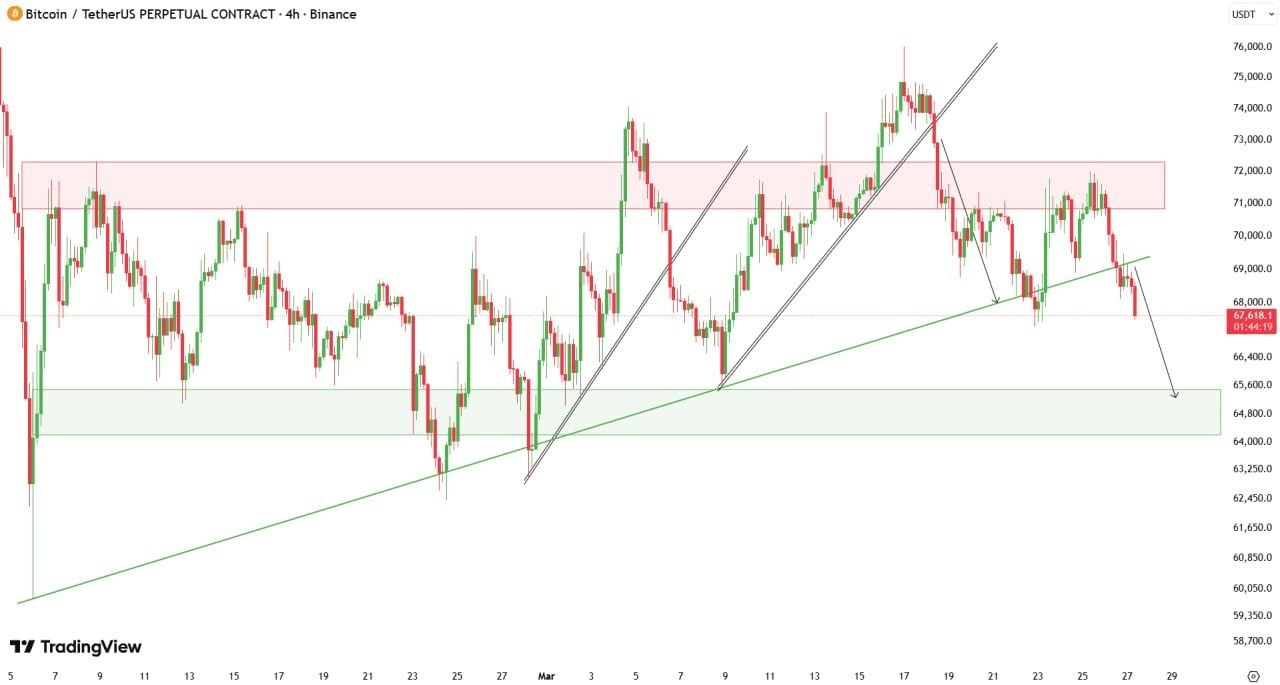 Four-hour chart of the perpetual contract BTC/USDT. Source: Crypto Technical Analyst/Telegram
Data from CoinGlass highlighted the high-risk scenario for the price at March's monthly close, with BTC/USD preparing to record six consecutive months of losses for the first time since the end of the 2018 bear market.
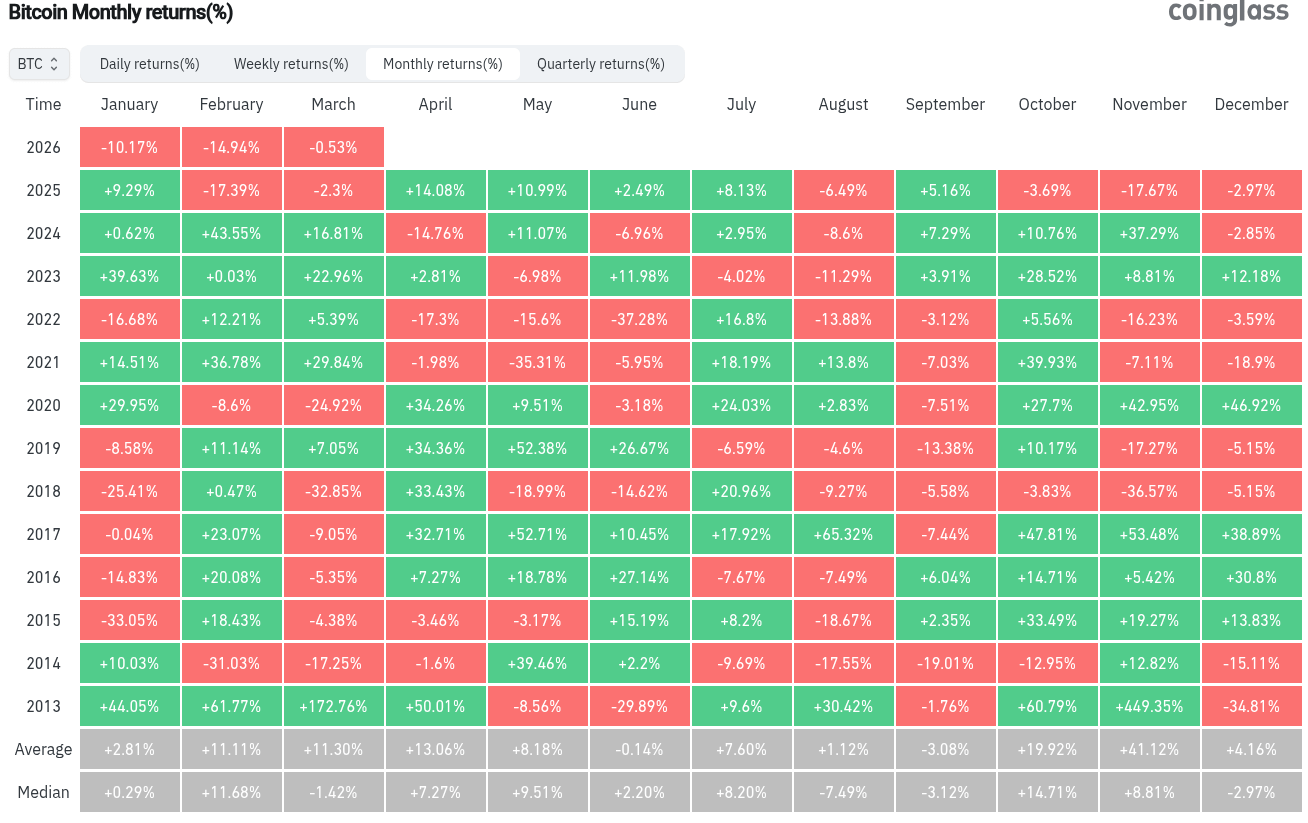 Monthly returns of BTC/USD (screenshot). Source: CoinGlass
“In fact, we see the market reducing risk before the weekend, as expected and as we have observed in recent weeks,” continued trader Daan Crypto Trades.
“Eyes on the low of $65,600 from last Monday. The main area for me remains the low of the range, as there is still plenty of liquidity in that region.”
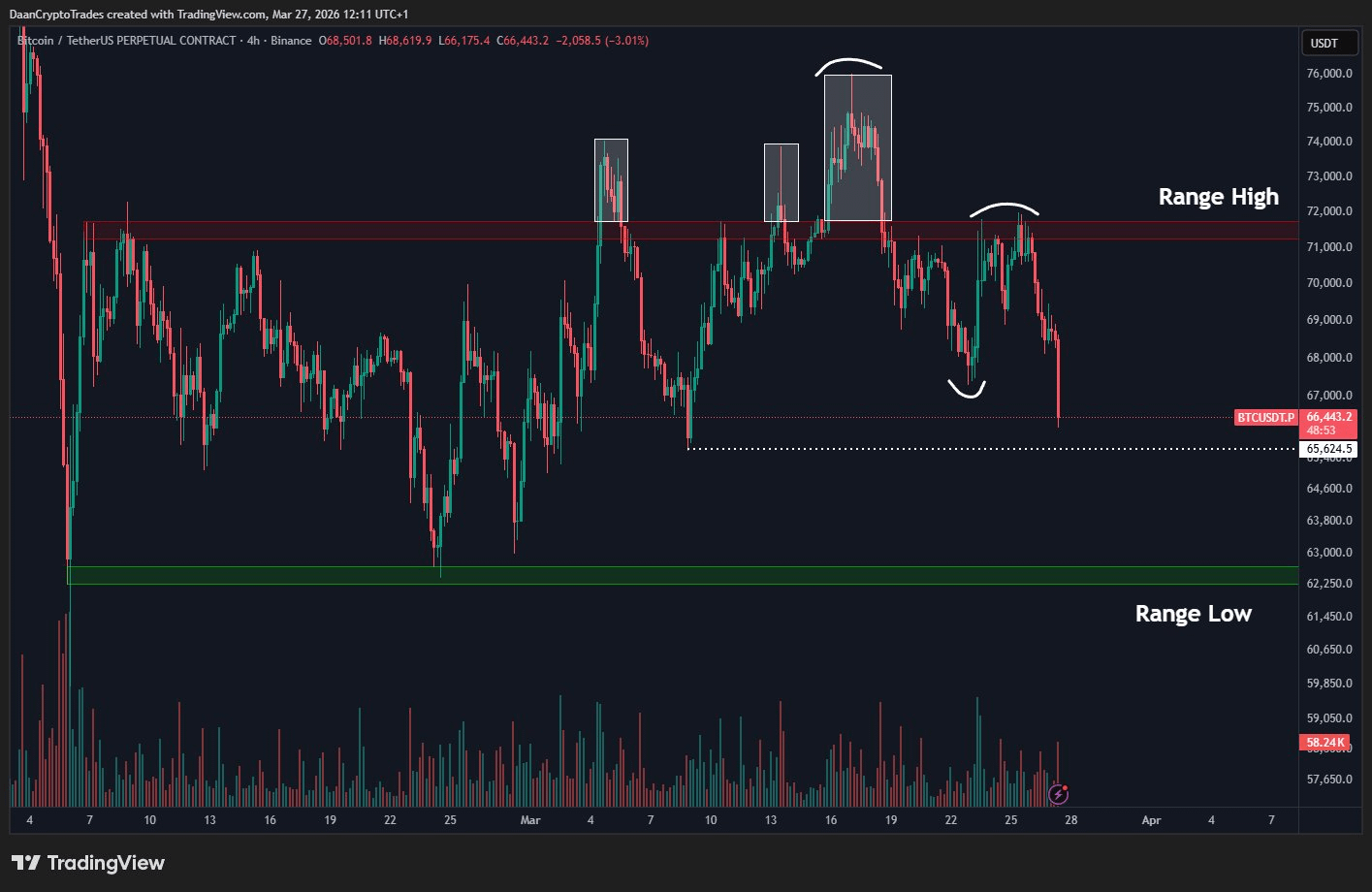 Four-hour chart of the perpetual contract BTC/USDT. Source: Daan Crypto Trades/X
$BTC $ETH $SOL
#Bitcoin #BinanceResearch #Geopolítica #ETFs #RiskScenarios #BinanceSquare #Write2Earn