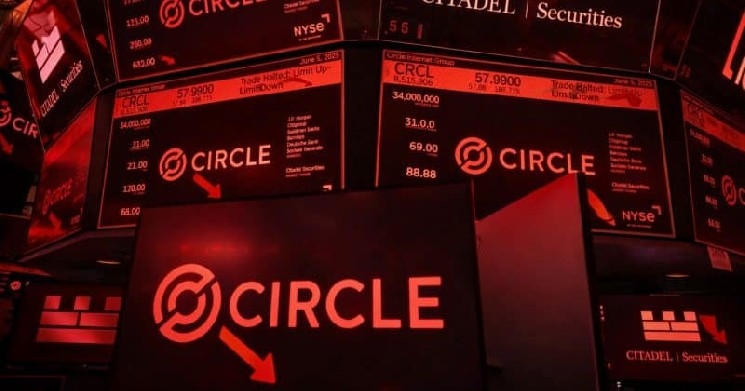
The promise of a friction-less digital dollar just hit a $128-billion roadblock in Washington. On Tuesday, Circle Internet Group (CRCL), the powerhouse behind the USDC stablecoin, watched its market valuation crater by more than 20%. This wasn't a standard crypto dip; it was a violent reaction to the "Clarity Act," a piece of legislation that threatens the very core of the stablecoin business model.
A Revenue Model Under Siege
The primary catalyst for the sell-off is a proposed ban on "stablecoin yields." The bill would prohibit issuers like Circle from paying interest or "rewards" to customers for holding the asset. By effectively turning USDC into a "zero-return" instrument, Congress is stripping away the primary incentive that fueled USDC’s $31 billion circulation growth in 2025.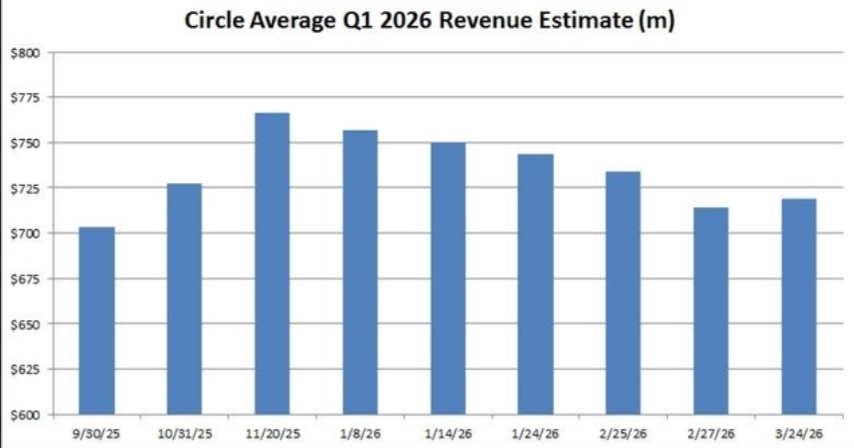
As the chart above illustrates, Street estimates for Q1 2026 revenue have been on a steady decline. The current projection sits near $656 million, as analysts bake in the reality of a "yield-less" future.
Valuation Realities
The crash has forced a brutal reassessment of Circle’s valuation. Even after the plunge, the company trades at more than 91 times its expected adjusted earnings—double the multiple of Coinbase. Investors are now asking if Circle deserves a "growth" premium if it is forced to operate like a traditional, highly regulated financial utility.
Circle’s worst trading day since going public is a loud reminder that in fintech, the stroke of a pen in D.C. can be more volatile than any flash crash.
#Circle #OilPricesDrop #Binance #freedomofmoney #crypto $CRCL $LINK $SOL