
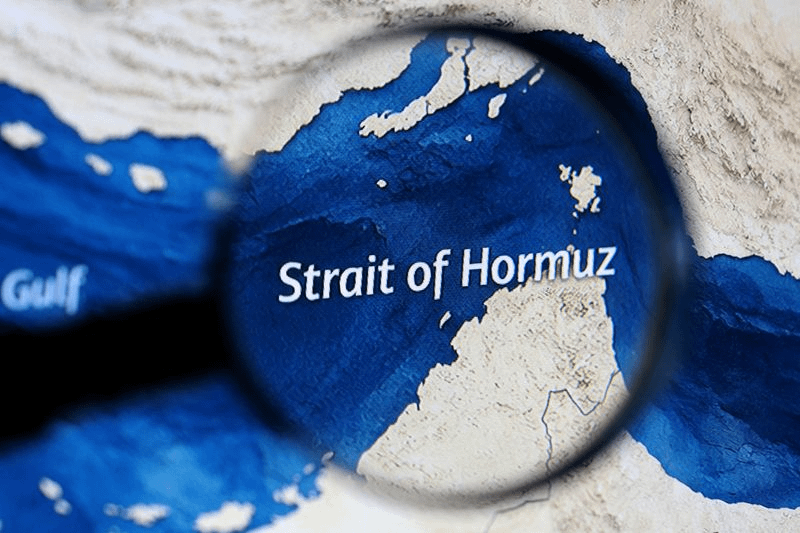
The global shipping industry is cautiously examining the conditions of the US-Iran agreement on the ceasefire. The arrangement aims to temporarily unblock the Strait of Hormuz and allow more than 800 commercial vessels trapped in the Persian Gulf to finally head out to the open ocean. However, market participants are hesitant to send their tankers into the dangerous zone, reports Bloomberg.
The key details of the agreement remain vague, and the statements from both sides directly contradict each other. Tehran claims that it has agreed to provide safe passage for ships for a period of two weeks. The navigation of tankers will be carried out in coordination with the Iranian armed forces and taking into account 'technical limitations.'
On the other hand, Donald Trump announced a 'COMPLETE, IMMEDIATE, and SAFE OPENING' of the strait. In a separate post, he added that the U.S. Navy would 'help disperse the gathering of ships' and 'be nearby' to ensure a smooth flow.
The main intrigues: have the parties agreed to cancel the transit fees that Iran began charging ships, and when exactly does the ceasefire come into effect?
Initially, the news sparked cautious optimism among shipowners. The Japanese Shipowners' Association (the largest industry association) stated that it would carefully review the details of the U.S.-Iran agreement before making recommendations.
However, most players warn: absolute clarity is required to resume navigation, and even in the best-case scenario, restoring full traffic will take a lot of time.
"You can't just take and restart global maritime flows in 24 hours," explains Jennifer Parker, adjunct professor at the Defense and Security Institute at the University of Western Australia. "Tankers' owners, insurers, and crews must believe that the risk has truly decreased, not just been put on pause."
According to the analytics company Kpler, the lion's share of the fleet stuck in the Persian Gulf consists of vessels carrying energy resources. Currently, 426 tankers with crude oil and clean petroleum products, 34 gas carriers with liquefied petroleum gas, and 19 tankers with liquefied natural gas are blocked. The rest are carrying dry cargo and containers. There are about 20,000 sailors on the blocked tankers.
Traders and shipowners are now closely monitoring which specific ships will dare to go through the strait first and how their voyage will end.
#USIsraelStrikeIran , #WorldNews2026
With us (in this group !), as a rule, remain those (subscribers !) who, in search of fresh and relevant news, do not want to browse dozens of different websites and news publications, but can afford to read all the most interesting news in one news feed !!! 😉
Enjoy your viewing !!! 😊
Meanwhile, we will continue the search for fresh and interesting news. 😉