


Bitfinex's latest Alpha report points out that Bitcoin is facing the risk of consolidation as U.S. Treasury yields soar and the economic outlook bleak.
Affected by macroeconomic uncertainty, the price of Bitcoin fell below the $90,000 mark on January 13, and briefly dropped below $89,000.
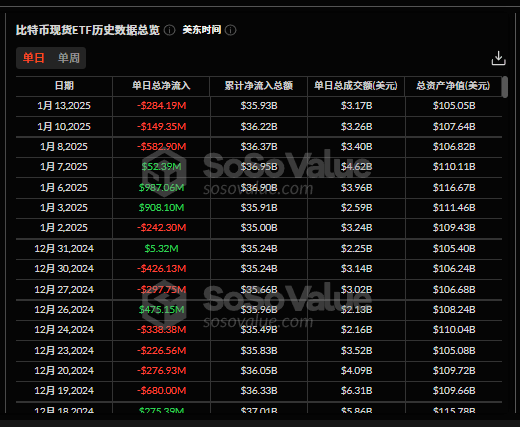
At the same time, the spot Bitcoin spot ETF has shown net outflows for 7 of the past 12 trading days. Although the net inflow of funds on January 3 and 6 was close to $1 billion per day, it reversed on the 8th and 10th, with a total outflow of $731 million.
These changes in capital flows are closely related to macroeconomic pressures, with rising U.S. Treasury yields and changes in the Federal Reserve’s policies being the driving forces behind them.
US Treasury yields and the impact of Fed policy
In terms of treasury yields, the 10-year U.S. Treasury yield reached 4.76%, a 14-month high, which also brought a great impact to Bitcoin. On the one hand, institutional investors prefer bonds rather than volatile assets such as Bitcoin. On the other hand, rising borrowing costs have led to a decrease in capital inflows into the speculative market, increasing downward pressure on Bitcoin prices.

As for the Federal Reserve, the minutes of the Federal Open Market Committee (FOMC) meeting revealed a hawkish tendency, and the unexpected growth in US jobs made hopes of a rate cut in 2025 slim. Financial conditions tightened accordingly, and liquidity in speculative markets such as cryptocurrencies was also suppressed.
However, Bitcoin has historically reacted to these types of changes faster than stocks because it has higher volatility and is more sensitive to liquidity changes. For example, it may take months for stocks to reflect higher yields, while Bitcoin typically reacts within weeks, as seen in previous yield spikes.
Additionally, Bitcoin price trends are closely linked to the U.S. stock market, specifically the S&P 500 Index (SPX). Typically, the correlation between BTC and SPX is most significant in the first quarter, meaning that Bitcoin will continue to reflect the general market trend.
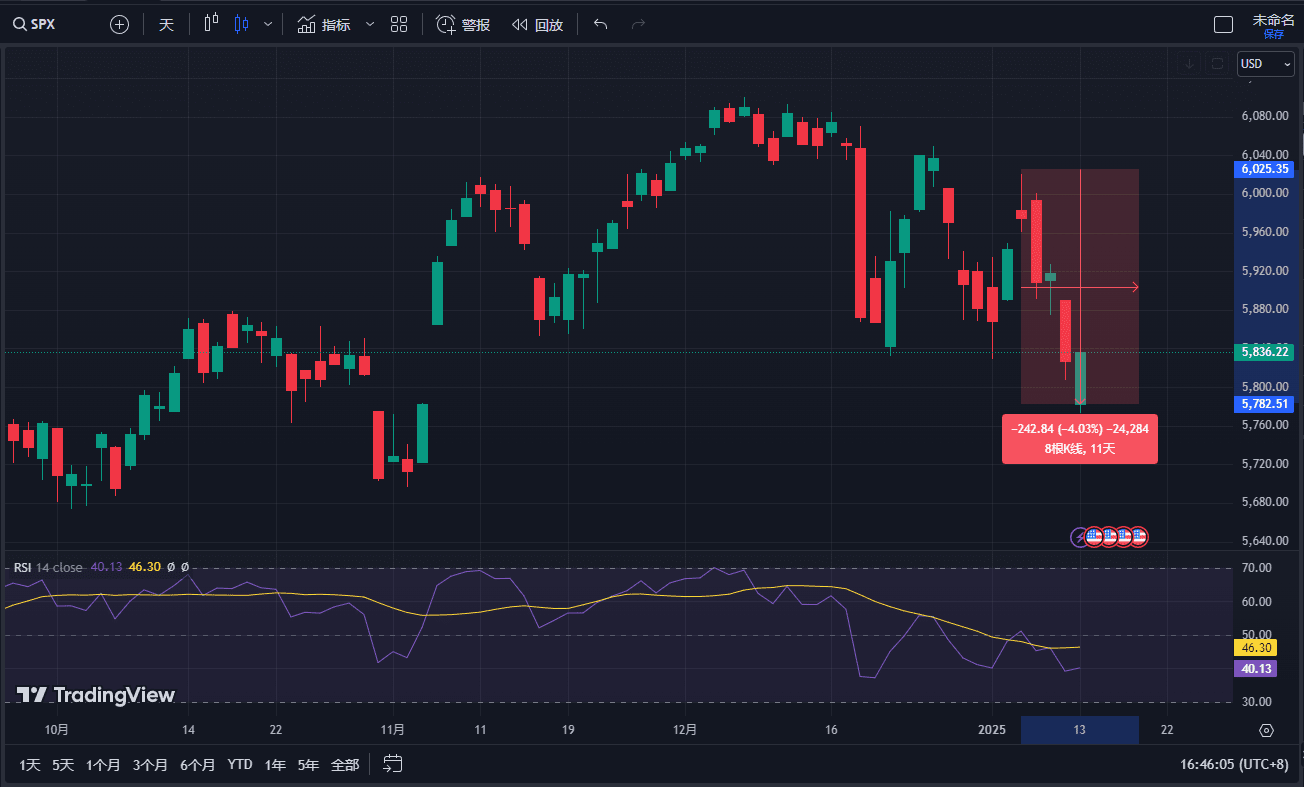
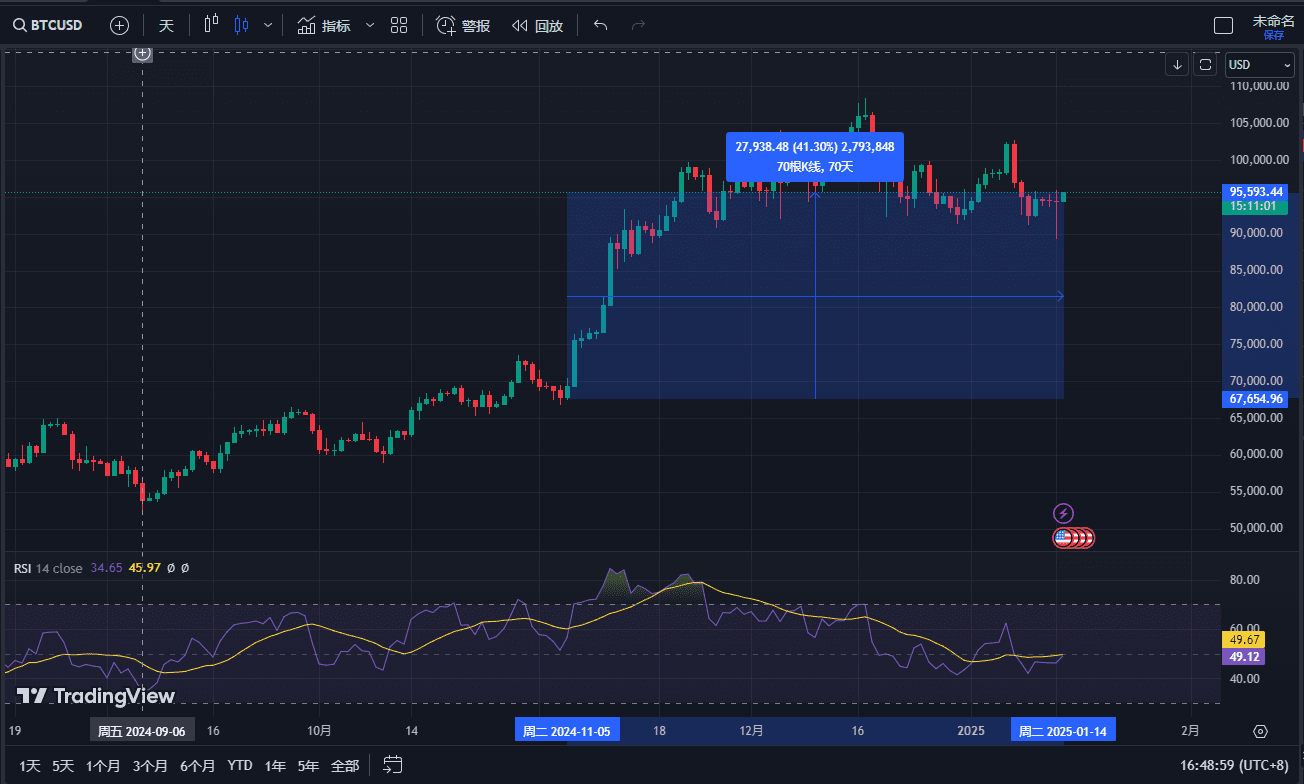
Recently, the SPX has given up more than 4% of its gains in January, while Bitcoin has remained relatively resilient, having gained more than 40% since hitting a low of $67,541 on Election Day 2024. Bitcoin is currently consolidating around the $95,000 support level.
Bitcoin’s relative strength amid macro pressures can be attributed to optimism about potential regulatory changes, particularly the crypto-friendly policies that a new Trump term could bring, which also provides a certain balance to the challenges facing risky assets.
In summary, the current macroeconomic situation is volatile due to rising U.S. Treasury yields, hawkish signals from the Federal Reserve and ETF fund outflows, making the road ahead for risky assets difficult; but Bitcoin is more resilient than traditional stocks, and as regulation becomes more transparent, it is expected to continue to attract investors.
In short, Bitcoin holders currently have to deal with macroeconomic headwinds while waiting for potential opportunities brought about by policy and sentiment changes.
