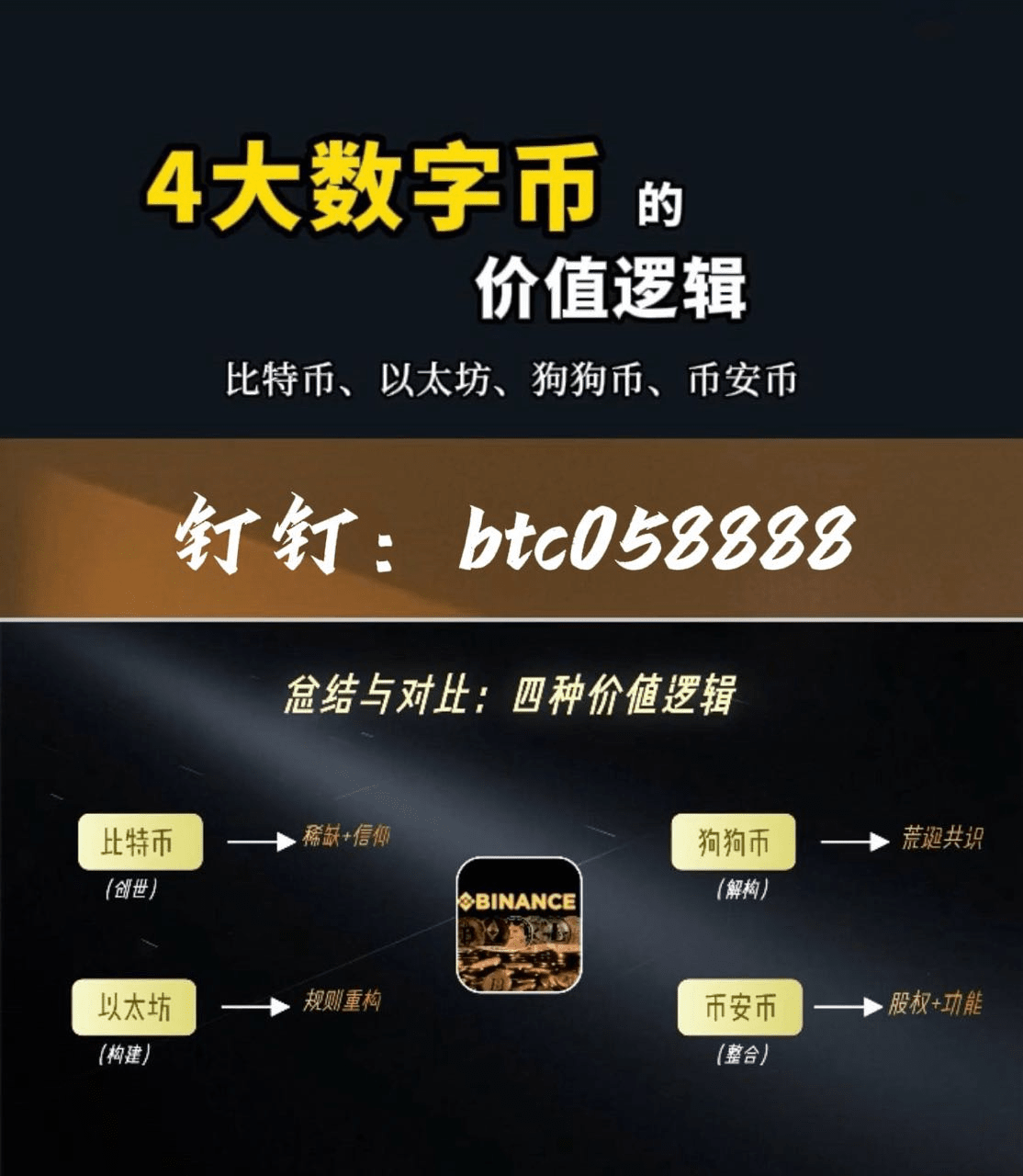
The combined market value of these four cryptocurrencies exceeds 2.5 trillion dollars, higher than the GDP of 90% of countries worldwide and far exceeding 99% of publicly traded companies. They are Bitcoin, Ethereum, Dogecoin, and Binance Coin. How can they, although invisible and intangible, be worth more than many physical enterprises? Is this a victory of rationality or an illusion created by the crowd? How should we view their value? Why do people collectively believe in certain things? These four coins represent four distinctly different value logics.
Bitcoin — Genesis, Scarcity, and Faith. The legend of Bitcoin begins with Satoshi Nakamoto and the unchangeable limit of 21 million coins; its scarcity is written into the code, unaffected by any institution, hence it is called digital gold. More importantly, it is the pioneer of decentralization, just like Van Gogh and his starry night, with countless replicas, but only one original. Economically, it stands on supply and demand. Financially, it has become a hedge asset against inflation. Philosophically, it is an experiment of faith. Every change in the history of currency is a transfer of consensus, from shells to gold to paper money, and now to Bitcoin; its value stems from innovation, absolute scarcity, and global consensus. Thus, from being worth nothing to a million each, to a market value exceeding 2 trillion, it has become the brightest jewel in the crown of cryptocurrency. However, Bitcoin is more like a concept, with limited practical functionality.
Ethereum - Rules and Possibilities. The 19-year-old genius Vitalik Buterin brought Ethereum. If Bitcoin proposed the concept of decentralization, Ethereum implemented it through smart contracts, enabling various decentralized applications. This is a piece of self-executing code that requires no intermediaries and is triggered by conditions. It builds a system that does not rely on trust and authority, becoming the underlying soil for NFTs, DeFi, and DAOs, much like Android in the digital world. The value of Ethereum lies not in scarcity but in ecological prosperity; the more people use it, the higher its value. Economically, it has built an application network, while financially, it charges tolls to the decentralized version of Nasdaq. Philosophically, it challenges traditional systems—what would happen if society operated on code rather than trust? Ethereum has truly turned decentralization into an actionable reality. Most cryptocurrencies and applications are built on Ethereum, and once assets enter your wallet, no authority can easily take them away. You might say that Ethereum indeed has practical value, and I can understand that, but the next Dogecoin may once again overturn your understanding of value.
Dogecoin - Absurdity and Culture. There is no coin more absurd than Dogecoin, as it originally started as a joke. In 2013, Adobe programmer Billy Markus was discontented with the speculative frenzy in the cryptocurrency community. He sarcastically remarked that Bitcoin was nothing special; anyone could create a coin. So he created Dogecoin using a Shiba Inu as its logo. He then distributed these coins worldwide, not believing they would ever be valuable. In 2015, he sold all his Dogecoins in exchange for a used Honda car. Little did he know that this joke would later have a market value in the tens or hundreds of billions. However, it had almost no technical or practical value, relying solely on absurd consensus and, with Elon Musk fanning the flames, Dogecoin soared mindlessly. Attention drives value. Dogecoin is the epitome of an emotional economy, affirming that emotion is indeed value in economic terms, and in financial terms, it is purely an emotional asset. Philosophically, it has become a footnote of absurdism—just as life can be absurd, so can value. It reminds people with a sarcastic smile that value is not necessarily rational; it can come from cultural resonance or even just a joke.
bian Coin - Bridging the centralized and decentralized worlds. Bian is the largest exchange in the crypto world. When digital currency exchanges were just emerging, there was a joke circulating that decentralized coins were traded on centralized exchanges like Huobi and Binance. Isn't that ironic? But in reality, it is not contradictory; people need both the convenience of trading and absolute control over their assets. Quick trading on centralized platforms allows assets to be stored on decentralized chains for self-custody at any time. When Bian was born, OK and Huobi were already at their peak, making it difficult to break through the competition. The design of Bian Coin not only helps raise funds but also builds a commercial ecosystem, locks in users, and enhances competitiveness as its core strategy. Soon, Bian's daily trading volume reached a peak of hundreds of billions of dollars, and even with a transaction fee of only 0.1%, daily revenue could reach as high as 100 million USD. At that time, Huobi and the current CoinBase had not yet launched platform coins, which might be one reason for Bian's rapid development. Bian Coin is like the 'universal key' of the Bian ecosystem; it can offset transaction fees, participate in wealth management, and access various applications. Its value comes from centralized functionality, much like shopping cards or airline mileage points; the larger the platform, the more stable the price. It acts like a points system, giving the platform stronger wings. In finance, it is similar to quasi-equity, appreciating as the platform grows. It tells people that the token model of functionality and equity can attract more people to participate in projects at low cost, leverage resources, and ultimately become a giant in the industry.
The value sources of these four coins are completely different. Bitcoin redefines value storage with scarcity and belief, Ethereum explores code-driven society with rules and possibilities. Dogecoin structures the rational hypothesis of value through absurdity and culture, while Bian Coin powers the platform with functionality and equity. They are not just coins but four large-scale human experiments about money, credit, and meaning.
In the next decade, who will dominate value? Who will prevail? Is it scarcity? Is it systems? Is it absurdity or practicality? The answer may not be a single choice; the future is more likely to be a composite picture, where belief and rules coexist, absurdity and culture dance together, and equity and functionality soar together. The digital age is continually broadening the boundaries of value while also posing an ultimate question: is value logic or illusion? The stories of these four coins are essentially about humanity's ultimate values. When we gaze at them, we are also gazing at our own future.#加密市场反弹