#美联储FOMC会议 #加密市场反弹 #加密市场观察 Look at the truth of things from the perspective of crime
Analyze the essence of the case from a human perspective

Today I won't talk about tutorials, but only about the difficulties and barriers you will encounter, to see if you have the ability to solve them one by one—when you truly overcome all the difficulties, you will naturally be able to make money.
From the perspective of time nodes, the cryptocurrency trading business really started to scale up at the end of 2017. Although there were off-exchange traders like Zhao Dong before that, it has already been 8 years. An internet money-making model has survived for eight years; how much space do you think is left?
Now you’re finally realizing you want to get involved; to be honest, it's a bit late.

The basic logic of a coin dealer is: buy USDT at a lower price, then sell it at a slightly higher price, with the difference being the income.
So the question arises, how do you get USDT at a low price? Most coin dealers rely on exchange flow and queue to purchase through OTC orders. When retail investors want to sell coins, the platform will match the order to the merchant, and the merchant will pay the seller.
The profit from this operation is about 2 to 3 cents per U, which means if you have 1 million in deposits and 1 million in withdrawals, you can earn 3,000 yuan.
Sounds good, right? 3,000 a day, in a month you could earn a six-figure income…
But problems often arise in areas that 'seem fine': can your personal bank card really handle daily transactions of around 2 million?
As for using your own and family members' WeChat and Alipay for receiving payments? Don't dream; all accounts will be frozen in less than a week.
Assuming you have resolved account issues, the next challenge will be: how to avoid 'black money'?

Five years ago, our team had already figured out the risk control system, and the awareness that coin dealers should possess is something retail investors should also learn, as this is the most direct way to understand how black money flows into your card.
To understand black money, you first need to know its operational essence: once a victim is scammed, the moment the money flows out of their card, it must be transferred within a very short time. The runners and card users will constantly maneuver within minutes or even dozens of minutes; as long as the funds stay in a certain account for too long, they could be judicially frozen.
Therefore, black money will never stay in the card overnight. This has also derived the most basic anti-black skills of coin dealers: check the transaction flow.
If you want to buy coins from me, I will first check if there are large amounts of money suddenly entering your account in a short time, because most current consumption scenarios do not require bank transfers.
If your bank statements show characteristics like 'large amount of money entering in a short time → rapid withdrawal', I will directly refuse this order.
A qualified coin dealer would choose accounts that have stable balances, no unusual deposits for a week, and records of normal living expenses (takeout, taxis, shopping) as partners.
This can at least filter out the vast majority of risks related to 'level two or above'.

However, to guard against '一级黑资', that is a technical task. Many coin dealers stumble at this step, hence they can at most avoid level two related cases, while often being helpless against level one cases.
Their so-called review method is just to see if the other party is real-name verified, but this trick is completely ineffective against 'pig-butchering three-party scams'.
Let's first discuss how these scams operate:
Victims typically linger for more than ten days in a carefully designed romance or investment scheme, where the other party asks them to register an account on a false investment website.
At this time, the scammer holds all of the victim's personal information: identity information, phone number, bank transaction history, etc. The scammer will then use this information to register on exchanges, communication software, and various withdrawal platforms.
When contacting coin dealers again, if they see that the real-name verification on the exchange, WeChat, and the payer all match, they will think it's the other party operating, and then they will take the money and release the coins. The scammer will immediately transfer the coins away.
By the time the victim discovers the problem, the coin dealer already holds 'first-hand black money'.
Many coin dealers will say: 'I obtained it in good faith, and I verified the identity; the other party indeed paid with their real name.'
Ridiculous—your review process does not constitute substantial verification; many victims do not even know what Binance or OKX is.
So how do we crack down on third-party scams?
Nowadays, almost no coin dealer has a complete method. The real key lies in:
You need to clarify whether the victim was scammed out of money or coins.

When a coin dealer fails to fulfill their review obligations and sends coins to a scammer's address, if the victim pays but receives nothing, that is 'scammed out of money'.
But if you send coins to the victim themselves, and they then transfer the coins out and get scammed, that means they were 'scammed out of coins'. At this point, you are considered to have obtained it in good faith—because the money and the goods have been genuinely exchanged.
So how do you ensure that the trading counterpart is indeed the person?
It's not just about looking at an ID card. A photo of an ID card can be casually sent to you by a scammer.
There are only two truly effective methods:
First: full video recording and dual verification
Like banks selling financial products and insurance, there is full process recording.
If you can do this, you can confirm that the person you are trading with is a 'real person', not an identity simulated by a scammer.
Second: face recognition real-name authentication (mini-program verification)
Our previous internal class students have all used this method, but I have never made it public.
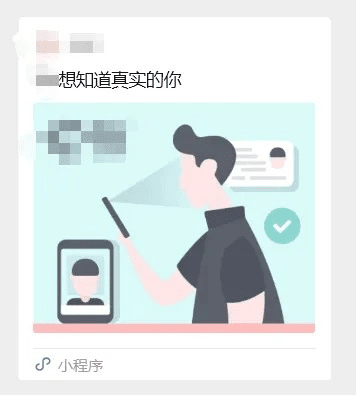
You send the authentication mini-program to the other party, and after they perform face recognition, the result will be directly fed back to the mini-program. The data verification comes from an authoritative entity's real-name database, making it very difficult to fake.
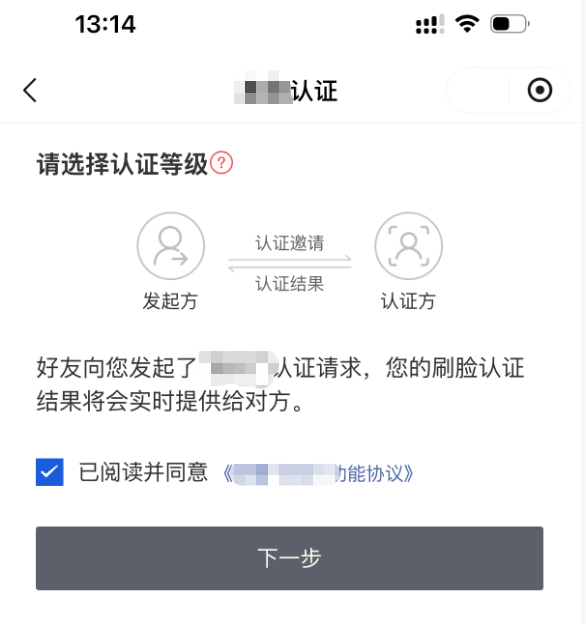
But that’s not enough; you also have to confirm that the other party's wallet address is indeed controlled by them—
You can require them to undergo real-name verification on exchanges, screenshot wallet ownership, show phone installation status, and even directly ask 'Is this address solely under your control?'.
After multiple verifications, you obtain a complete and real identity of the purchaser and actual control over the coins.
Finally, have the other party confirm receipt of the coins and provide a written commitment that any subsequent losses, fraud, etc., are unrelated to the seller.
As long as you keep all records intact, you can truly say you’ve entered the realm of 'coin dealing'.

When you have resolved the resources for the receiving account, mastered risk control methods, and understood legal boundaries, you may ask:
So how can you really make money?
The answer is simple yet the hardest:
Channels determine pricing; you can either buy USDT at a low price or sell it at a high price.
But this industry is different from others; there is no information gap.
If the market price is 7 yuan for USDT, and you insist on selling at 7.02, then most likely the money you received is black money.
So you can only find buyers who are 'selling at market price' or 'leaving 2 cents profit'. Otherwise, find a lower-priced sourcing channel.
But why would others sell to you at a low price?
You must provide sufficient security—such as promising a full refund for frozen cards without conditions, and not just saying it, but genuinely being able to provide hundreds of thousands in cash for compensation.
Almost no one can do this online. Most will directly block you after an incident, saving more than losing money.
Thus, you face the barrier of 'trust'.
How to establish trust? The simplest way is to create content and build a media presence.
By this point, you will realize that this industry has actually formed a complete closed loop.
Finally, let's sort out the resource combination you need:
Financial strength, bank account relationships, connections, low-cost sourcing channels, safe selling channels, legal knowledge, ability to解除风控, media operation ability…
Any one of these could allow you to thrive in society, yet you're thinking of combining all these abilities just to be a coin dealer?
Are you brave or just a bit overconfident?
Do you still have confidence in saying you can be a coin dealer?
The courses on the market that charge you 100,000 for teaching OTC do not have as much content as this article.
About Dayi
Dayi, the founder of the Dayi Blockchain (Chongqing) Legal Consulting Center, has been in the media industry for nine years, with seven physical stores in Chongqing, and five years of experience as a coin dealer across major exchanges. A firm believer in Bitcoin, he has helped fans successfully appeal for the unfreezing of hundreds of bank accounts related to coins and successfully appealed for dozens of individuals on the blacklist of two mistakenly frozen cards!