
What trading pursues is not absolute reliability, but relative reliability. Seize opportunities at the minimum cost, rather than seeking perfect opportunities without cost. Those who do not accept the cost of risk will never be able to seize opportunities.
Especially in secondary pullbacks, it's not about making trades only when a small-level reversal is 'certain'. Certainty requires consuming space; when is the trend most certain? It's most certain when it has already emerged, but has it already emerged, and is there still an advantageous position?
Rather, when signs appear that a pullback is about to end, we must pay close attention, and then if you have a 50 to 70 percent confidence, you can take a chance. A good market condition has a 70 percent chance, while a bad market condition may only have a 50 percent chance, but so what?
Always believe in one thing - as long as you dare to take action, there will be opportunities!
From a technical perspective, understanding seven parts is about grasping it, which means that in certain strong trends, the expected sentiment is strong, and as soon as the price pulls back, countless people think it 'becomes cheaper' with a strong willingness to buy supporting the price. Thus, the pullback will be very orderly, and the endpoints and secondary reversal patterns will be expressed very clearly, making it easier to trade.
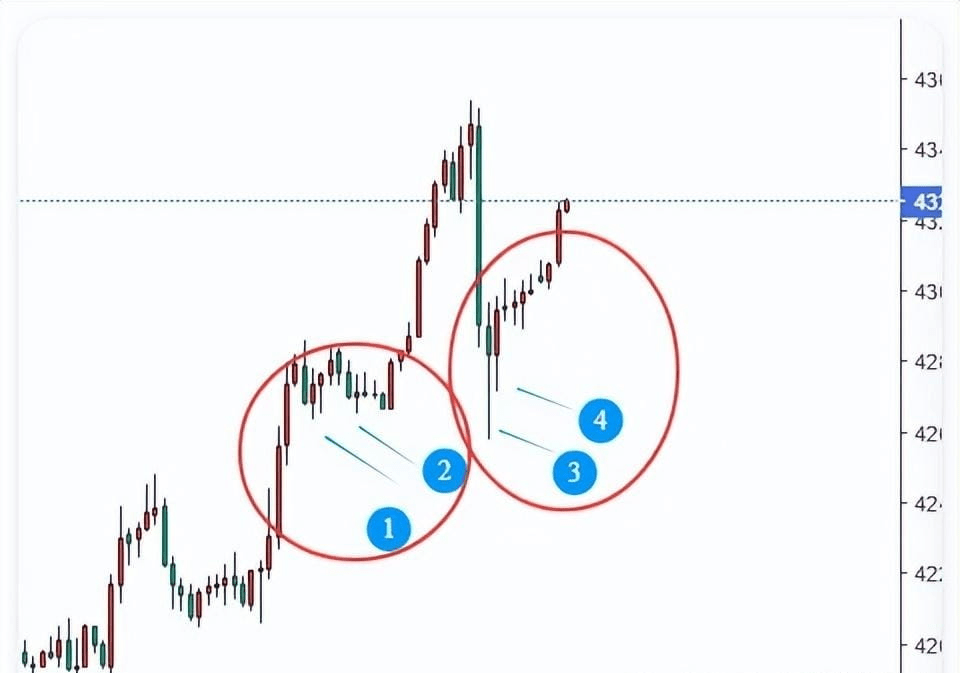 It has a very significant characteristic: the first lowest point of the pullback is basically not broken, just like in a bullish trend, the low points of secondary pullbacks are gradually raised, eventually forming a regular consolidation structure, and then breaking upwards. The effectiveness of secondary reversal signals in this type of movement is very high.
On the contrary, if the first low of the pullback is always broken, then the scope of the pullback is likely to shift, even evolving from a regular consolidation into a phase of wide fluctuations, manifested as back-and-forth sweeps, increasing the probability of tail break failures.
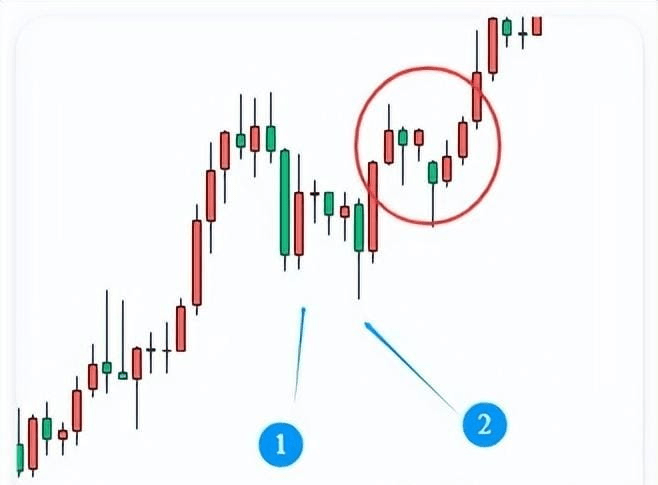 So this is also a very significant characteristic: whether the first low has been broken determines whether the pullback structure is regular, and whether the tail signal is reliable or not.
In trading, you need to think. You should analyze the expected strength behind the graphical structure itself, the rule that the first low does not break represents that the trend sentiment is still there. If the first low is broken, it indicates that the trend sentiment may be somewhat weakened, and the effectiveness of the tail reversal signal will decrease.
That is to say, we can only decide which trends to participate in, and cannot accurately predict the trends. Moreover, many times you are only controlling the probability of loss orders, which does not affect certainty.
Essentially, it is a cost and choice problem of 'losing one out of two' or 'losing one out of three or four'.
Things that can be attributed to costs do not count as issues; at most they are just loss orders. You need to have confidence in managing risks.
Moreover, whether to act or not also depends on the situation. Suppose someone successfully placed a bottom order at the beginning of the trend, completed one or two additional positions, and without the urgency of missing out, they should pursue the stability of their positions.
Take fewer risks and avoid unstable signals to prevent excessive speculative emotions and greed from affecting your state.
Some people do not have bottom orders to cushion them; what should they do? They inevitably need to take more risks to catch the trend and cannot give up any entry signals, because giving up once means possibly losing out on a big segment of the market.
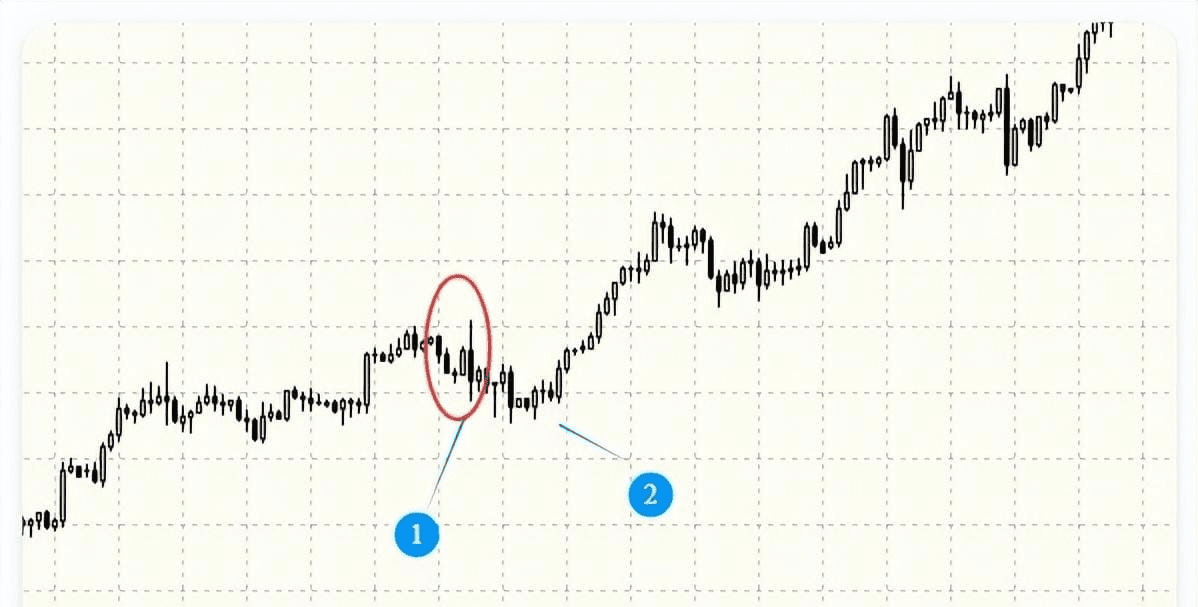 If, due to a failure at position 1, you give up executing signal 2 or subsequent signals, then in the absence of a bottom order, you are likely to miss the subsequent bullish market for more than half a month.
How did the trend market in the past half month come about? It was obtained day by day during the previous fluctuation period!
The cost for trend traders to miss the trend is much greater than a few loss orders. Friends who like to discuss 'best signals' should not forget this point. The idealization of signals requires 'giving up secondary opportunities' in exchange.
That is to say, since the regularity of the pattern determines the probability of loss orders, it is something related to risk control, and ultimately it is a secondary matter in trend trading.
What is most important? The most important thing for trend traders is to never be empty-handed in a trend!
Study it; reaching the end is also a method of controlling frequency and risk. If not done well, it can lead to extreme conservatism; losing is not a matter of ability, making a profit is the goal.
You need to consider how to catch the trend, even if it involves risks, you must place your orders to avoid wasting the costs of waiting in months of a fluctuating market, this is the most critical thing.
This is what I often say about 'the importance of bottom orders'. Successfully placing a bottom order during the initiation phase creates a good premise for subsequent trading, and then it’s about self-control and position management.
And without a bottom order, then 'how to place a bottom order' is the most important thing. At the same time, due to the trend accelerating into a high volatility period, the rigorous requirements for the graphic should be appropriately relaxed, and quickly securing the bottom order is key.
Otherwise, the cost of trial and error in a fluctuating market cannot be recovered due to excessive caution in a trending market, which is the most erroneous thing. A single or a few loss orders can only represent a temporary result, while missing out on a major trend may lead to a year of trading failure.
This is what I often say, when doing analysis, the most important thing is to find the main driving factor of the market. Once you understand it, you can maintain your trading position. And in trend trading, the most important thing is the bottom order; only with the bottom order can there be anchor points and prerequisites for a series of subsequent additional operations.
We must always focus on solving the main problems and not be distracted by secondary issues!
I am Little Egg Tart, a professional analyst and teacher, a mentor and friend on your investment journey! As an analyst, the most basic thing is to help everyone make money. I will solve your confusion, position issues, and speak with strength. When you are lost and do not know what to do, pay attention to Little Egg Tart, and I will point you in the right direction #比特币波动性 $BTC
