
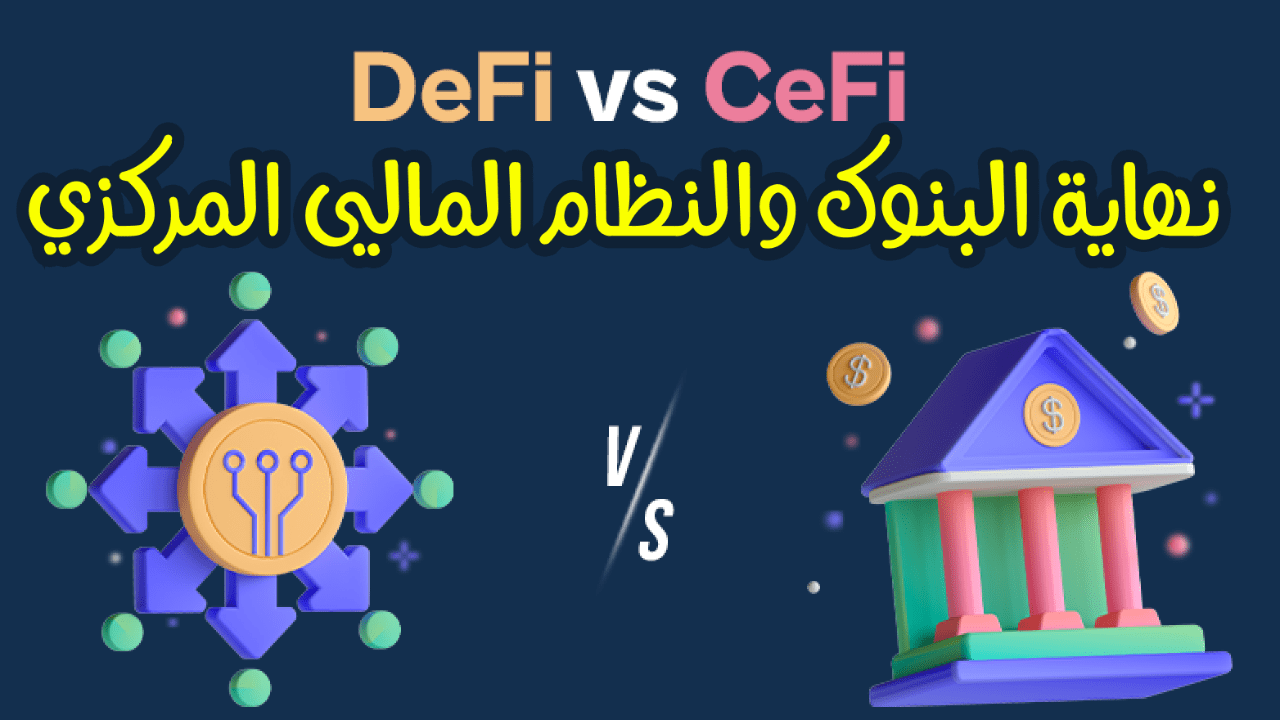

the introduction
With the advent of Bitcoin, trading platforms played a vital role in matching buyers and sellers of digital currencies. Without these forums, which attracted a user base from all over the world, the amount of liquidity would be much less, and there would be no way to agree on the correct price for assets.
Previously, this field was subject to the control of central authorities. However, the currently available technologies that are witnessing rapid development have contributed to the emergence of many tools, the number of which is increasing day by day, and that support decentralized trading operations.
In this article, we will explore decentralized trading platforms, which are cryptocurrency trading communities where there are no intermediaries.
Definition of decentralized trading platforms
In theory, any peer-to-peer exchange is a decentralized trading process (read, for example, an explanation of currency swapping). But in this article we will focus on one of the platforms that matches the functions of central trading platforms. The main difference is that its backend is on a blockchain. No one has custody of your money, and you do not have to trust the trading platform as is the case with centralized platforms, if not at all.
How central trading platforms work
In a traditional centralized trading platform, the user deposits their funds – either in the approved local currency (via bank transfer or credit/debit card) or in digital currency. After depositing digital currencies, the user has no option to control them. In terms of use, the user can trade or withdraw digital currencies, but from a technical standpoint: the user cannot spend them on the blockchain.
Since the user does not have the keys to the funds, the trading platform is required to sign the transaction on his behalf when making a withdrawal. When trading, transactions do not take place on-chain – the trading platform allocates balances to users registered in its database.
In general, operations on the platform are very smooth because slow-speed blockchains do not impede the flow of exchanges, and a single-party system is dedicated to each transaction. Digital currencies are easy to buy and sell, and they also provide the user with more tools than others.
In exchange for the independence that the user enjoys: he must trust the trading platform with his money. As a result, the user is exposed to certain risks related to digital currencies. He might ask himself, what if the team steals the Bitcoins you worked so hard to collect? Or what if a hacker hacks into the system and steals the money?
For many users, this level of risk is acceptable. They simply only deal with reputable trading platforms that take precautions to reduce the risk of a data breach.
How decentralized trading platforms work
Decentralized trading platforms are identical to their centralized counterparts in some aspects and very different from them in others. Let's agree in principle that the working mechanism of a few decentralized trading platforms available to users is different. What they have in common is that orders are executed on-chain (in the case of smart contracts), and that users do not risk custody of their funds at any stage.
Some transactions occur on trading platforms that rely on cross-chain interoperability, but the most common ones focus on assets on a single blockchain (such as Ethereum or the Binance chain).
Chain order lists
In some decentralized trading platforms, all operations are done on-chain (we'll talk about hybrid methodologies later). Every request (as well as modifications and cancellations) is recorded on the blockchain. This methodology is said to be the most transparent, as it does not require the user to trust a third party that transmits requests on his behalf, and it is impossible to manipulate.
Unfortunately, this methodology is also impractical compared to other methodologies. Since the user requires each node in the network to record the request indefinitely, he pays a fee for this. He has to wait for a miner to add his message to the blockchain, so the experience is also slow.
Some consider the reliance on inside information in trading to be one of the drawbacks of this model. Insider trading occurs in markets where an insider is aware of a pending transaction and uses the information he has to place a trade before the transaction is processed. As such, the insider takes advantage of inside information that is not publicly available. In general, this action is illegal.
Of course, if all information were on public record, there would be no opportunity for insider exploitation in the conventional sense. On the other hand, there is a different type of attack: where a miner sees the order before confirming it, and then makes sure their own order is added to the chain first.
Examples of on-chain order list models include the decentralized Stellar and Bitshares platforms.
Off-chain ordering menus
Decentralized exchanges that use an off-chain order list model still operate in a decentralized manner in some aspects, but they are certainly more centralized compared to the previous model. Instead of each request being published on the blockchain, it is hosted elsewhere.
where? It depends on the following. A central entity may undertake complete supervision of the order list. If the entity is in bad faith, it may manipulate the markets to some extent (i.e. exploit inside information or manipulate orders). However, the user may benefit from non-custodial storage.
The 0x protocol for the ERC-20 token and other tokens on the Ethereum blockchain is one good example of this. Unlike being managed by a single entity, decentralized trading platforms provide a framework for entities known as “transmissions” to manage off-chain order books. Hosts use 0x smart contracts and other tools to access and transfer an aggregated pool of liquidity between users. Trading on the series will not take place until after reconciliation between the two parties.
These methodologies are superior in terms of ease of use to methodologies that rely on on-chain order lists. It does not have the same speed restrictions, because it does not use the blockchain at the same pace. However, trades must be settled on them, so the off-chain order list model is no match for centralized trading platforms in terms of speed.
Off-chain demand list applications include Binance DEX, IDEX, and EtherDelta.
Automated market maker
Are you bored of reading the term “wishlist”? Well, the automated market maker model eliminates the whole idea. There is no place for market makers or profiteers, only users, game theory, and a few magic formulas.
The features of an automated market maker depend on the application – generally, an automated market maker collects a set of smart contracts and offers lucrative incentives to ensure users participate. We will not go into details about these applications, but you can read this article What is Uniswap and how does it work? To learn about how decentralized Uniswap trading platforms work.
Decentralized trading platforms based on the automated market maker model have evolved in terms of ease of use recently, as they now support wallets such as MetaMask or Trust Wallet. However, an on-chain transaction must be performed in order to settle trades, like other types of decentralized trading platforms.
Projects implemented on it include the Uniswap and Kyber networks (which are based on the Bancor protocol), both of which support the trading of ERC-20 tokens.
Advantages and disadvantages of decentralized trading platforms
In the previous sections, we have listed some advantages and disadvantages regarding decentralized trading platforms. Below we will discuss it in more detail.
Advantages of decentralized trading platforms
No identity verification is required
Compliance with identity verification and anti-money laundering is standard practice for many trading platforms. For regulatory reasons, users are often required to submit identification documents.
Some users see this as a violation of their privacy, and some see it as a threat to their safety. What if the user does not have the correct documents? What if the information somehow leaks? Since decentralized trading platforms are open to the public, no one will verify the identity of the user. All you need is to own a digital currency wallet.
However, there are some legal requirements if the decentralized trading platform is partially managed by a central authority. In some cases, if the request list is centralized, the host is required to adhere to these requirements.
No counterparty risk
The main attraction of decentralized trading platforms is that they have no custodianship over customer funds. Therefore, even major hacks, such as the MT Gox hack that occurred in 2014, will not pose a risk to users' funds or lead to the disclosure of any sensitive personal information.
Tokens not included
Tokens not listed on centralized exchanges can be freely traded on decentralized exchanges, provided there is supply and demand.
Disadvantages of decentralized trading platforms
Ease of use
In practice, decentralized trading platforms are no match for traditional trading platforms in terms of ease of use. Centralized trading platforms offer trading operations in real time and are not affected by block creation periods. Therefore, centralized trading platforms provide new users with a more convenient and secure experience with non-custodial cryptocurrency wallets. If the user forgets the password, all he has to do is reset it. If the initial statement is lost, it will not be lost in cyberspace without the possibility of retrieval.
Trading volume and liquidity
Trading volume on centralized trading platforms is still lower than that of decentralized trading platforms. But more importantly, centralized trading platforms also excel in terms of liquidity. Liquidity is a measure of how easy it is to buy and sell assets at reasonable prices. In highly liquid markets, the price spread between the bid and ask narrows, leading to increased competition between buyers and sellers. In illiquid markets, the user faces more difficulty in finding someone willing to trade the asset at a reasonable price.
Decentralized trading platforms are still limited to a relatively limited category of users, so they do not always have the supply and demand for the digital assets that the user wants to trade. The user may not be able to find the trading pair he wants to use, and if he does find it, he may not find the appropriate price to trade the asset.
Fees
Fees are typically not higher on decentralized trading platforms, but it can happen, especially in the event of network congestion or when using an on-chain order list.
Concluding thoughts
Many decentralized trading platforms have emerged over several years, and the goal of developing each one was to benefit from previous experiences in order to enrich the user experience and build more influential trading communities. In conclusion, the idea seems very compatible with the spirit of individual sovereignty: since the user does not have to trust a third party in the field of digital currencies.
With the advent of decentralized finance, decentralized trading platforms based on the Ethereum blockchain have seen a huge surge in usage. If things go this way, it will likely be accompanied by a technical breakthrough in everything related to this industry.