
What is Alephium?
Alephium is an efficient and scalable Layer 1 blockchain network for building high-throughput decentralized applications that runs on a modified version of Proof of Work (POW). Alephium's innovations span all areas of network operations, including its underlying codebase, consensus system, account management model, and virtual machine. The token is $ALPH, and its Chinese name is Alfang.
The Alephium Network is based on 6 core innovations:
Ralph: A programming language focused on security, simplicity, and efficiency. Ralph is a statistically typed language used for developing smart contracts on the network.
Alephium Virtual Machine - Alphred: Alphred is the virtual machine of the Alephium blockchain. It automatically executes transactions based on the underlying smart contract code.
"Less Proof of Work" (POLW) consensus mechanism: An improvement on the classic POW consensus mechanism to achieve a consensus algorithm with lower energy consumption. POLW requires miners to destroy ALPH tokens to confirm blocks, rather than running energy-intensive mining farms like POW blockchains.
sUTXO (stateful UTXO) transaction model: sUTXO implements Bitcoin’s UTXO model for regular asset transfers, and Ethereum’s account model for smart contract transactions.
Smart Contract Technology and Alephium Asset Permission System (APS): Alephium’s smart contract support enables developers to build applications that run on the network, while APS eliminates the need to run multiple approval transactions when interacting with smart contracts, as seen on other smart contract blockchains.
Sharding and Blockflow Technology: Sharding is a method of scalability of data management on blockchain. Alephium's implementation of sharding technology is called Blockflow.
These protocols power a flexible network that can be used for a variety of purposes. In addition to regular P2P transactions, Alephium can also be used to build DeFi applications and perform DeFi-related transactions such as providing liquidity, yield farming, lending, and trading. Later in this article, we will introduce some projects in the Alephium ecosystem.
Cross-chain bridge from BSC to Alephium
After three months of testing, the Alephium to BSC (BNB Smart Chain) cross-chain bridge is now live on the mainnet! The future is multi-chain, and the number of independent and layer 2 blockchain networks will continue to increase, requiring a connecting medium. To this end, Alephium is establishing a secure communication path with other autonomous blockchain networks through a bridge powered by smart contract technology.
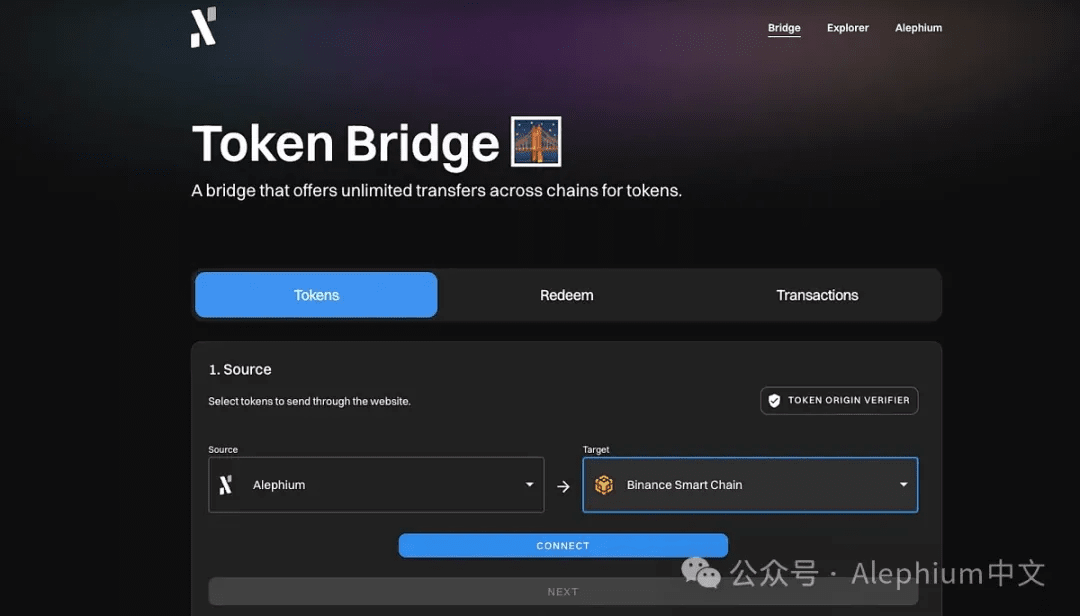
With the launch of the BSC bridge, you can now bridge assets between the Alephium network and BSC. Supported assets at launch on the bridge include BNB, USDT, and USDC.
To facilitate the bridging process, especially for new users, Alephium will airdrop 0.1 ALPH to users to cover the bridging fee. Users who bridge assets from BSC to Alephium will receive 0.1 ALPH as a direct deposit from the Alephium faucet after the transaction is confirmed.
The Alephium bridge provides relatively fast processing times. Assets bridged from BSC to the Alephium network will reach the target chain within 20 minutes. However, due to the higher block confirmation requirements on the Alephium network, bridging from Alephium to BSC will take longer. Alephium to BSC transactions will be confirmed within 50 minutes or after 205 block confirmations.
To build an asset bridge between Alephium and BSC, you can visit https://bridge.alephium.org/.
Special Rewards
Alephium and projects in its ecosystem are offering various incentives to users who access the network from BSC, including high-yield DeFi pools, rare NFTs, and whitelisted positions for top projects in the ecosystem.
Some of the additional benefits of connecting to the Alephium network include:
Alphaga, Alephium’s largest NFT trading platform, offers 100 limited edition NFTs to users who access the network. Users who access assets worth more than $1,000 may also be eligible for a second batch of NFT collections.
A whitelisted spot for IDO activity from top projects in the Alephium ecosystem will also be reserved for users bridging to the network from a BNB Smart Chain.
Linx Labs will reserve 10 whitelisted spots for 10 randomly selected bridge users for the Linx Labs IDO sale.
AlphBanX will also allocate 10 golden whitelist positions for AlphBanX sales to users who inject more than $1,000 into the network. The first user to inject more than $1,000 in assets into the network will also have the opportunity to invest $1,000 in the AlphBanX seed round.
Users who stake at least $50 into the network will be entered into a draw for 10 whitelisted seats in the Mined.fi IDO sale.
Multiple DeFI projects on the network, including Elexium Finance and CandySwap, are offering higher yields and voting rights for the BNB/ALPH pool.
Alephium Wallet
Since you need a wallet on Alephium to interact with the Alephium network, Alephium supports the following wallets:
Alephium Official Wallet: Available for desktop, mobile devices on iOS and Android, and as a browser extension on Chrome and Firefox.
Hardware wallets: Ledger and OneKey, Tangem and SafePal coming soon.
Third-party wallets: FxWallet and Sezame Wallet for mobile, and Zelcore for desktop and mobile. Linx Labs will also release a wallet in the near future.
Alephium Ecosystem
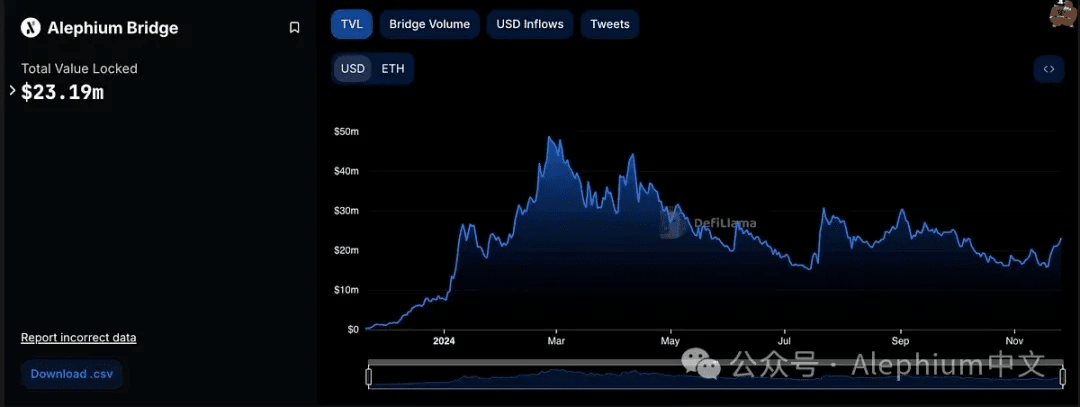
According to DefiLlama, as of November, the TVL on the Alephium bridge exceeded $23 million, currently the PoW public chain with the largest TVL after BTC. The Alephium ecosystem is full of new and upcoming projects deploying DeFi applications on the network. Some notable projects in the Alephium ecosystem include:
Elexium Finance

Elexium.Finance accounts for over 55% of TVL on the Alephium network. The DeFi platform was launched in Q2 2024 and has grown to become a dominant project on the network. Elexium is a VE (Voted Escrow) AMM DEX. VE tokens confer governance rights, where users can lock their tokens and vote on which pools receive emissions.
Elexium offers swap rates with virtually no slippage and also features a swap router that is able to “jump” across eight pools to execute trade requests. This eliminates the need to create a pool for each asset listed on the exchange.
Elexium Finance is powered by the Elexium token (EX), which is used for platform governance. The issuance of Elexium to liquidity pools depends on the votes of Elexium stakers. Each staker has voting rights associated with the amount of EX staked and the chosen staking period. Using their voting rights, they can vote for a pool or a group of pools to receive the week's Elexium issuance. Pool creators or project teams can bribe voters with their tokens to vote for their pools. Elexium charges 0.3% of the exchange amount as a platform fee; half of the revenue generated by the fee is allocated to Elexium voting and the rest to liquidity providers.
Currently, USDTeth/USDCeth has an annualized rate of 24.63%, USDTeth/USDTbsc has an annualized rate of 38.17%, ALPH/WBNB has an annualized rate of 51.99%, and ALPH/USDTeth has an annualized rate of 95.9%.
AlphBanX

AlphBanX is an overcollateralized loan and stablecoin protocol on the Alephium blockchain. It allows users to borrow AlphBanX Dollar (ABD) using their ALPH tokens. Borrowers deposit 150% of the amount they intend to borrow from the protocol. ABD is pegged to the US dollar and strictly maintained within this range. ABD holders can redeem their stablecoins for ALPH.
AlphBanX has a liquidation protocol that enables the protocol to manage bad loans. When the collateral value falls below a 150% ratio, the loan will need to be liquidated. In this case, the liquidator will be able to purchase the ALPH collateral at a discount and save the loan. According to the project, borrowers will be able to quickly obtain loans without credit score checks and can also take advantage of various loan repayment options.
AlphBanX plans to launch a native token, ABX, which will be used to manage the platform through DAO voting and incentivize users. ABX stakers will also receive part of the fees generated by the platform.
2 weeks ago, ABX IDO was snapped up and the pre-sale was sold out in a few hours. After the pre-sale, the price of the coin increased by 5 times. ABX is now listed on the Matcha Exchange.
mined.fi
Mined.fi uses the principles of DePIN and RWA to create a decentralized physical mining infrastructure network. It tokenizes real-world assets such as mining equipment and infrastructure, stores them as NFTs in vaults, and issues liquidity mining tokens (LMT). This tokenization improves liquidity and accessibility for large-scale mining operations that have traditionally had poor liquidity.
Miners stake their facilities to the network, while ALPH holders stake their tokens in the vault and receive yield-based liquidity mining tokens proportional to their stake. ALPH in the vault is used to repay USDT loans that miners borrow from the protocol to expand their ASIC mining facilities. In return, stakers in the vault receive a portion of the miners' revenue. As mentioned above, miners' facilities are represented as NFTs on the Alephium blockchain. This tokenizes ASIC miners and enables a more flexible ownership system. According to Mined.fi, this strategy not only enables stakers to generate income, but also improves the efficiency of mining operations and helps to establish a more environmentally friendly mining system.
Mined.fi is governed using the platform’s native token, MINE. MINE holders who stake tokens in the mine’s security module can vote on improvement proposals.
Ayin's Meta Fi
Ayin is one of the earliest DEXs on Alephium, and now, in order to further strengthen the protocol, it has rebranded to Meta Fi. Meta Fi represents an evolved, more connected and sustainable form of DeFi, presenting a range of DeFi products in a unified user-centric interface. These meta products include:
MetaDEX: A full-protocol market maker that integrates different AMM models into one platform.
Meta-Router: Intelligent routing across all DEX modes for optimal transaction efficiency.
Meta-incentives: Allow permissionless incentives between any pair of LPs, and up to five types of rewards can then be issued simultaneously.
Meta Bridge: Supports bridging between Ethereum and BSC via Ayin.
Meta Lending: Provides users with greater access to liquidity by allowing them to borrow and lend ALPH in a decentralized and non-custodial environment.
at last
With the launch of the bridge between Alephium and BSC, as well as the existing bridge between Alephium and Ethereum, Alephium makes it easier for cryptocurrency users to explore its ecosystem. According to DefiLlama, Alephium's TVL has been increasing in November 2024, jumping from $5.46 million to $23 million at the time of writing.
In this article, we looked at some of the exciting projects in the Alephium ecosystem, including Elexium, the largest protocol by TVL on-chain. Other upcoming projects include Invariant Labs and its centralized liquidity AMM DEX, AlphBanX’s hybrid crypto-backed and crypto-collateralized stablecoin protocol, DePIN project Mined.fi, and of course Linx Labs’ powerful DeFi platform.
This article is for informational purposes only and should not be considered financial or investment advice. Always do your own research before investing or depositing crypto assets in any project.