
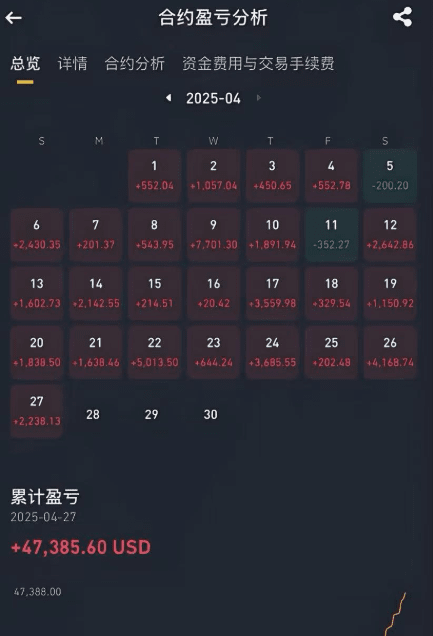
On the road of trading cryptocurrencies, I started as a small retail investor with 5000 yuan and finally turned into a middle-class with 25 million! I found that the most effective strategy is actually very simple, a method I've tested: with a success rate of 90% (four-step strategy + six maxims), simple and practical! Sharing with everyone:
Step one: choose the right currency.
Open the daily chart, first look at the MACD indicator +. Only select currencies with golden cross signals (the MACD line crossing above the signal line), especially those
Coins that form a golden cross above the zero axis have a higher success rate. Simply put, this is the 'buy signal' given by the market.
Step two: determine buy and sell with moving averages.
Focus on a moving average - daily moving average + (for example, 20-day moving average). The rule is just two sentences:
Holding online: when the price is above the moving average, hold on with confidence;
Sell offline immediately: as soon as it drops below the moving average, clear the position immediately, don’t hesitate.
This line is your 'safety belt'; if it breaks, stop loss, simple and effective.
Step three: position management.
1. Timing for increasing position: If the currency price breaks through the moving average and the trading volume also synchronously increases and stabilizes above the moving average, consider increasing the position.
2. Sell in batches:
· If it rises 40%: sell 1/3 first;
· If it rises 80%: sell another 1/3;
· If it breaks the moving average: sell all remaining.
This can lock in profits and avoid being stuck.
Step four: stop-loss iron law.
The moving average is the core; if it suddenly drops below the moving average the next day, you must clear your position immediately. Even if the currency you chose before was good, dropping below the moving average indicates a trend.
When the trend changes, do not stubbornly hold on. Wait until it stabilizes above the moving average before coming back.
Three don'ts principle: avoid common traps.
1. Do not chase gains.
Don't rush in when everyone is buying; instead, calmly observe when everyone is panicking. For example, when the price drops but indicators start to improve, you can
Can be an opportunity.
2. Do not go all in.
Diversify your funds into different currencies, don't put all your eggs in one basket. For example, divide into 5 parts and invest only one part each time, this way if there's a mistake in one
Losses can be controlled.
3. Do not operate with full positions.
Leave some money for emergencies. There are opportunities in the market every day, so there's no need to bet everything at once.
People trading cryptocurrencies often focus on one question: 'How's the market going?'
But honestly, the market itself is not the most frightening. What really causes losses is not the market itself, but the obsession in our hearts.
Trading is a mirror, reflecting our emotions, desires, fears, and greed.
Check out these 11 common misconceptions about trading cryptocurrencies; see how many you fall into. The earlier you see through them, the less you'll lose.
1. Love-type trading: fell in love with a currency, lost the entire account.
Have you ever had such moments? A certain currency just took off, and you couldn't help but chase in, telling yourself 'if I don't get in this time, I'll never have the chance again!'
No matter how high the position or how big the risk, you just have to buy. You are not analyzing, but rather falling in love.
What you love is not the currency, but the 'illusion of making money'.
Advice: Every trade should have a clear entry logic and exit mechanism; do not get emotionally attached to any currency.
2. Value stubbornness: say long-term but focus on the short-term.
Many people call themselves 'value investors', but they are actually just unwilling to admit mistakes after buying high and getting stuck.
When the price drops, you desperately look for good news to comfort yourself: 'This project has great technology' 'The founder is reliable'.
The valuation has long been overdrawn, yet you still cling to it, saying you are 'holding steady'.
Advice: True value investing is buying at the correct price and being willing to accept volatility, not stubbornly holding on at the wrong price.
3. Emotion-based judgment: when stuck, become a bull, when others are bearish, you explode.
Just got stuck, and you turn from a rational person into a 'hard-headed trader'.
You react to others' bearish opinions, only paying attention to bullish voices on social media.
In fact, you are not analyzing the market, but seeking comfort.
Advice: If emotions can’t control your trading, it means you are not really prepared. Learning to consider opposing viewpoints is the beginning of maturity.
4. Procrastination on stop-loss: able to exit with small losses, but insisting on turning it into heavy losses.
Knowing the trend is wrong, yet still thinking 'I'll check one more time' or 'what if it rebounds?'
The result is that you originally only lost 5%, but in the end lost 50%, only then willing to admit defeat.
Short-term trading turns into long-term burial.
Advice: Set your stop-loss point, respect the market, and do not be a fantasy-type trader.
5. Emotion-avoidance trading: the currency should not be hated; what you hate is your inability to let go of yourself.
A certain currency once caused you significant losses, and from then on you blacklisted it, no matter how strong it becomes in the future, you won't look at it.
In fact, what you hate is not that currency, but the version of yourself that made the decision at that time.
What you refuse is a chance to prove yourself again.
Advice: The market has no emotions, and opportunities do not hold grudges. Don't let past mistakes stop you from seizing current opportunities.
6. Afraid to chase after selling: afraid of chasing high, missing the entire trend.
Sold too early, saw it rise and felt regret, but also unwilling to buy back.
Afraid of getting stuck after chasing, afraid of 'standing guard at a high position'. As a result, you watch it rise while you just observe.
You missed the entire trend.
Advice: Accept that you are not a god, and you cannot buy at the lowest and sell at the highest. The core of trend trading is 'participation', not 'perfection'.
7. Itchy hands trading: trading without a plan.
No signals, no logic, no position management, yet you can't help but operate.
You think you’ve captured inspiration, but it’s just your hands itching controlling your brain.
After rushing in, you realize it’s not what you thought at all.
Advice: Trading without a plan is no different from buying a lottery ticket. Do not challenge probabilities with impulse.
8. Impulsive trading: wanting to sell after holding a currency for less than an hour.
Buying means staring at the market, panicking with every shake, wanting to cut at every dip.
Always think you are flexible, but in reality, you are just too anxious inside.
In this state, no strategy will work.
Advice: After setting your target and stop-loss points, don't operate frequently. The rhythm of trading is more important than the frequency of trading.
Key points for trading cryptocurrencies:
1. Learn before investing: master the basics before investing your funds.
2. Timing the trade: avoid chasing gains and killing losses, wait for the right opportunity.
3. Diversify your layout: do not concentrate funds on a single target.
4. Set stop-loss properly: establish a bottom line to protect your principal.
5. Continuous learning: deepen your understanding of the cryptocurrency world, do not follow blindly.
6. Curb greed for stability: take profits at the right time, do not be greedy.
7. Manage emotions: avoid letting emotions dominate your trading.
8. Patience is key: exchange time for returns, and move forward steadily.
