
 Advances in Global Regulation of Stablecoins
Several important regulatory bodies, including the European Union with its MiCA framework (Markets in Crypto-Assets) and advances in the United States with discussions about specific laws for stablecoins, are solidifying their positions. There is a trend towards greater clarity in the classification and oversight of these assets, seeking to mitigate systemic risks and protect investors. This more defined framework could drive institutional adoption of stablecoins, especially in cross-border transactions.
 Continuous Innovation in Layer 2 Solutions and Scalability
The Ethereum ecosystem, in particular, remains a hotbed of activity around layer 2 solutions. Projects based on rollups (optimistic and zk-rollups) are reaching levels of maturity and increasing adoption, significantly improving speed and reducing transaction costs. This is opening the doors to a new wave of more efficient decentralized applications (dApps) that are accessible to a broader audience.
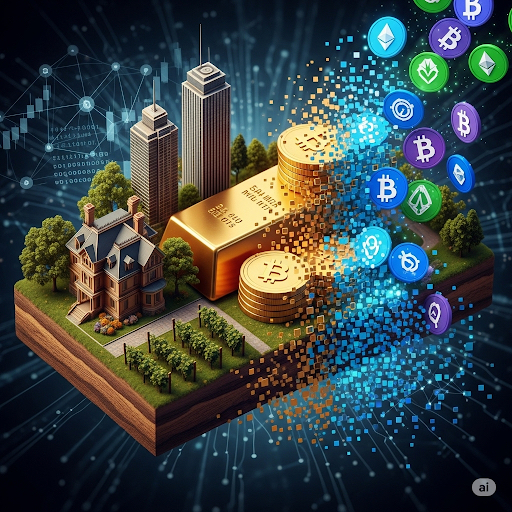 The Resurgence of Institutional Interest in Tokenized Assets
Beyond traditional cryptocurrencies, institutional interest in the tokenization of real-world assets (RWAs) is gaining ground. From bonds and real estate to artworks, companies are actively exploring how blockchain technology can offer greater liquidity, transparency, and fractional ownership. This movement could redefine traditional financial markets in the long term.
 The Impact of AI on the Crypto Space
Convergence and New Opportunities: The synergy between artificial intelligence (AI) and blockchain is becoming increasingly evident. Projects are being developed that utilize AI to enhance the security of smart contracts, optimize trading strategies, and even create new models of decentralized governance. This convergence promises to unlock new functionalities and efficiencies within the crypto ecosystem.
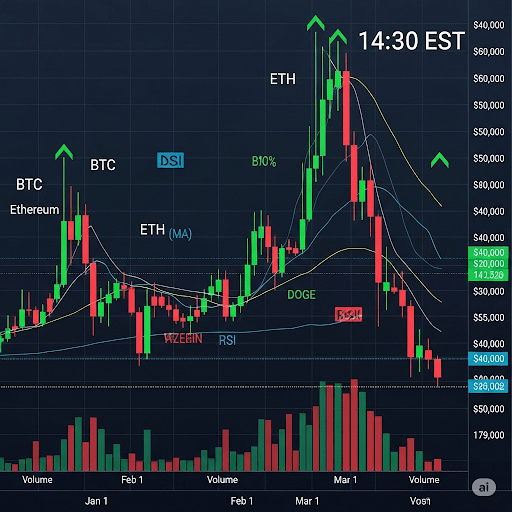 Movements in the Price of Bitcoin and Altcoins
Volatility and Consolidation: After a period of high volatility, the market has shown signs of consolidation in recent weeks. Bitcoin, while experiencing fluctuations, has managed to maintain support above key levels, suggesting possible accumulation by long-term investors. Altcoins have followed mixed trends, with some sectors such as DeFi and GameFi showing resilience, while others experience adjustments. Global macroeconomics, central bank policies, and geopolitical developments continue to be influential factors.
Useful Tips:
Given the current dynamics of the crypto market, here are some key recommendations:
Stay Informed about Regulation: Regulatory evolution is one of the most important drivers of the market. Pay special attention to how laws on stablecoins and the classification of crypto assets are developing in your jurisdiction and globally. A clear regulatory framework can bring stability and confidence, but it can also impose restrictions.
Deepen Your Understanding of Scalability Solutions: If you are a user or developer of dApps, familiarize yourself with Layer 2 solutions. Understanding how rollups and other scaling technologies work will allow you to take advantage of faster and cheaper transactions, giving you an edge in identifying projects with real growth potential.
Explore Tokenized Assets (RWAs) with Caution: The tokenization of real assets is a promising field. Thoroughly research the projects engaged in this, evaluating the strength of the underlying assets, the reputation of the issuers, and the liquidity of the secondary market. This is a growing sector, but as always, due diligence is essential.
Consider the AI-Crypto Convergence: The AI space in crypto is in its early stages, but its potential is immense. Keep an eye on projects that are innovatively merging these two technologies. They may offer new investment and development opportunities, but they also carry risks inherent to novelty.
Adopt a Disciplined Investment Strategy: Volatility remains an intrinsic characteristic of the crypto market. Avoid impulsive decisions based on daily fluctuations. Consider dollar-cost averaging (DCA), diversifying your portfolio, and only investing capital you are willing to lose. Set clear goals and risk limits.
Prioritize Security: In an environment where cyberattacks and scams remain a concern, security should be your number one priority. Use hardware wallets, enable two-factor authentication (2FA) on all your exchanges and platforms, and be extremely cautious with suspicious links or offers that are "too good to be true."


