
Let me provide an analysis based on the available information, focusing on the current context of XRP:
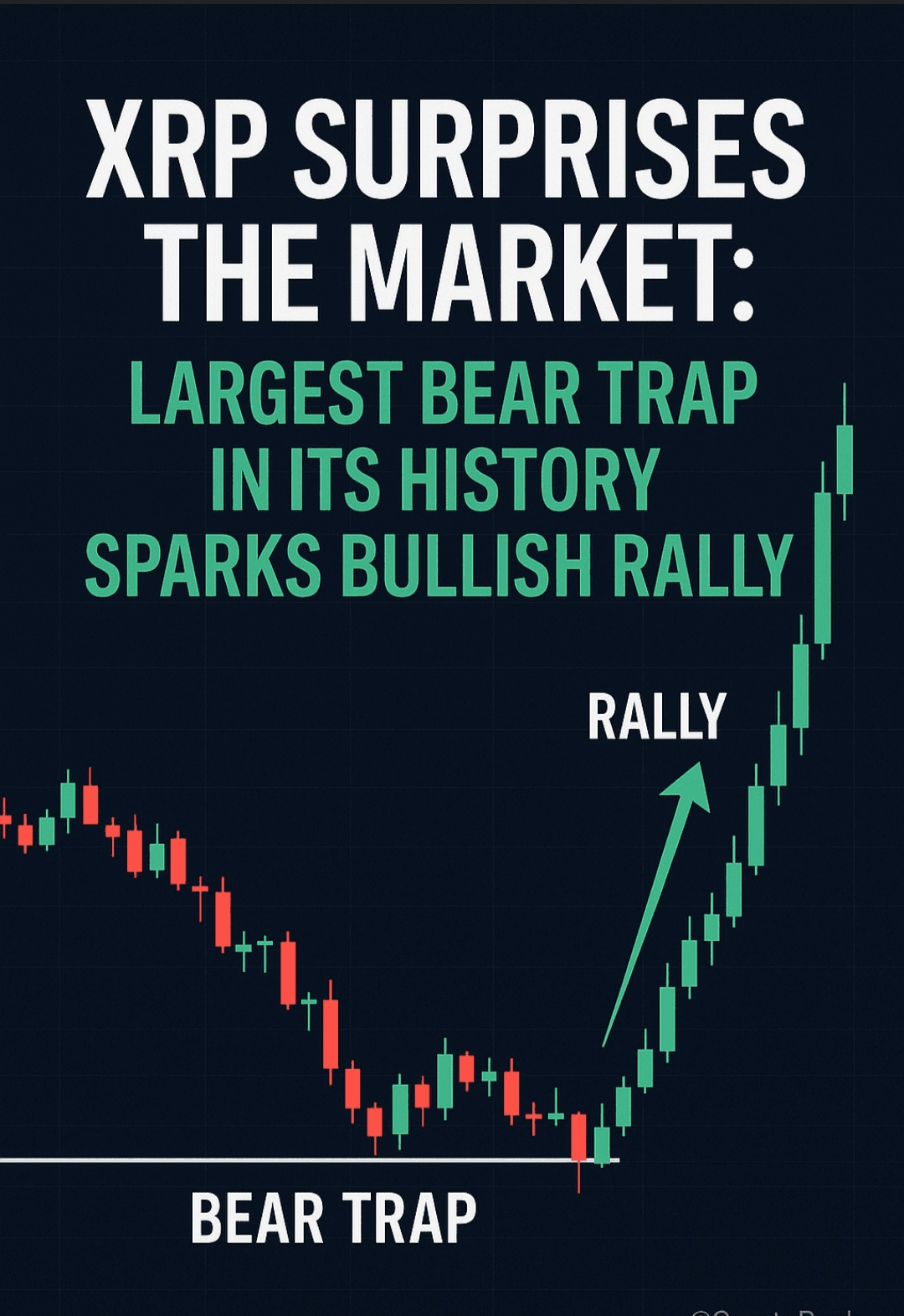
What is a bear trap? A bear trap occurs when the price of an asset drops sharply, prompting traders to sell in fear of further losses, but the price quickly rebounds, resulting in losses for those who sold and gains for buyers at the bottom. In the context of XRP, this may be attributed to high market volatility or specific news affecting sentiment.
Current Status of XRP:
Recent Price Performance: According to available information, XRP has seen significant rises recently, reaching a market value of over $137 billion after a 15% increase in one day, becoming the third-largest cryptocurrency following Donald Trump's victory in the U.S. presidential elections in November 2024. The price reached around $2.50, compared to less than $0.60 before the elections.
Recent Volatility: There are posts on platform X indicating a sharp drop in the value of XRP by more than 20% over two days, causing significant losses for some traders (such as a $100,000 loss for one user).
This decline may be linked to actions by major investors (like Chris Larsen, the co-founder of Ripple, who sold nearly $200 million of XRP), which could ignite a bear trap if followed by a price rebound.
Market Analysis: Expert forecasts indicate that XRP is currently trading around the $2.17-$2.43 level, with strong support at $1.90 and resistance at $2.85-$3.00.
If a sharp decline occurs to support levels (like $1.90 or $1.70) followed by a rapid rebound, this can be considered a bear trap. Is it the 'largest bear trap in history'?
Lack of Conclusive Evidence: There is no data in available sources confirming that XRP has recorded the largest bear trap in cryptocurrency history.
This could be an exaggerated statement or a common rumor circulating on platforms like X, especially with posts indicating significant volatility and suspicious actions from major investors. Historical Context: XRP has witnessed significant volatility in the past, such as rising to $3.28 in January 2018 and then falling by 82.26% by the end of the year.
Such movements may resemble bear traps, but describing them as 'the largest in history' requires specific data on the magnitude of the decline, the number of affected traders, and the subsequent rebound.
Influencing Factors:
Whale Actions: Selling large amounts of XRP by figures like Chris Larsen could cause a temporary price drop, igniting a bear trap if followed by institutional buying or a rebound supported by positive news (such as the conclusion of Ripple's case with the SEC).
Legal Case: Developments in the case between Ripple and the Securities and Exchange Commission (SEC), especially with expectations for a resolution in July 2025, could be a catalyst for significant price volatility, supporting the likelihood of a bear trap.
Market Sentiment: Trump's victory and his commitment to support cryptocurrencies have boosted optimism around XRP, which may lead to rapid rebounds after declines.
Analysis and Forecasts: Potential Scenario: If there has been a sharp recent decline (such as the 20% drop mentioned in X posts), this could result from selling by whales or a price correction after the significant rise in November 2024.
A quick rebound to levels like $2.85 or $3.00 could confirm a bear trap, especially if it coincides with positive news such as the conclusion of the SEC case or increased adoption of RippleNet.
Risks: High volatility in the cryptocurrency market makes XRP susceptible to bear traps, but investors should place stop-loss orders (such as $1.70) to mitigate risks.
Additionally, Ripple's control of 55 billion units of XRP (about 55% of the supply) may influence market dynamics and raise suspicions about manipulation.
Recommendations: Monitor support levels ($1.90-$2.00) and resistance ($2.85-$3.00) closely.
Follow news related to the SEC case and the actions of major investors.
Avoid making decisions based on panic, as bear traps rely on exploiting emotional reactions.
Summary: Although there is no conclusive evidence proving that XRP recorded 'the largest bear trap in history', recent volatility, whale actions, and legal developments suggest the possibility of a significant bear trap if a rapid rebound follows a sharp decline.
Traders are advised to be cautious, use risk management tools, and closely follow the news. If you are referring to a specific event or have additional details (such as a specific date or magnitude of decline), please share them so I can provide a more accurate analysis.$XRP


