
In the zero-sum game of the capital market, everyone is very clear about one point: your profit comes from the price difference between buying and selling.
However, how to buy at the bottom and sell at the top is an ultimate question that has troubled people from beginning to end.
There are various so-called technical schools in the market, intricate and complex. The ultimate mystery is how to find the school that suits you best. For example, my style is mainly based on the relationship between volume and price, as well as macroeconomic operations. Many fans often ask me in private messages why the support and resistance levels I draw are so accurate.
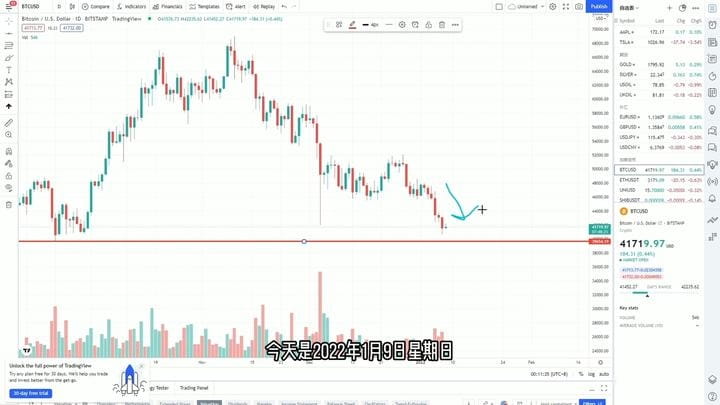
However, my own markings are not very effective. The reason is quite simple: the so-called support and resistance are fundamentally determined by the volume of buying and selling. If there is a long period of sideways consolidation at a certain price, it can be concluded that there are many people holding positions in this cost range.
If the market makes a breakthrough and rises, we can reasonably conclude that those who hold positions in this cost range are all in profit. When the price falls back to this cost range, the selling profits above are likely to re-enter at the previous cost (because of the successful experience of previous profits), while those who did not sell in this cost range will have stronger tolerance when the price returns to this range (because the previous rise has unrealized gains). The combined strength of both forms a so-called support level. If this support level is forcefully and quickly broken, it will create a cascading effect, falling back to the next support range, and so on.
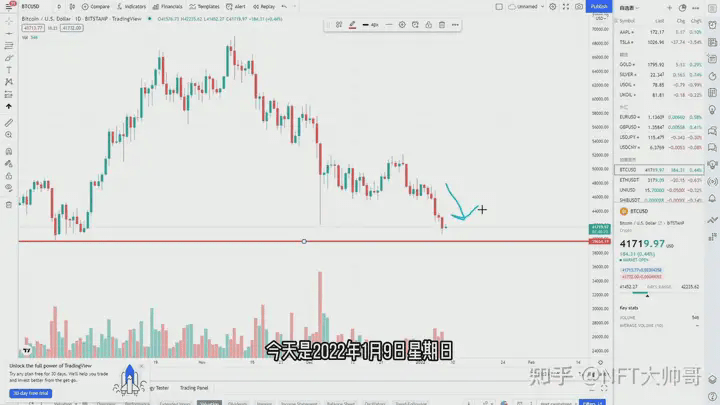
It's simple. On January 9th, I had already marked the support level below for everyone, and then on January 10th, the price decisively fell back to that support level. Sometimes it may not happen quickly, but it will eventually come. After all, there are resistance levels.
Knowing the principles of resistance and support above, the entry point becomes easier to determine.
The conclusion is simple: sell near resistance levels and buy near support levels.
PS: The above is just a simple discussion about my most commonly used methods for judging pressure and resistance, which also includes several details such as the role of volume, false breakouts, and other minor knowledge. Comprehensive analysis is necessary to do the right thing at the right price.