

While Bitcoin holds an unmatched position in security and decentralization as the pioneer of the cryptocurrency world, it faces fundamental issues such as limited transaction capacity and lack of programmability. This is where Bitlayer (BTR) comes into play! Bitlayer stands out as an innovative Layer 2 solution that addresses scalability and programmability issues while preserving Bitcoin's security. In this article, we will detail what Bitlayer is, the functionalities of the BTR token, the project's vision, and how it provides revolutionary contributions to the Bitcoin ecosystem.
What is Bitlayer?
Bitlayer is the first rollup solution developed based on the unique security of Bitcoin while integrating Ethereum's programmability features. Built on the BitVM paradigm, this platform overcomes Bitcoin's limited transaction capacity and lack of programmability, offering a broader ecosystem for developers and users. Bitlayer allows the development of smart contracts and decentralized applications (dApps) while remaining true to the fundamental principles of Bitcoin. Furthermore, it offers full compatibility with the Ethereum Virtual Machine (EVM), enabling easy migration of Ethereum-based applications to Bitlayer.
Bitlayer is not just a scaling solution; it is also a platform that redefines Bitcoin's potential. It opens new doors for decentralized finance (DeFi), reliable systems, and scalable infrastructures. The BTR token plays a significant role in governance and incentive mechanisms, serving as the heart of this ecosystem.
Problems Solved by Bitlayer
While Bitcoin leads in security and decentralization, it struggles with some fundamental limitations. Bitlayer transforms the Bitcoin ecosystem by offering innovative solutions to these issues:
Low Transaction Capacity and High Fees: While Bitcoin's main chain offers high security, it can only perform a few transactions per second and is not suitable for micropayments due to high transaction fees. Bitlayer increases transaction capacity with rollup technology, providing high-volume transactions at lower costs.
Lack of Programmability: Bitcoin's limited script language does not support complex smart contracts, making it difficult to develop applications like modern DeFi protocols or automated trading systems. Bitlayer provides Turing-complete programmability, offering developers Ethereum-like flexibility.
Unsecured Bridge Issues: Bitcoin lacks a native mechanism for reliably interacting with other blockchains. Existing bridge solutions often rely on centralized structures or multisig systems, creating security risks. Bitlayer solves this issue by offering a reliable and decentralized bridge with the BitVM Bridge.
Developer Experience Barriers: Bitcoin's complex script system creates a high entry barrier for developers. Bitlayer enables Ethereum developers to easily develop applications using the tools and Solidity language they are accustomed to, thanks to EVM compatibility.
Bitlayer's Vision and Roadmap
Bitlayer aims to provide scalability and programmability while preserving Bitcoin's security. The project's vision is to transform Bitcoin from merely a store of value into an ideal infrastructure for decentralized finance (BTCFi) and other innovative applications. Here are the key stages in Bitlayer's roadmap:
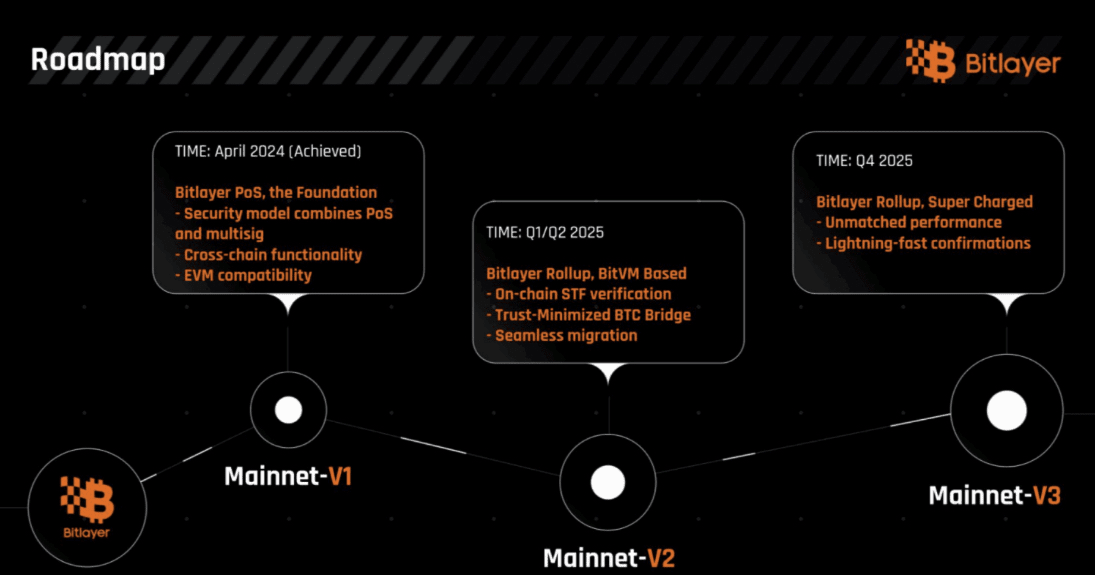
1. First Phase: Bitlayer PoS (Mainnet V1) – April 2024
At this stage, Bitlayer was launched with a security model combining Proof of Stake (PoS) and multisig technology. Thanks to EVM compatibility, developers and users can easily develop applications and transact in a Bitcoin-based ecosystem. Cross-chain functionality allows asset transfers between Bitcoin, Ethereum, and other networks. This phase is now complete and the testnet is open to developers.
2. Second Phase: Bitlayer Rollup (Mainnet V2) – Q1/Q2 2025
Bitlayer will evolve as a BitVM-based Bitcoin rollup, completely taking over Bitcoin's native security. At this stage, a reliable bridge will be offered with the BitVM Bridge, and Layer 2 state transitions will be validated on the Bitcoin chain. Applications will seamlessly transition from the PoS phase to the rollup.
3. Third Phase: Super Enhanced Rollup – Q4 2025
At this stage, Bitlayer will achieve a transaction capacity of 20,000 transactions per second (TPS), making it an ideal platform for high-volume applications. Transactions will receive soft confirmation within 3 seconds, maximizing user experience. When combined with Bitcoin's security, this will position Bitlayer as a leading solution for enterprise-level applications.
Bitlayer (BTR) Tokenomics
BTR is the native token of the Bitlayer ecosystem, with a total supply of 1 billion. The token supports the ecosystem with two main functions:
Ecosystem Incentives: BTR promotes growth by rewarding ecosystem participants such as developers, users, and partners.
Governance: BTR holders have a say in the platform's governance, allowing them to vote on proposals and contribute to parameter adjustments. This ensures that Bitlayer has a decentralized and community-focused structure.
In terms of tokenomics, Bitlayer's token distribution is planned as follows:
80% allocated for providing liquidity and supporting smart contract transactions.
15% directed towards ecosystem development, marketing, and community growth activities.
5% will be used for advisors and exchange listing processes.
This structure supports the sustainable growth of the ecosystem while preserving the value of BTR.
Technical Features of Bitlayer
Bitlayer stands out with a range of innovative features that combine the security of Bitcoin with the flexibility of Ethereum:
EVM Compatibility: Ethereum-based applications can be easily migrated to Bitlayer.
BitVM Bridge: Reliable and decentralized bridge enables the transfer of Bitcoin assets to other chains.
Bitcoin Equivalent Security: Layer 2 state transitions are validated on Bitcoin's main chain with BitVM-based verification.
Flexible Data Availability: Users can choose between Bitcoin-based or third-party data availability solutions.
Bitlayer vs. Ethereum: Comparison
Bitlayer and Ethereum offer different advantages. Here is a comparison of the two platforms:
Gas Fees: While Bitlayer uses BTC as a gas token, it offers low transaction costs with innovative mechanisms. In Ethereum, gas fees fluctuate based on network demand and can be high.
EVM Support: Bitlayer supports all EVM features except for the Cancun update. Ethereum appeals to a broader developer audience with full EVM support.
Solidity Versions: Bitlayer supports up to Solidity v0.8.28, while Ethereum supports the latest Solidity versions.
Bitlayer offers an attractive alternative for developers and users by providing low-cost transactions while maintaining Bitcoin's security.
Bitlayer's Investors
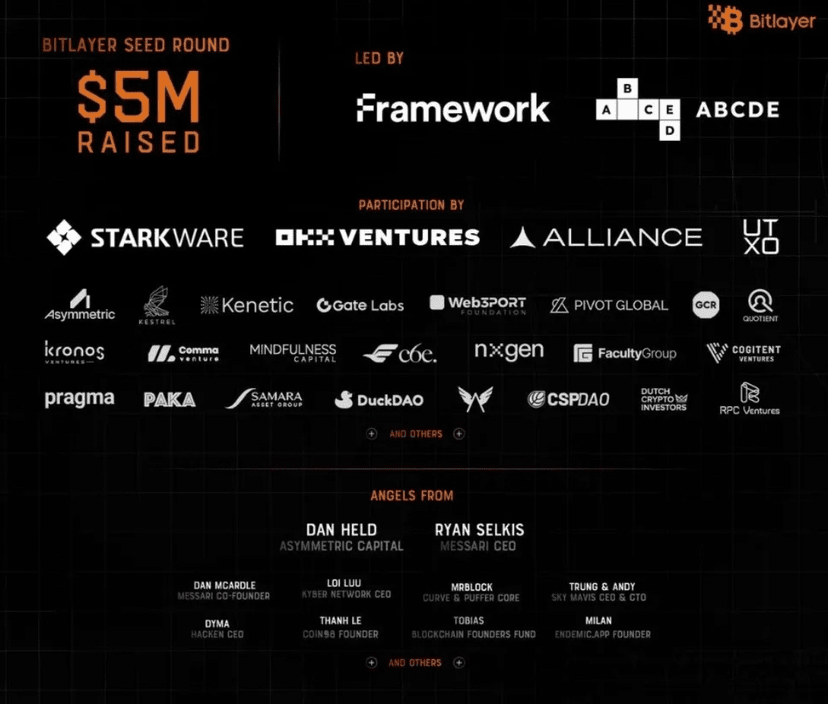
Bitlayer receives support from strong investors including OKX Ventures, StarkWare, Alliance, UTXO, Asymmetric, Kesrel, Kenetic, Gate Labs, Web3Port Foundation, Pivot Global, GCR, Quotient, Kronos Ventures, Comma Ventures, Mindfulness Capital, NxGen, Faculty Group, and many more. This extensive investor network proves the project's reliability and potential.
Bitlayer Founding Team
Behind Bitlayer is a team experienced in blockchain and technology. Kevin He and Charlie Hu (Founding Partners) are the leaders shaping the project's vision. Daz manages the technical infrastructure as the Chief Architect, while Skyler Harris (Director of Digital Marketing) and David Rutkovsky (Director of Global Business Development) strengthen the project's global reach.
Stay tuned for updates.