

GAM3S.GG co-founder Omar Ghanem transformed his early frustrations in esports and gaming into a mission: to bring more players into web3, after building a career in brand work and competitive gaming, Omar witnessed firsthand the friction and missed opportunities that players face in terms of identity, access, and ownership.
In this conversation, Omar shares how blockchain solves real problems, why community is always the first priority, and what 'gaming identity' means for the future of web3.
Note: This interview has been edited for length and clarity.
OpenSea: How did you get into gaming and Web3? Which came first?
Omar Ghanem: Of course, gaming was definitely my first contact, I studied marketing, and my first job after graduating from university was at L'Oreal, which was super boring, I quit after six months - because I didn't like doing cosmetics marketing.
I ended up working in an agency, which was more interesting, I worked with brands like Visit Dubai and Dubai Tourism for a few years, responsible for festivals and events in Dubai, I also worked with Emirates Airlines and some other well-known brands.
But I always wanted to find a career path in gaming, I worked with some well-known esports companies in the Middle East and North Africa, we organized Ubisoft and Nvidia's (Rainbow Six) Middle East and North Africa regional tournament, we partnered with Red Bull and Riot Games to host (League of Legends) tournaments, and we also worked with the Epic Games Store and (Fortnite) to carry out influencer content marketing activities, so, I got a lot of exposure to the gaming circle.
My reasons for entering Web3 are a bit different, I observed esports from the inside - that was in 2015, 2016, long before Saudi money poured in - there were many problems at the time, I remember a 16-year-old Lebanese player won a prize pool, but it was a nightmare to send him the prize money, the money had to go through his bank, the central bank, our bank - which raised an alarm, why could this unknown child get so much money?
It takes months, which is normal, that's when I first became interested in cryptocurrency - solving such problems, later I found that there is a field in the cryptocurrency field that focuses on games, which really attracted me.
I've had a PlayStation account since the PS3 - probably 2006 or 2007, I've played over 400 games on that account, but there's nothing left except for a few screenshots, even when I was working in the gaming industry, no one offered me early access codes on Steam to check my account, the account only shows (Counter-Strike) and some game time, nothing else, they didn't see my PlayStation side.
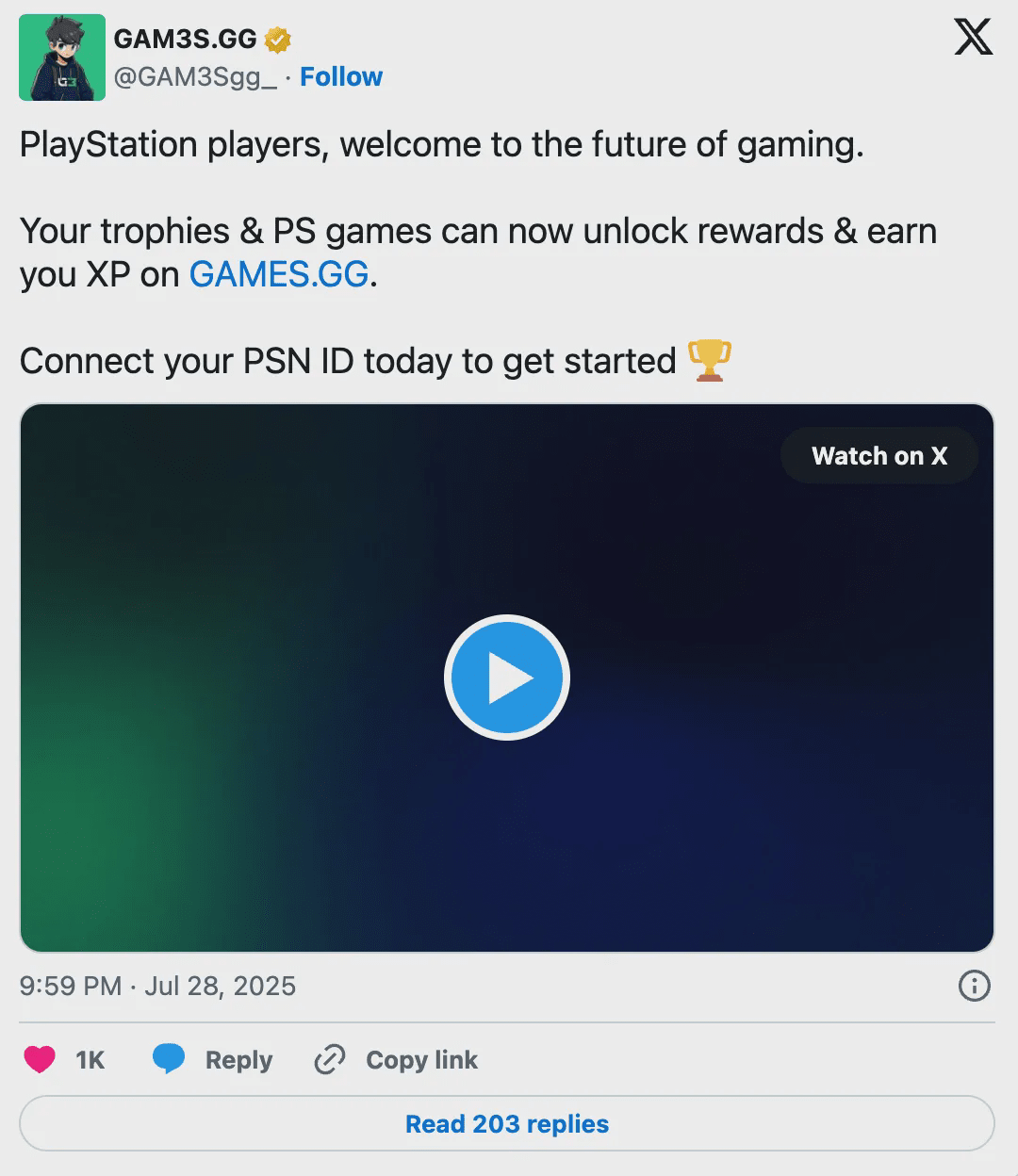
The idea of unified identity through blockchain is indeed very attractive, which is also part of why I am excited about what we are building now - especially the PlayStation integration we announced.
The last point - and one that everyone is discussing - is the opportunity to make money doing what you love, I played a lot of (FIFA), spent money buying ultimate team packs, and built a great team, but when the new version of (FIFA) was released in September, everything became meaningless, you can't do anything with your old team.
Games may cost between seventy and eighty dollars, but with coins and gift packs, you can easily spend several times that amount, and you can't resell anything - even at a loss, which makes no sense to me.
Yes, I'm here for a few reasons, but going back to your original question, I would definitely consider games first, then crypto games, because it is a niche within a niche.
OpenSea: It sounds like you are fascinated by games, found problems, and realized that this technology can solve these problems.
Omar Ghanem: That's right, that's why my passion has never waned, even when the market fluctuates, people ask: "Is it dead?" But the core issue still exists - and I believe in the solution, so, even after four years, my belief has not changed, even if a certain game stops, it doesn't matter, the principle remains the same.
OpenSea: That makes perfect sense, I was going to ask what problems you aim to solve, but you've already answered it, it's really a direct connection - seeing the problem firsthand and finding a solution.
Also, I always think about how Vitalik lost everything in (World of Warcraft) and created Ethereum, gaming seems to be an obvious use case for Web3, especially for NFTs.
Omar Ghanem: Yes, absolutely.
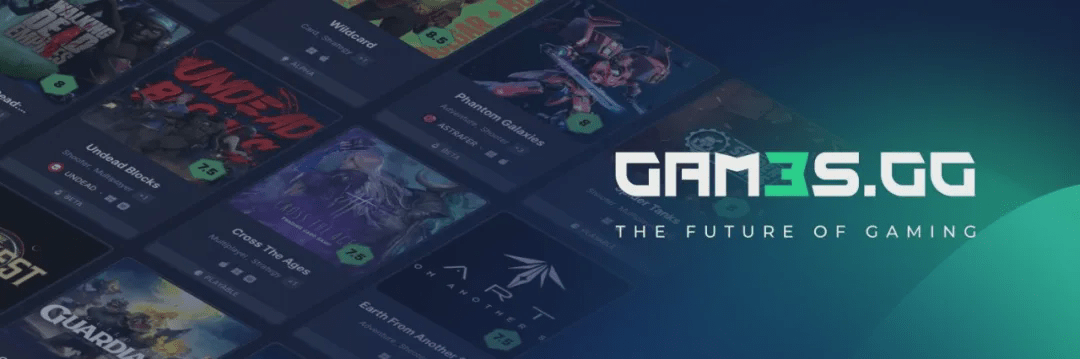
GAM3S.GG was actually born out of frustration, in the winter of 2021, when I first got into the field, there were very few games, most of them were Axie imitators, you could only switch back and forth between Discord, download .exe files, and then just pray that everything goes well.
Cryptocurrency itself is full of anonymity, which is not the experience we want, so we built this platform to solve this problem, our idea is: "If not us, who?" because media like IGN and Kotaku have been reluctant to touch Web3 for years.
When I recommend a game to someone with an esports background like me, and they find the game quality to be poor, I feel bad too, if no one points it out, it will damage everyone's credibility, we want to be a trusted source of information, if a game is bad, we will say it bluntly, we may upset some teams, but at least everyone will trust us.
So, if we say a game is 3 out of 10, you definitely know we're serious, we're gamers too - we're not kidding around.
OpenSea: How has your vision changed since launch? Are the problems you are solving now different from when you started?
Omar Ghanem: Of course, our vision is the same - we want to get as many gamers as possible into Web3, we believe it solves real problems.
If players start to demand more from developers and publishers, they have to respond, this hasn't changed, but the way we package the product has changed.
Early on, we were very focused on becoming the biggest company in the Web3 gaming field, we wanted to be the center of this niche market - top, but we encountered a bottleneck, if you only communicate with the same 50,000 people on Discord and Twitter, you can't attract new users.
So, we changed our strategy, we need to promote on Instagram, Reddit, TikTok, and YouTube, we need podcasts, newsletters - these methods can reach players outside the isolation zone and really bring them in.
Just showing off that we are the biggest in this field can't change the status quo at all, so we turned to short content, and it worked.
Some of our videos went viral online, high school old friends would send me messages saying they saw GAM3S.GG videos on Instagram, this influence made us realize that we were on the right track.
Recently, with PlayStation integration, people can't help but ask: "What changes will this bring?" For us, it's like opening the door, Web3 may be too closed - have you used Discord? Do you hold that NFT? It becomes a gatekeeper.
But if you want to attract talent, you can't close the door - you have to open it, it's a huge change.
That being said, a lot hasn't changed, I've worked with almost the same team for four years, which is a bit incredible, they believe in my ideas and mission.
The real change is in the method, early on we focused on solving user onboarding issues, later, we focused on showcasing a 3A game, now, we focus on building a sustainable ecosystem.
The focus is constantly evolving, but the mission remains the same - to get more players into Web3, every user who registers with GAM3S.GG has joined, they get a wallet through account abstraction and integrate into this ecosystem, if we win, the whole space wins.
OpenSea: So who do you think your core audience is? Gamers or Web3 gamers? I know there is overlap between the two, how do you see this?
Omar Ghanem: Definitely just gamers.
The term "Web3 gamer" feels a bit limiting, I'm not an AWS gamer, or a Google Cloud gamer - I'm just a gamer, I play (League of Legends) on PC and single-player campaigns on PlayStation.
We focus on the following subcategories:
Gamers who are tired of the status quo and want to make a change;
Gamers who are satisfied with existing content but want to discover new content;
Crypto speculators interested in game applications.
We serve everyone, some people come for the tech, some people come for the games, maybe someone comes for (Spider-Man 2) and ends up discovering (MapleStory) on the chain, everyone's journey is different.
OpenSea: Let's talk about community, you mentioned Discord and social media, but how important is community to GAM3S.GG? How do you interact with them?
Omar Ghanem: Community is everything, your life and death are together.
We are honored to be able to cultivate our members for a long time, many of the most active Discord members - some of whom are now moderators - have been with us for more than three years.
Our cross-platform communities are different - Discord and Reddit or Instagram are different - but they are all important, if you are not building for someone, what's the point?
Unfortunately, in the early days of the cryptocurrency field, many teams would raise funds first, build something, and then try to impose it on the community, we do the opposite.
We built the community first, then, after understanding the community's pain points, we built the product around the actual needs of the community, and then we raised funds to scale up.
This sequence makes a big difference.
We are excited about real interactions, whenever we publish a new guide, we track: how many people found it? How many people registered? How many people joined Discord? These are the metrics we value most, not just the numbers on the dashboard.
OpenSea: That's so thoughtful, you also mentioned going out into the world and meeting people - tell me more about that.
Omar Ghanem: Yes, especially in the early days, most of our community members came from developing countries such as the Philippines and Brazil that are very open to cryptocurrency.
So we went to them, last year we held the game awards ceremony in Manila, because it is close to the origin of Web3 game Axie.
The importance of community cannot be overemphasized.
OpenSea: Let's talk about partnerships, you mentioned PlayStation, please talk about it in detail, more broadly, what kind of partnerships make sense for GAM3S.GG? Is it with studios, chains, or brands?
Omar Ghanem: Grow through cooperation, it actually depends on the goal, but for us, always pursue a win-win situation.
If we can open our doors to each other, we will work together, we have established partnerships with ecosystems such as Arbitrum, Avalanche, and Ronin, all of which are very meaningful.
We help their games get more visibility and distribution, in return, we get co-signing, branding, and access to their development team - real support.
I'm especially excited about the partnership with OpenSea, we will bring the OpenSea experience to GAM3S.GG, users can not only browse games or read reviews, but also see items such as skins and props, and buy them directly.
OpenSea: Absolutely love it, as a pioneer in this field, how do you think Web3 gaming will develop next year? How will it develop in five years? What are your expectations? Will we move towards an ownership model, or more play-to-earn incentives?
Omar Ghanem: This is a big problem, but a good problem.
In the short term, this year has been difficult, it may be the most Web3 game studios we have seen close - at least the most publicly closed.
But it's normal, if you know games, you know that 99% of games fail.
Even big games - XDefiant has 8 million players, but still failed, Splitgate 2 recently went back to Beta testing, game studios are closing down all the time, the difference is that the negative emotions are stronger, you feel the failure far more than the success.
But I am more confident than ever, we started as a website listing 30 good games, now, we have over 500 Web3 games, spread across 30+ game chains, and that number is still growing.
Will the investment come back? Maybe, it depends more on macro trends - finance, economy, and the broader gaming market, but from a technology and adoption perspective, I am optimistic.
If - and I do think it's just a matter of time - major players like Rockstar add digital items to games like GTA, everything will change.
I'm not saying they will use cryptocurrencies or tokens, but like PlayStation's PS Stars app - earn digital collectibles through games, this mechanism opens up minds.
We already know that Sony has NFT patents, and other companies are also researching this technology, if (Grand Theft Auto) is released in May 2026 and launches a multiplayer game a few months later, that could be a key moment, it will show people the true potential of this technology.
They didn't consider what the technology could actually solve - ownership, portability, transferring money without a bank, proving your game progress, etc., once people see how it actually works - especially from a trusted brand - they'll start to like it.
So for the next 3 to 5 years, I'm very excited, Ubisoft already has three games based on Web3, (MapleStory) is a large IP that is developing Web3, and even Pokémon is trying to make collectibles in partnership with Sui.
I have no doubt that the technology works and is necessary, but like anything, change is difficult and takes time, even if the market booms again and everyone is excited and comes back, I would still say: remember why you are here.
If it's just for money, there are definitely easier ways to make money, but if you're here because you're tired of the way games work - tired of the studios deciding when to release the next (FIFA) game, tired of putting money into games and getting nothing in return - then that's why you stay, this reason always applies regardless of how the market changes.
OpenSea: Your perspective is so insightful and pragmatic, I really appreciate it.
Omar Ghanem: I try to stay calm, there are two ideas within our company, every time a studio closes down, someone always says: "Oh no, another one is closing down, games can't be made!"
Then someone said: "Dude, just open the website, we have 500 games, no problem."
But yes - negative voices are always louder.
OpenSea: Anything else you want OpenSea readers to know in closing? About the space, or about GAM3S.GG?
Omar Ghanem: Yes - one point I want to emphasize is the gaming identity aspect I mentioned earlier, which is what excites me the most.
All along, building a complete player image across platforms has been out of reach, everything is fragmented - Xbox, PlayStation, mobile platforms, Steam, Microsoft has tried Game Pass and cross-device access, but it still lacks connection.
We have been building a way to unify your gaming identity and then use it to open doors.
Like I said, I play (Counter-Strike) on Steam, but single-player games on PlayStation, so a new Steam single-player game should still target me.
This data not only helps developers, brands, and publishers better target their users, but also helps players discover games across platforms, which is what really excites me.
PlayStation integration is my favorite announcement in four years because I can finally earn experience points with the trophies I win on my platform, that's the experience we're building.
OpenSea: Omar, thank you very much, it's great to meet you.
The OpenSea content you care about
Browse | Create | Buy | Sell | Auction

Collect and follow the OpenSea Binance channel
Stay up to date