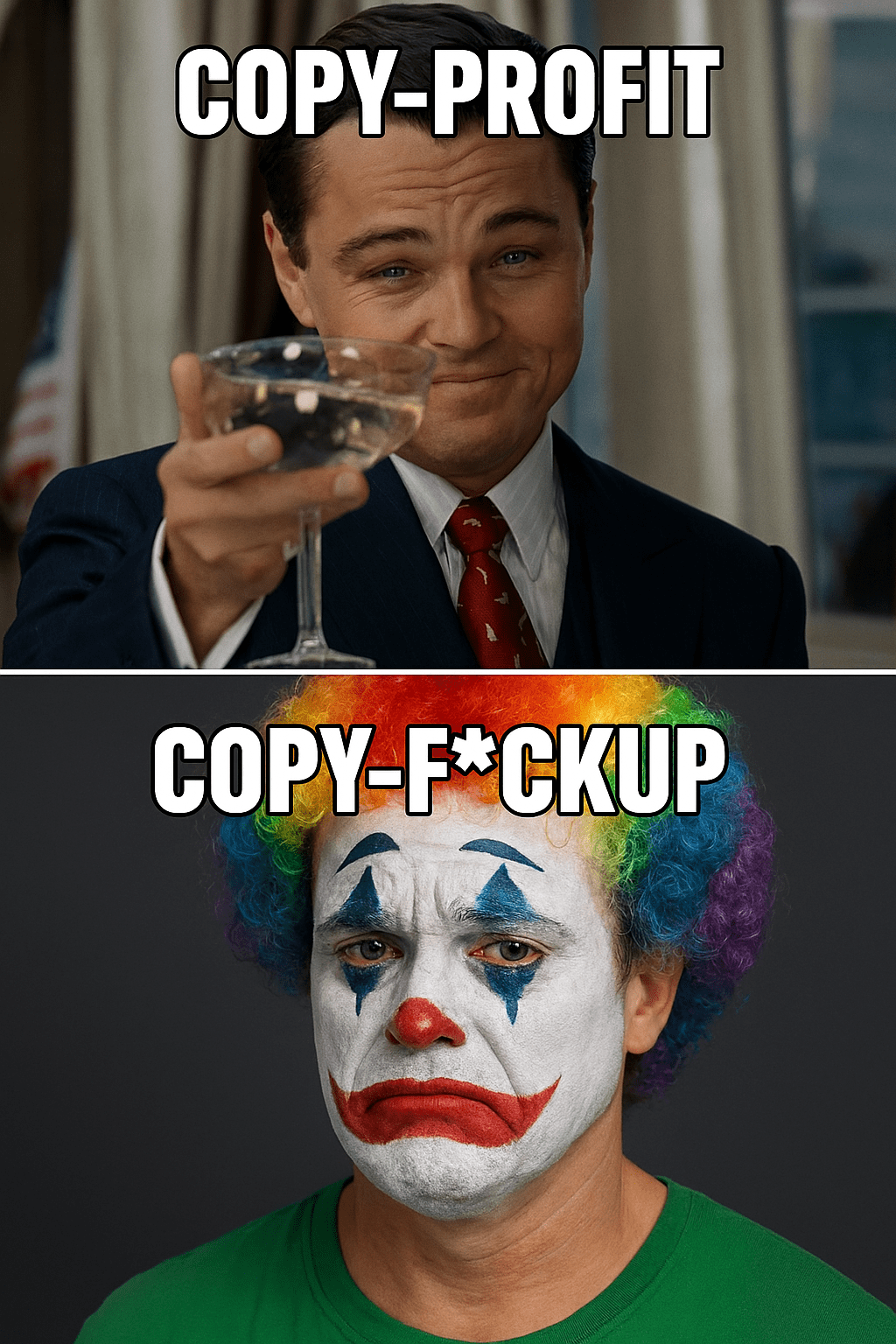
📌 What is copy trading?
Copy trading is the automatic duplication of trades of an experienced trader in your account. You don’t trade yourself — you select a trader, allocate a budget, and all their actions are repeated in real-time.
---
⚙️ How does it work?
1. Choosing a trader: Platforms provide ratings, statistics (ROI, drawdown, number of trades).
2. Connection: You allocate the amount you want to invest.
3. Automatic copying: All actions of the trader are duplicated in your account.
4. Control: You can change the amount of copying, pause, or exit at any moment.
---
🏦 Popular platforms
| Platform | Features |
|---------------|-------------|
| Binance | Simple interface, many traders, ROI filters |
| Bybit | Active community, flexible risk settings |
| MEXC | Focus on futures, automation, educational materials |
| CopyFX (RoboForex) | Forex-oriented, in-depth trader analytics |
---
✅ Advantages
- Passive income — no need to trade yourself.
- Learning through observation — see professional strategies.
- Accessibility — even beginners can start.
- Diversification — you can copy several traders.
- Flexibility — easy to change or stop copying.
---
⚠️ Pitfalls
1. Fake traders
- Some ‘traders’ inflate statistics, trade aggressively for hype.
- Check transaction history, duration of activity, maximum drawdown.
2. Portfolio drawdown
- If the trader loses 40% — you lose too.
- It's important to monitor DD (Drawdown) — a risk indicator.
3. Opaque platforms
- Not all platforms show real statistics.
- Choose those where public graphs, reviews, and transaction history are available.
4. Delays in copying
- In highly volatile markets, even a second delay can be costly.
5. Capital mismatch
- If the trader has $100K, and you have $100 — your risks may be disproportionate.
---
🧠 How to choose a trader?
- ROI > 20% — stable profit.
- DD < 15% — low risk.
- >100 transactions — experience.
- >3 months of activity — stability.
- Positive reviews — reputation.
---
🧩 Risk management strategies
- Copy several traders — reduce risk.
- Use stop-loss — limit losses.
- Regular
or review statistics — adaptation.
- Don't invest everything — keep a reserve.