
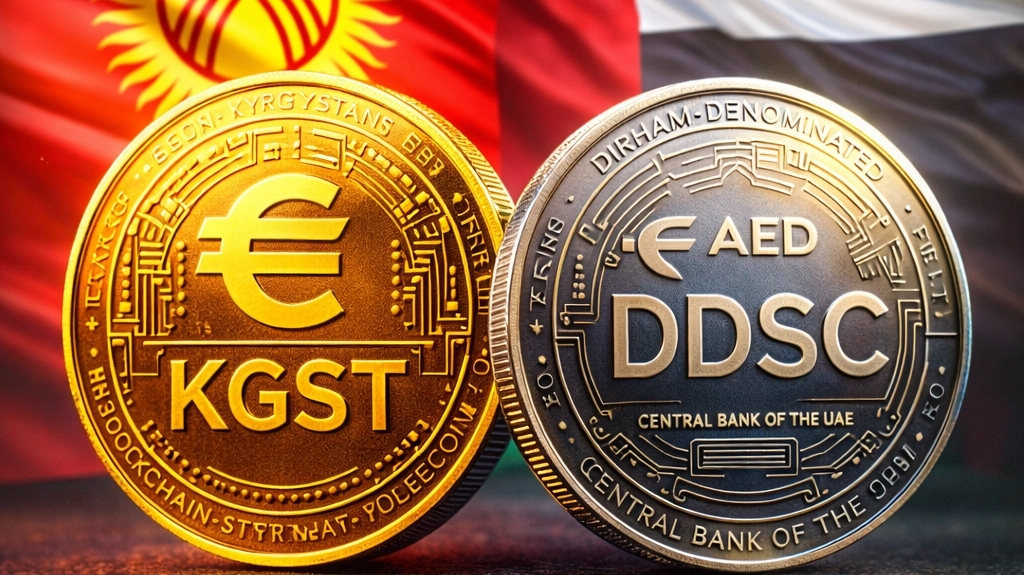
Take $KGST — the stablecoin of Kyrgyzstan, which is pegged 1:1 to the national som and operates on $BNB Chain. It is somewhat like a digital som, but already on the blockchain, fully backed by reserves in licensed banks of the Kyrgyz Republic and subject to regulation under the law on virtual assets. It was created to simplify calculations, transfers, and to give people the opportunity to use the national currency in digital form, on any device and within international payment systems.
And now let’s look at #DDSC — a new stable token pegged to the UAE dirham. It is approved by the Central Bank of the UAE and is already operating on the institutional network ADI Chain, designed for corporate and banking settlements.
This means that the state is seriously approaching digital money, not just experimenting, but implementing them for payments, settlements, treasury operations, and international trade.

The difference between them is important:
#KGST — this is really a popular, accessible stablecoin that can provide ordinary people and businesses with new ways to transfer and store money, without excessive fees and with a transparent peg to the som.
DDSC is an institutional tool for large settlements and integration of financial systems that brings stable digital assets to the level of banks and corporations.
But they have one thing in common: they both show that the world is moving towards digital money that is regulated and simultaneously accessible on the blockchain.
This is not just hype — this is a real step towards how we will pay, transfer, and store money in 5–10 years.
And if you look at these projects now with understanding, you can realize that future finances are not just BTC and ETH, but also such stable digital currencies that operate in a real economic space.
And what do you think — is this a new era of money, or just a trendy topic? 😏