


I’ve heard “fastest L1” so many times that the phrase doesn’t even register anymore.
It’s become background noise.
Every chain is fast in a blog post. Every chain has sub-second blocks in a controlled demo. And then real users show up, things spike, and suddenly the experience stretches.
So when I first saw Fogo positioning itself around latency and high-performance SVM execution, I didn’t lean in. I leaned back.
But something about it kept resurfacing in conversations — not hype threads, not price chatter — actual infra discussions. Builders talking about coordination. Traders talking about determinism. That’s a different tone.
What changed for me wasn’t a single stat. It was reframing the problem.
Most people talk about speed as execution throughput.
Fogo seems to treat speed as coordination discipline.
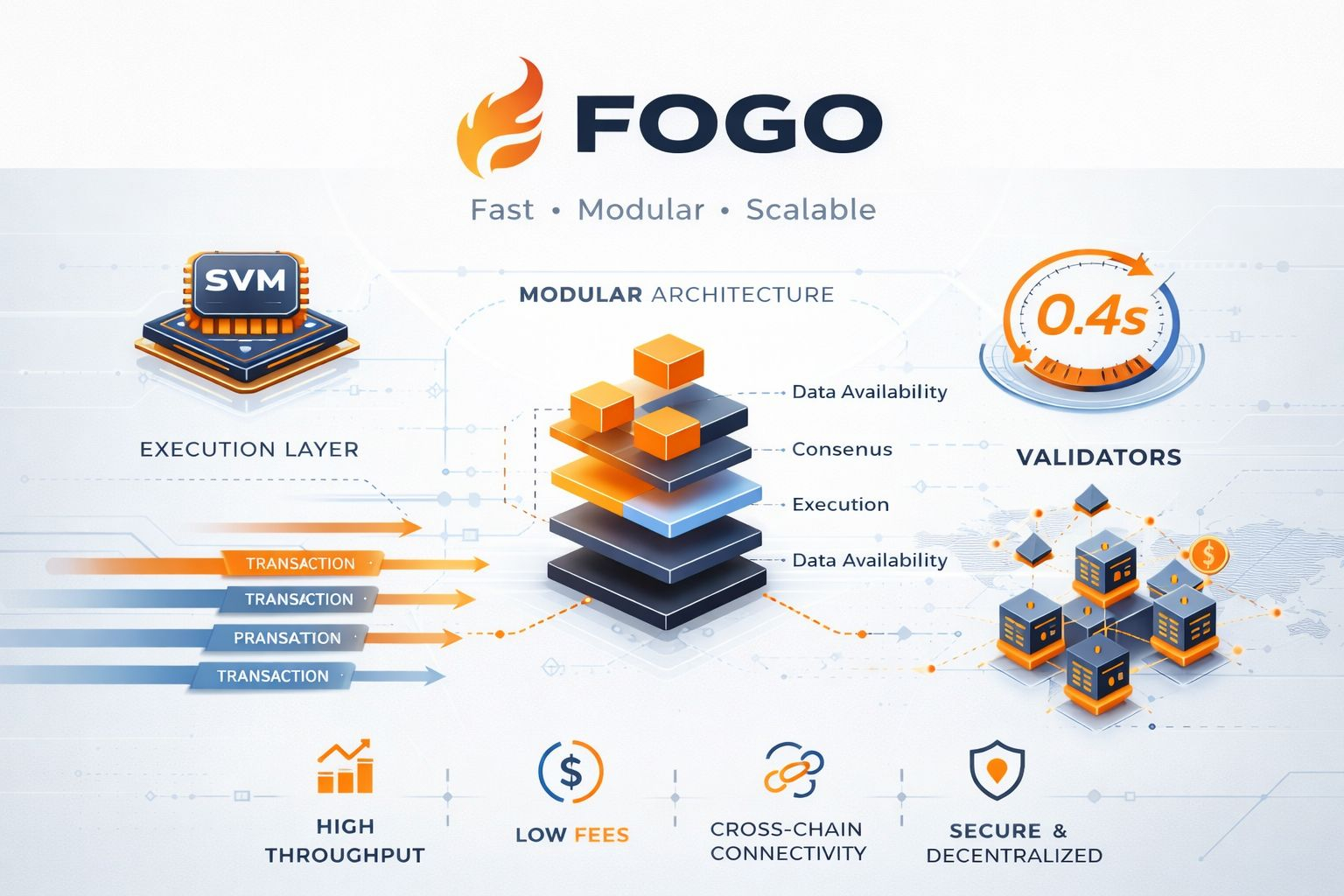
It runs on the Solana Virtual Machine, which already gives it serious execution capabilities. That’s table stakes at this point. SVM parallelization isn’t experimental anymore.
But what Fogo tweaks is the environment around that execution layer.
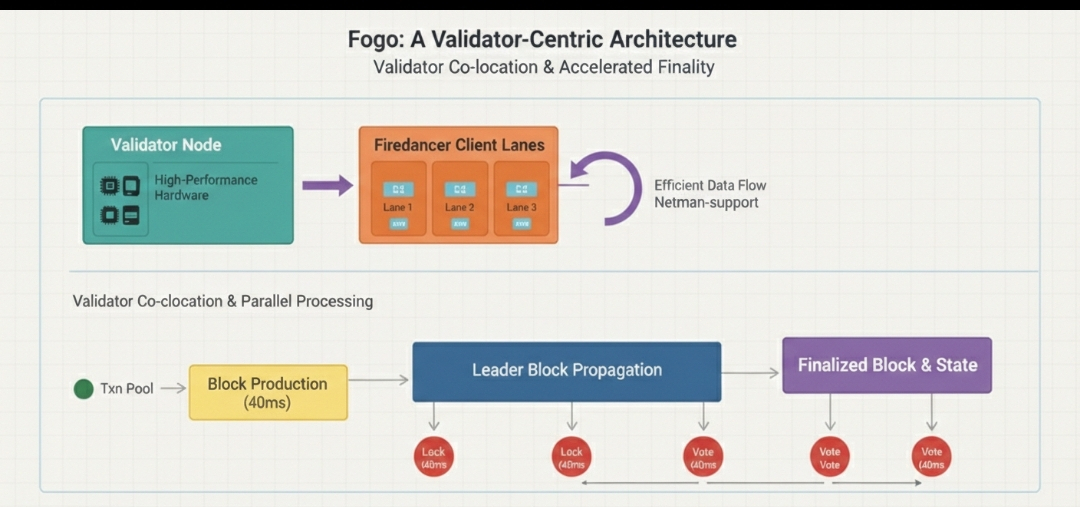
Multi-Local Consensus is the part that forced me to think differently. Instead of pretending a globally scattered validator set can agree instantly, Fogo clusters validators into optimized zones. Shorter communication paths. Faster agreement loops. Lower variance.
That last word matters more than the others.
Variance is what ruins trust.
Average block time might look great. But worst-case latency under load is what traders feel. It’s what DeFi protocols absorb during liquidations. It’s what causes cascading behavior when confirmation timing stretches unpredictably.
Fogo’s architecture feels built for worst-case scenarios, not ideal ones.
Then there’s the Firedancer-only validator approach.
At first, that felt like a decentralization red flag. Less abstraction. More control. More predictable packet flow.
Fogo isn’t optimizing for philosophical diversity.
It’s optimizing for deterministic execution.
That’s not neutral. It’s a bet.
And I respect projects that make clear bets instead of pretending to solve everything at once.
What I noticed personally is subtle.
When I imagine deploying strategies on Fogo, I don’t automatically build in latency buffers in my mental model. I don’t assume the network might wobble under pressure. That changes how aggressively you can operate.
Infrastructure shapes psychology.
Most chains underestimate that.
I’m not blind to the risks. Ecosystem gravity matters. Liquidity consolidates slowly. Solana’s cultural and developer base is strong. Fogo doesn’t magically inherit that just because it shares the VM.
And specialization cuts both ways. If you’re building for latency-sensitive markets, you need those markets to show up.
But after watching enough L1s collapse under the weight of their own benchmarks, I find Fogo’s constraint-aware design refreshing.
It doesn’t claim to defeat physics.
It engineers around it.
Maybe that’s not as flashy as “infinite scalability.”
But it’s a lot more believable.
And in this space, believable architecture is rarer than it should be.
