
Have you ever thought about where the true value of a public chain really comes from?
It's not about the elegance of the code, nor the accumulation of capital, but whether it can enable value to continuously circulate and amplify within its own network, ultimately forming a self-reinforcing economic flywheel.
Today, I want to talk to you about the major project that ZKsync is building — we call it the flywheel model of 'Zero-Knowledge Economics' (ZK Nomics). The V31 protocol upgrade is the starting point for this flywheel to begin accelerating.
1. The Gears of the Flywheel: Why is native interoperability the 'money printer'?
The core of any economy is transactions. Where there are transactions, there are fees; where there are fees, there is value capture.
But the problem in the past was: chains were isolated from each other. Liquidity was trapped on islands, transaction scenarios were limited, and fee income could not be maximized.
ZKsync's next protocol upgrade—V31—is aimed at solving this fundamental issue: achieving native interoperability across the entire ZK elastic network.
What does this mean?
It means that in the future, whether it's existing public chains like Abstract and Gravity, or future bank-affiliated public chains, fintech public chains, or even institutional networks like Pridinm, they can seamlessly connect and trade freely within ZKsync's elastic network.
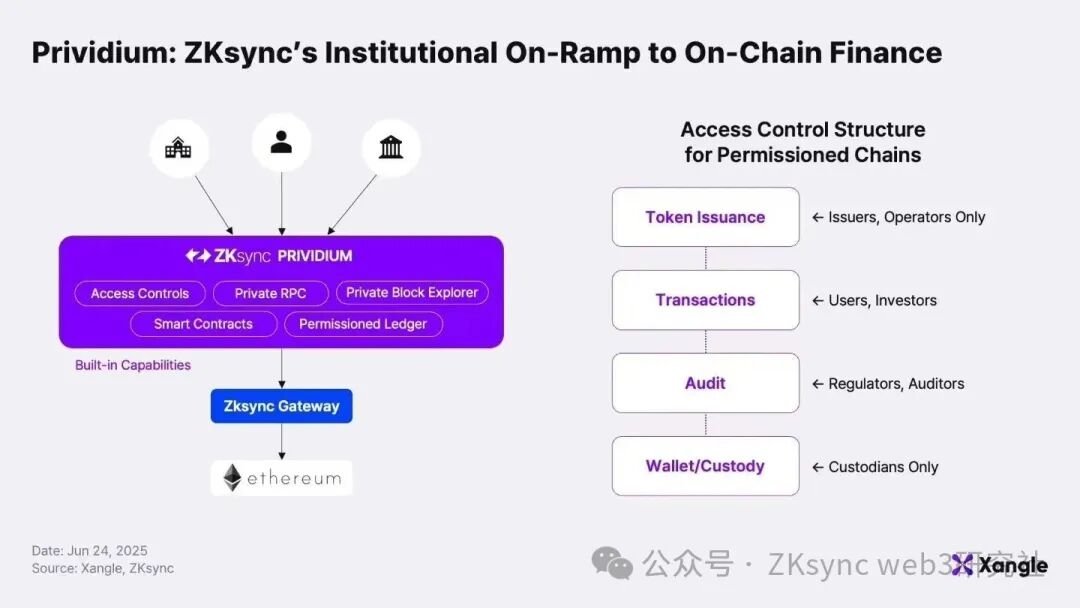
Every new chain that goes live, every new user that joins, and every cross-chain interaction will generate on-chain protocol fees. These fees will directly become the underlying source of income for the ZKsync economic system.
This is the fuel for the flywheel.
Second, the logic of the flywheel: more chains → more transactions → more income → larger network.
Once native interoperability is implemented, the logic of the flywheel becomes clear:
· More public chains connecting to the elastic network → more transaction scenarios.
· More transaction scenarios → more on-chain fee income.
· More fee income → stronger value capture capability.
· Stronger value capture → attracting more developers and users.
· More developers and users → driving more public chains to connect.
This is a typical manifestation of the "Metcalfe's Law" in the network economy: the value of a network is proportional to the square of the number of nodes. The elastic network of ZKsync is turning this square effect from theory into reality.
The V31 upgrade is the key to unlocking this square effect.
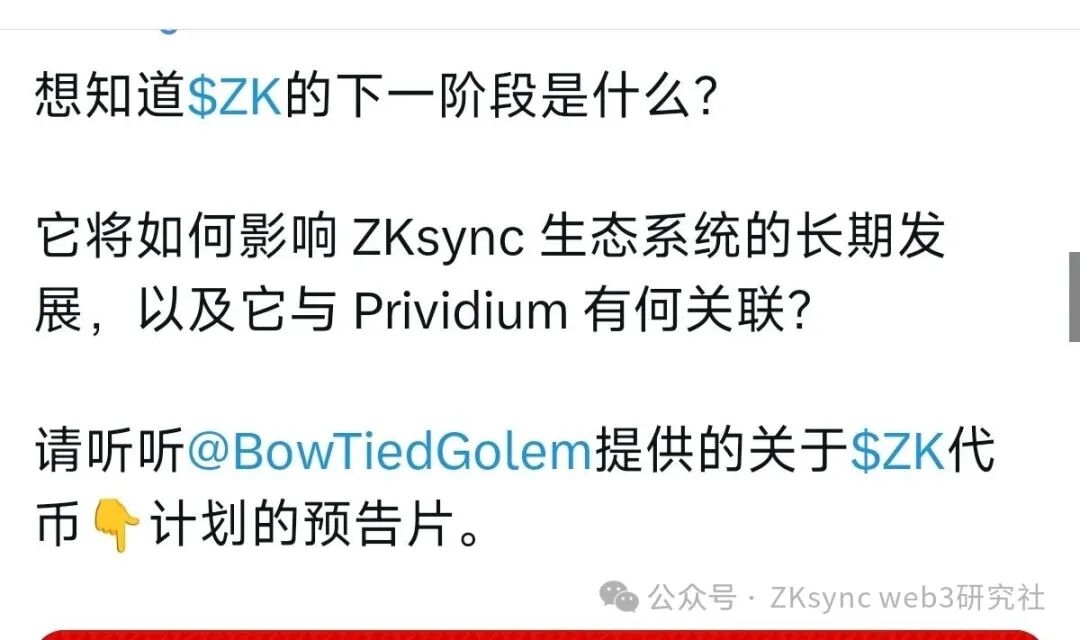
Third, opportunities for ordinary people: sit at the card table before the flywheel accelerates.
You might ask: what do these technological upgrades have to do with an ordinary person?
It matters a lot.
In the world of blockchain, the biggest wealth opportunities have never been in the "well-known hotspots," but rather on the eve of infrastructure upgrades. When the flywheel begins to accelerate, early builders are often the biggest beneficiaries.
How can ordinary people participate correctly, avoiding pitfalls while not missing out?
First: focus on real ecological construction, rather than price speculation.
The V31 upgrade, native interoperability, and new chain integrations are the core variables that determine ZKsync's long-term value. Instead of obsessing over K-line charts, it's better to understand what ecological projects like Abstract and Gravity are doing, and to experience the real scenarios of cross-chain interactions.
Second: become a "guardian," not a speculator.
In ZKsync's economic model, miner alliances (guardians) are the cornerstone of the network. By staking, participating in DAO governance, and providing liquidity, you are not only contributing to network security but also sharing in the dividends of network growth.
Third: avoid the "shady dog trap" and uphold the value baseline.
Before and after every round of technological upgrades, a bunch of imitation projects claiming to be "ZK concepts" will emerge to harvest newcomers. Remember: there is only one true ZKsync, and official information is always on Discord and Twitter. In the Asia-Pacific region, recognize the Thor Community. Avoid shady dogs, avoid needles, and avoid chasing highs—these are the three iron rules for ordinary people to avoid pitfalls.
Fourth, the flywheel has already started turning; are you ready to get on board?
Every protocol upgrade is a reconstruction of the infrastructure; every reconstruction will give rise to a new wealth distribution.
The native interoperability of V31 will allow ZKsync to truly evolve from a "scaling solution" into a "value network." As banks, fintech, and RWA come on board, and as on-chain protocol fees begin to flow continuously, the speed of this flywheel will only get faster.
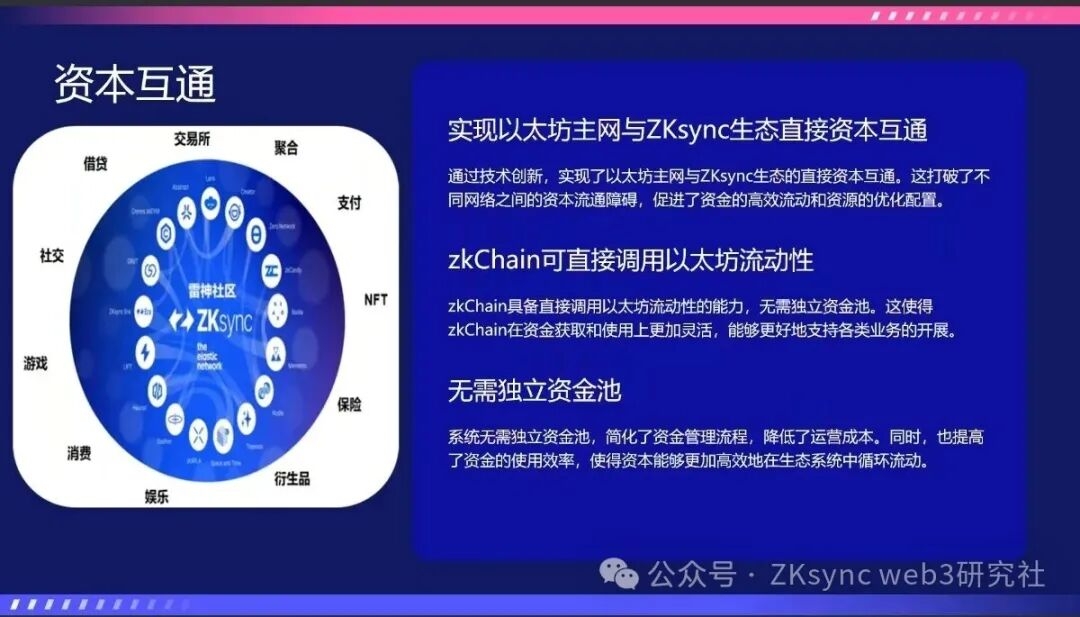
The Thor Community has always believed: true value comes from deep participation, not from the sidelines.
The flywheel of ZKsync has quietly started. This time, will you be the one sitting at the card table, or the one standing outside watching?
The choice is in your hands.
Join the Thor Community, become a guardian of ZKsync, and witness the era of zero-knowledge economics together.