
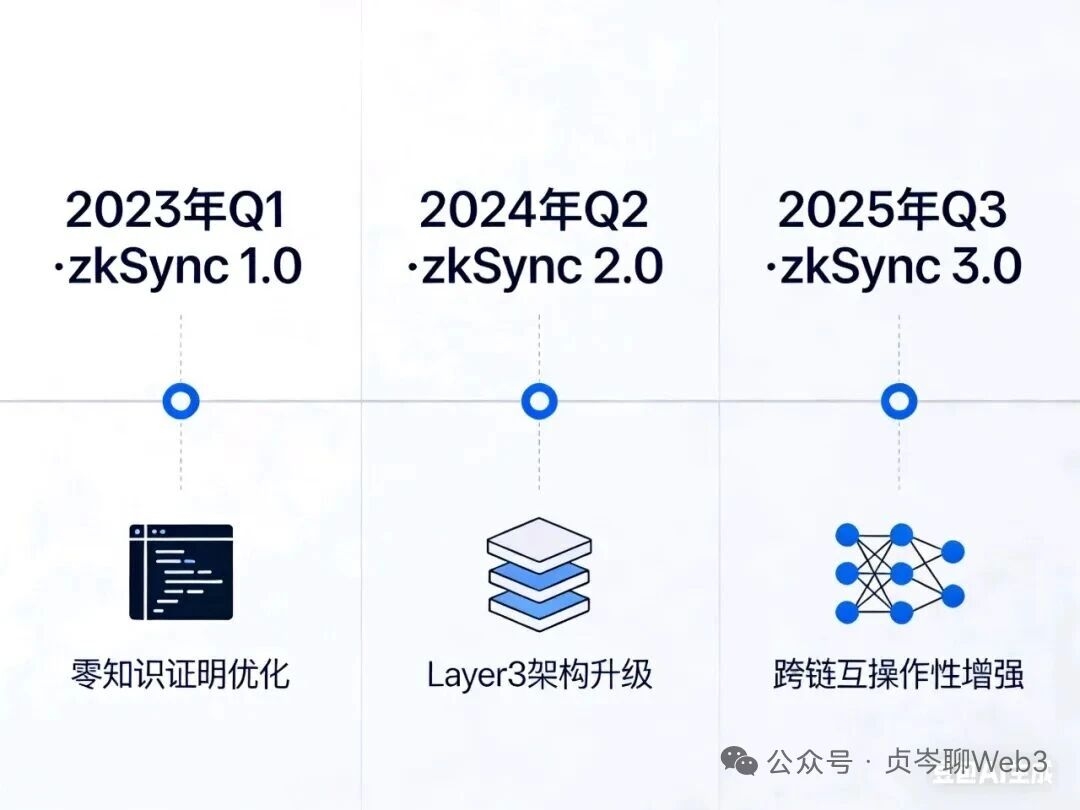
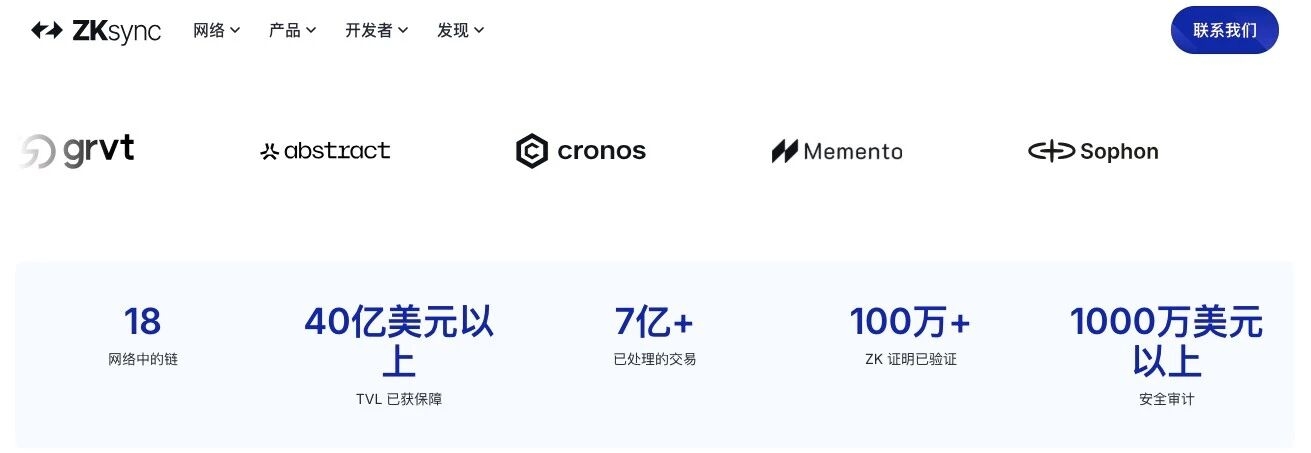
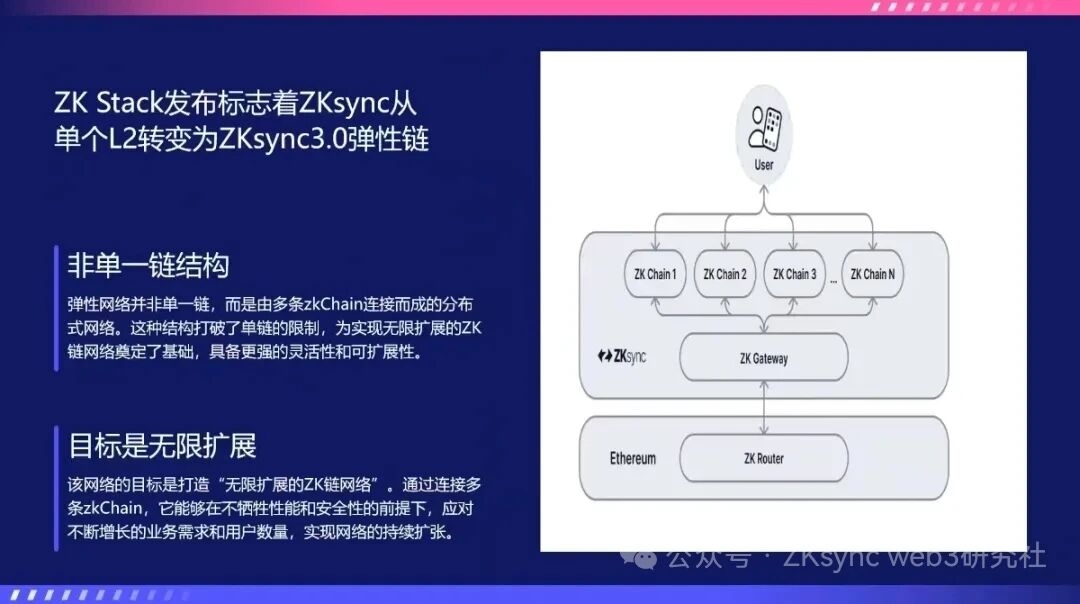
ZKsync Elastic Chain: As a brand new network architecture of the ZKsync ecosystem, it is not a replacement for ZKsync Era, but rather an infinitely scalable network upgrade based on it. It consists of multiple ZK Chains and achieves atomic-level cross-chain interoperability through ZK Router and ZK Gateway, completely addressing the custodial risks and capital efficiency losses of traditional cross-chain solutions, transforming the entire ecosystem from "single-chain application islands" to a "multi-chain collaborative sovereign network federation". Currently, the ecosystem has deployed 18 chains, carrying 3.1 billion USD in assets, validating the feasibility of this architecture.
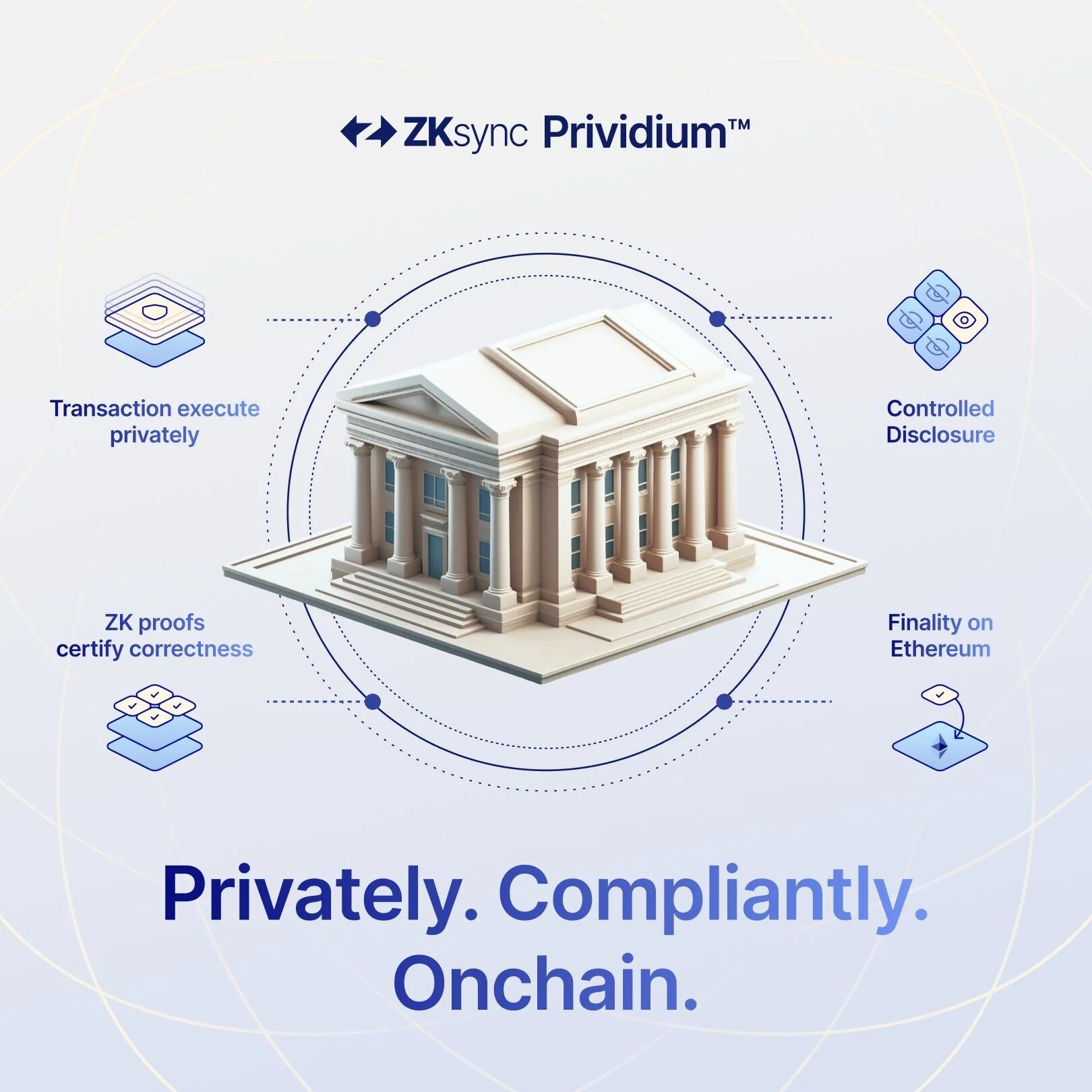
Prividium™: As the world's first institutional-grade dedicated Ethereum security blockchain platform, it fills the core gap in the institutional market for blockchain — it uses ZK zero-knowledge proofs as its core to achieve both transaction privacy protection and regulatory compliance while granting institutions complete control over their data, supporting core needs such as cross-border payments, tokenized asset issuance, and institutional fund management. ZKsync has already reached practical cooperation with institutions such as Deutsche Bank and Memento, becoming the core compliant interface for traditional finance to access Web3.
The two complement ZKsync Era: Era serves as the foundational public chain for ordinary users and general Web3 applications, Elastic Chain achieves infinite scalability and interoperability in the ecosystem, and Prividium targets the high-value institutional market. Together, they form a complete ecological map of 'mass + ecology + institutions'.
ZKsync's strategic elevation from 'Ethereum scalability tool' to 'blockchain operating system'
Surpassing Era does not negate the value of ZKsync Era (as the world's largest ZK Rollup, it remains the technical foundation and traffic entry point of the ecosystem), but emphasizes that the developmental core of ZKsync has fundamentally shifted.
From 'single-chain performance optimization' to 'multi-chain ecological construction': Previously, the core value of ZKsync Era was to solve the scalability and high transaction fee problems for Ethereum, making it an 'ancillary tool for Ethereum.' However, Elastic Chain enables developers to autonomously deploy dedicated chains through modular and customizable ZK Stack while achieving seamless interoperability among all chains, allowing ZKsync to become an 'operating system' capable of carrying a diverse ecology. Currently, the ecosystem covers multiple fields including DeFi, GameFi, AI, social, and institutional finance, validating its carrying capacity.
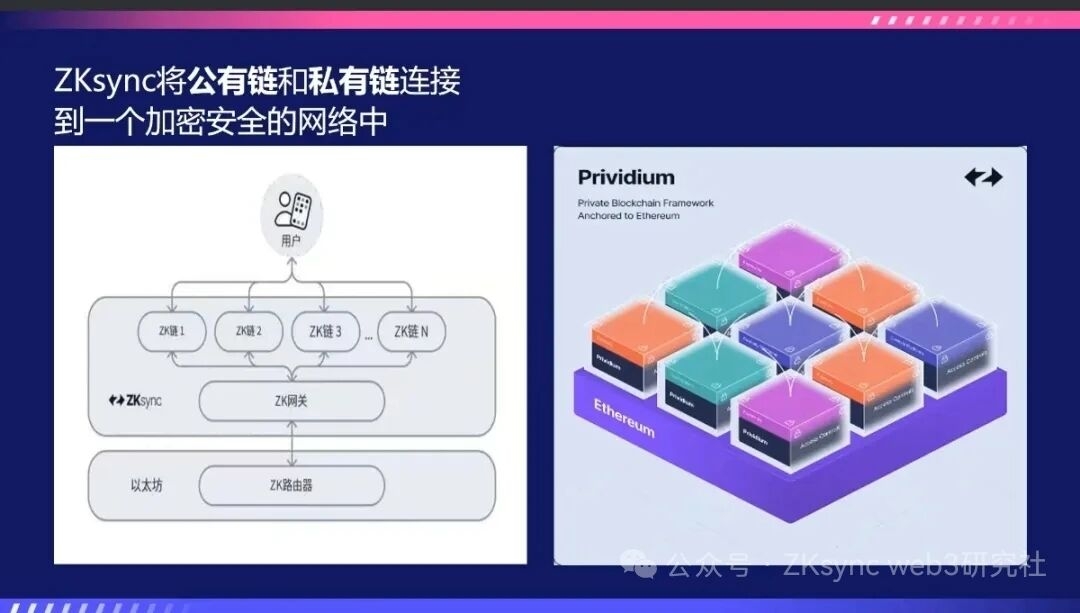
From 'targeting mass users' to 'full-scenario coverage': The primary service users of ZKsync Era are ordinary Web3 users and small to medium developers. The launch of Prividium has allowed ZKsync to achieve dual coverage of the mass market and institutional market for the first time — this is a crucial step for blockchain to move from 'niche technical experiments' to 'mainstream commercial infrastructure' and is also a core barrier that distinguishes ZKsync from other Layer2s (most Layer2s are still focused on mass users and lack institutional-grade compliance solutions).
From 'technical breakthroughs' to 'commercial landing': Whether it is the ecological expansion of Elastic Chain or the institutional cooperation of Prividium, both signify ZKsync's transition from the 'pure technical research and development' stage to the 'scaled commercial landing' stage. Its technical capabilities (ZK proofs, zero-trust interoperability) have been transformed into actual commercial value rather than remaining at the conceptual level.
Disrupting industry value assessment standards, reconstructing ZKsync's value logic — 'TVL has little significance now; ZKsync's value capture method has fundamentally changed. The traditional metric of TVL (total locked value) used to measure DeFi ecosystem activity can no longer match its new ecological positioning.
The limitations of traditional TVL: TVL primarily reflects the scale of locked virtual assets on-chain, suitable for single public chains/Layer2 focused on DeFi, but it has two major flaws — it is easily influenced by speculative funds and cannot measure the value of institutional assets and real-world assets. The ecosystem of ZKsync Era was originally centered around DEX, and TVL was once its core valuation metric, but as the ecosystem expands, this metric can no longer cover the overall picture.
ZKsync's new value logic: from 'virtual asset locking' to 'real value accumulation'
Asset type upgrade: ZKsync introduces institutional-grade real-world assets (RWA) through Prividium, such as tokenized government bonds, cross-border payment funds, and institutional financial assets. The value scale of these assets far exceeds that of virtual assets and possesses characteristics of stability and low volatility, which traditional TVL cannot account for.
Diversification of revenue models: No longer relying on traditional gas fee revenue, but obtaining sustainable protocol income through inter-chain interoperability fees of Elastic Chain, enterprise-level licensing fees of Prividium, and bridging fees of ZK Gateway. These revenues are not directly related to TVL, yet can support long-term ecological development.
Complex network effects: The value of ZKsync is no longer determined by a single user/asset scale but by the multiplicative effects of the technology network (number of ZK chains), institutional network (number of partnerships with financial giants), and user network (mature applications and users). TVL can only reflect a small part of the user network and cannot measure this complex network value.
If we continue to use 'the level of TVL' to assess ZKsync's value, we are falling into a cognitive misunderstanding. The core value of ZKsync is no longer about 'how many virtual currencies are locked', but about 'whether it can become a blockchain infrastructure that carries trillions of traditional financial assets and real-world assets', focusing on its ecological scalability, institutional compliance capabilities, and cross-chain interoperability.
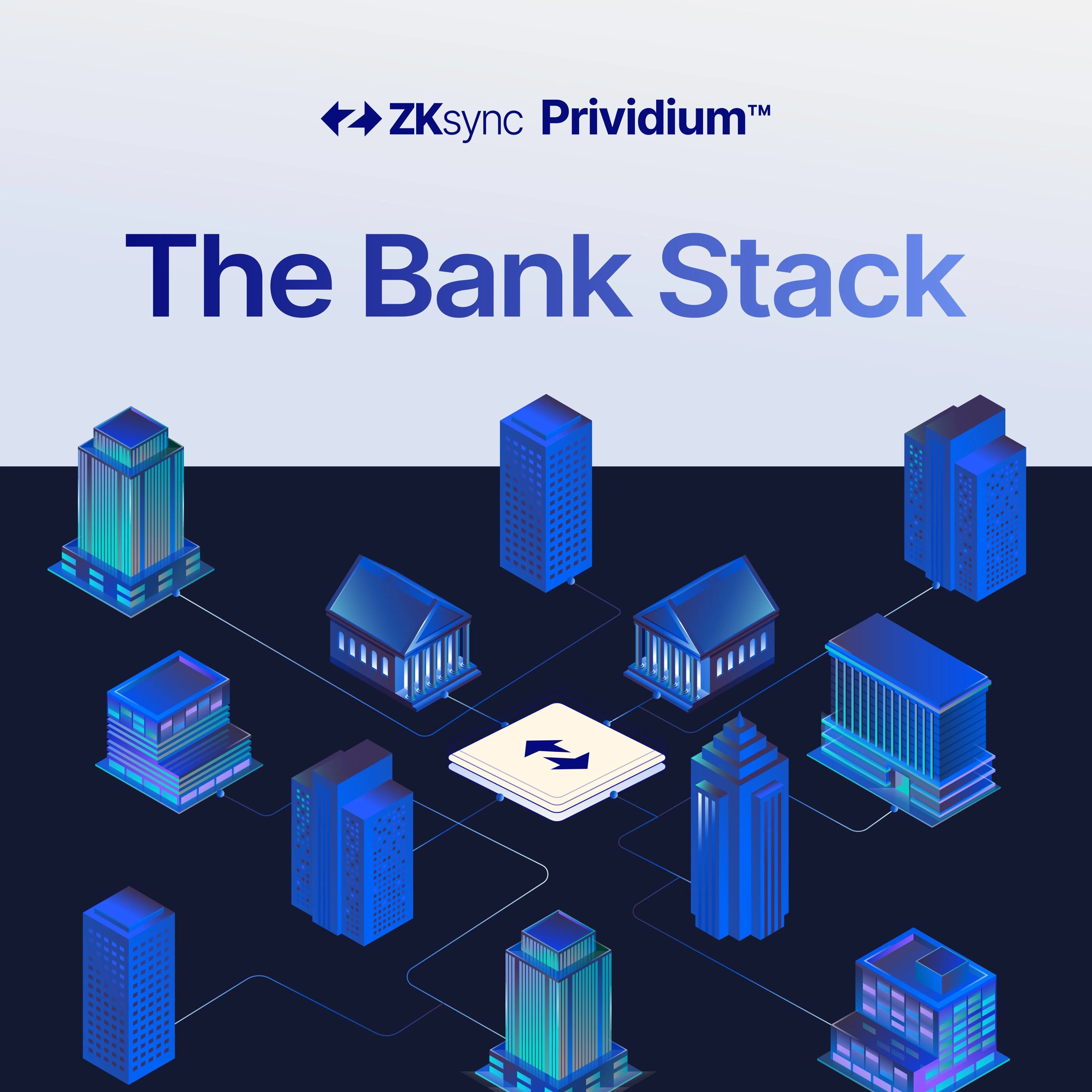
ZKsync hopes to leverage the ecological scalability of Elastic Chain and the institutional-level solutions of Prividium to become the core infrastructure of the next generation blockchain, while also becoming the 'only compliant channel' for traditional financial systems to access Web3.
The current development trend in the blockchain industry is institutionalization, real-world assets on-chain (RWA), and multi-chain interoperability. ZKsync's two major layouts precisely align with these three trends.
Elastic Chain addresses the industry's pain points of 'multi-chain interoperability', transforming blockchain from 'disparate islands' into a 'connected continent'.
Prividium solves the core obstacles of 'institutionalization and RWA' — privacy, compliance, and data control, enabling traditional financial institutions to confidently move assets and businesses on-chain. ZKsync's self-positioning upgrade: it no longer settles for being 'the best Layer2 for Ethereum', but hopes to become a 'blockchain operating system' that defines the standards for the next generation of blockchain and connects traditional finance with Web3. This is also its core differentiation from other Layer2s (such as Arbitrum and Optimism).
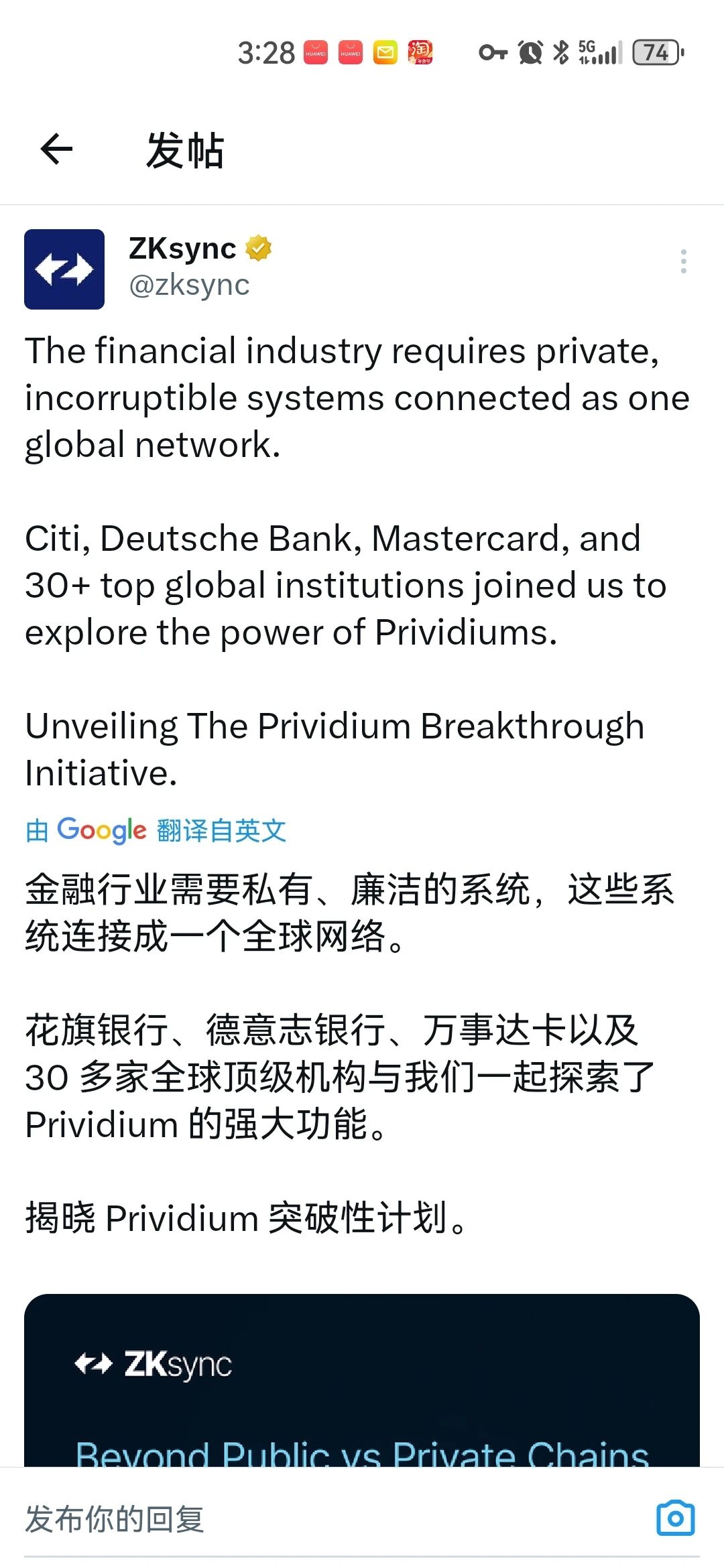
In summary, the surface shows the expansion of the ecological map, the middle layer indicates the elevation of the development model, and the underlying layer represents the reconstruction of value logic. This not only announces ZKsync's transformation from a 'single-chain scalability tool' to a 'full-scenario blockchain operating system' but also conveys a signal to the industry — blockchain development has entered a new stage of 'institutionalization, materialization, and multi-chain integration', where traditional value assessment standards and development models are outdated. ZKsync has already positioned itself ahead of time, becoming the core leader of this new stage.