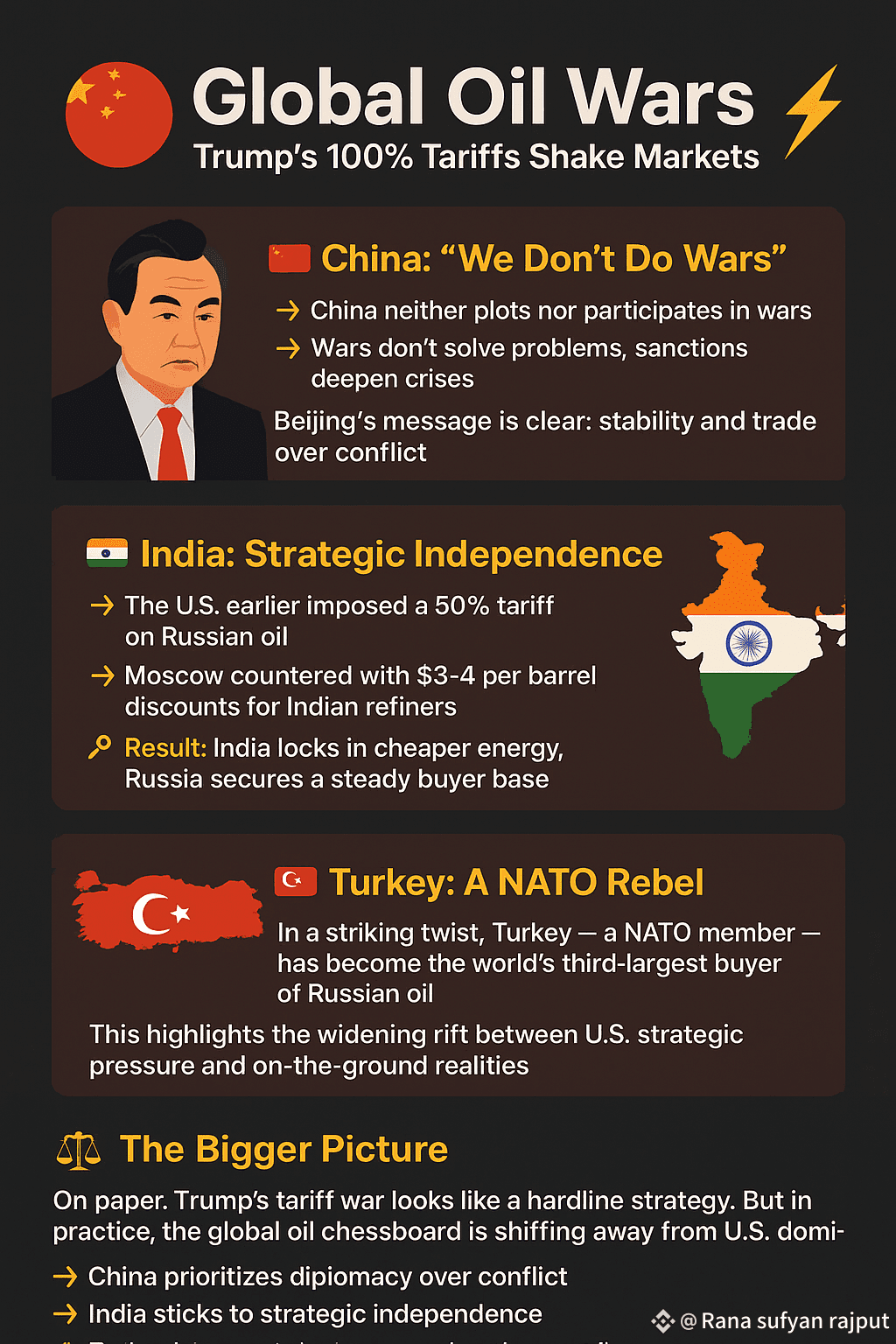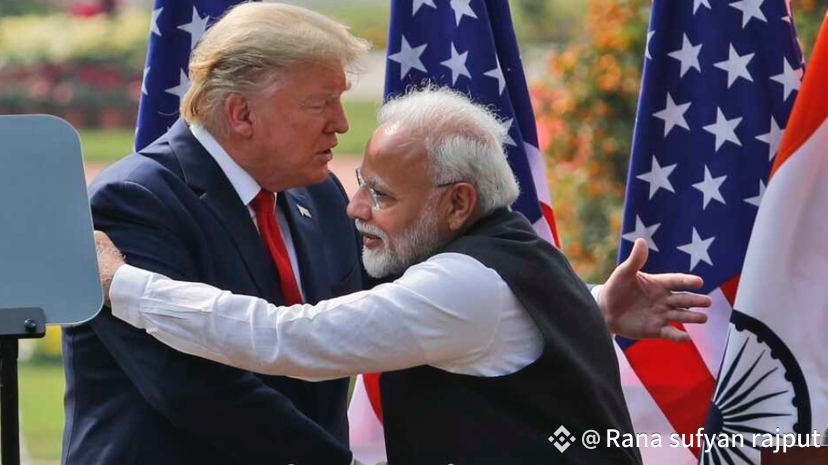
The U.S., under President Donald Trump, #TRUMP has cranked up pressure on global energy trade — calling on NATO allies to impose 100% tariffs on Russian oil buyers. This move has rattled commodity markets worldwide, but the global response is proving more complex than Washington expected. ⚡
---
🇨🇳 China: “We Don’t Do Wars”
Chinese Foreign Minister Wang Yi issued a firm rejection of U.S. sanctions politics:
China neither plots nor participates in wars.
Wars don’t solve problems, sanctions deepen crises.
Beijing is sending a clear message: stability, trade, and energy security matter more than conflict.
---
🇮🇳 India: Strategic Independence
Despite mounting Western pressure, India has kept its energy policy independent.
The U.S. earlier imposed a 50% tariff on Russian oil.
Moscow countered with $3–4 per barrel discounts for Indian refiners.
🔑 Result:
India locks in cheaper energy.
Russia secures a steady buyer base.
A pragmatic “win-win” model for both.
---
🇹🇷 Turkey: A NATO Rebel
In a striking twist, Turkey — a NATO member — has become the world’s third-largest buyer of Russian oil.
This highlights the widening rift between U.S. strategic pressure and on-the-ground realities:
➡ Energy security often outweighs alliance obligations.
---
⚖️ The Bigger Picture
On paper, Trump’s tariff war looks like a hardline strategy. But in practice, the global oil chessboard is shifting away from U.S. dominance.
China prioritizes diplomacy over conflict.
India sticks to strategic independence.
Turkey proves pragmatism trumps NATO alignment.
The big question:
👉 Will U.S. tariffs truly isolate Russia — or isolate the U.S. from its own allies? 🤔
Please 🙏 follow me
---
#️⃣ #TrumpTariffs #EnergyWar #OilCrisis #Write2Earn