

On February 28, the U.S.-Israeli coalition launched a military operation codenamed 'Epic Fury', conducting large-scale airstrikes on over 2,000 targets within Iran, resulting in the death of Iran's Supreme Leader Khamenei. This military action is regarded as the largest and most far-reaching geopolitical event in the Middle East in the past several decades.
The global capital markets held their breath for an entire weekend, just to validate a core question: Is the investment narrative that has been hotly pursued in the past two years a truth that can withstand scrutiny, or just a house of cards? In times of chaos, is gold really a hard asset that retains value? Can Bitcoin take up the banner of 'digital gold'? Is debasement trade a feasible investment logic, or merely a market narrative bubble?
As the market opened, the answer was already revealed. Gold briefly surged to $5,400 before plummeting alongside stocks, with a drop of over 4%; silver faced a heavy setback, with a single-day plunge of 8%; Bitcoin fell initially and then fluctuated, ultimately returning to its opening price, remaining stagnant; in contrast, the US dollar index rose against the trend by 1.1%, becoming one of the few winners.
Mainstream investment narratives are facing an ultimate stress test.
Over the past two years, a seemingly flawless investment logic has circulated in the cryptocurrency market and the macroeconomic sphere: the scale of US debt is out of control, the dollar is long-term entering a depreciation channel, and gold and Bitcoin are quality hard assets that hedge against currency devaluation. The 'currency devaluation trade' formed by the two has become mainstream in the market. In 2025, this narrative received solid data support: gold's annual increase exceeded 50%, Bitcoin peaked at $126,000, and the US dollar index fell nearly 11%, marking the worst first-half performance in 50 years. Ken Griffin of Citadel Investments has repeatedly mentioned this trading logic in public, and BlackRock's Bitcoin ETF management scale is nearing $100 billion.
The core underlying premise of this narrative is: once a true global crisis breaks out, funds will decisively abandon the US dollar and flow into hard assets like gold and Bitcoin for hedging.
And last weekend's sudden geopolitical conflict brought this core premise to its first high-intensity real pressure test.
On Monday, as the market opened, gold indeed exhibited the expected safe-haven performance, with London gold briefly surging to $5,418, nearly matching the historical high set at the end of January. However, the good times didn't last long, as international oil prices continued to soar and inflation expectations rose again, the market began to reassess the Federal Reserve's rate cut path, resulting in an instantaneous reversal in the trend of global assets. Gold closed the day down after rising, and further plummeted on Tuesday, dropping over 4% to its lowest level since February 20.
The performance of silver is even more tragic, breaking through the $96 mark on Monday, with a single-day drop approaching 8% on Tuesday, completely losing its safe-haven attributes.
The underlying logic is not complex: a surge in oil prices directly raises inflation expectations, and higher inflation will compress the Federal Reserve's room for rate cuts; cooling rate cut expectations will further boost the dollar's strength, and the dollar and gold, silver have always shown an inverse relationship, with a stronger dollar directly suppressing precious metal prices. Coupled with the forced liquidation wave triggered by the simultaneous sell-offs of global risk assets, gold and silver, which should have been the first choice for hedging, have become the targets prioritized for sale due to abundant liquidity and ease of liquidation.
This plot is not the first of its kind; when the Russia-Ukraine conflict broke out in 2022, Bitcoin did not demonstrate safe-haven properties but instead fell along with the Nasdaq index; gold initially surged but was later sold off by profit-takers, and now it is merely a replay of the same script, only with greater conflict intensity and larger market volatility.
The situation for Bitcoin is even more awkward. During the weekend when the conflict broke out, the crypto market was the only one operating normally globally, with Bitcoin dropping from around $66,000 to below $64,000 at one point, then quickly rebounding, essentially recovering its losses before the traditional financial market opened on Monday, seemingly showing strong resilience. However, it is not so; at that time, institutional funds had not yet entered the market, and the support for its rebound was only from retail funds and arbitrage trades, blindly searching for direction amid fluctuations. On Tuesday, as the global market continued to weaken, Bitcoin faced renewed pressure, hovering around $68,000, showing neither the safe-haven rally one would expect from 'digital gold' nor the sharp declines typical of ordinary risk assets, but rather exhibiting disordered fluctuations within a range.
The Strait of Hormuz, the chip industry chain, and the market crash triggered by the South Korean holiday.
The panic selling encountered by the South Korean stock market is particularly severe, with the core structural reason being: Monday is South Korea's Independence Day, and the national market is closed, with the exchange suspending trading.
The accumulated panic over the weekend had no outlet and was completely trapped in the market. At 9 AM on Tuesday, all the sell orders accumulated during the three-day holiday concentrated to crash the market, with the KOSPI index opening triggering a circuit breaker warning, ultimately closing down 7.24%, with a single-day market value evaporating by about 377 billion Korean won, equivalent to about $257 billion.
This is the largest single-day drop in the KOSPI index since the yen carry trade crisis in August 2024. At that time, the KOSPI fell 8.77% in a single day, triggered by weak US non-farm payroll data combined with an unexpected interest rate hike by the Bank of Japan, representing a release of systemic risk at the financial leverage level; this time, although directly ignited by geopolitical factors, it similarly conceals tight market risks, only with different risk sources.
In the past year and a half, South Korean retail investors have fallen into extreme anxiety of missing out (FOMO), with the KOSPI index soaring from 2,400 points at the end of 2024 to over 6,000 points by the end of February this year, with a 14-month increase of nearly 150%. Multiple brokerages have even raised their target price for the index to 7,000 and 8,000 points. In January of this year, the number of stock accounts in South Korea exceeded 100 million, while the total population of South Korea is only 50 million, with an average of over two accounts per person. The South Korean government even included 'KOSPI 5,000 points' in its policy agenda, setting it as a national policy goal.
At the same time, market leverage funds are also expanding. Before the incident, the balance of financing loans in South Korea exceeded 32 trillion won, equivalent to about $22.4 billion, setting a new high since 2021; the balance of stock pledge loans was another 26 trillion won, with the total leverage funds approaching $37 billion. The market panic index VKOSPI had already soared to 54 by the end of February, more than twice the normal level, indicating that while the index was repeatedly hitting new highs, market panic had already entered an extreme zone.
This high-leverage, high-panic market structure, when faced with acute shocks like geopolitical conflicts, will inevitably trigger textbook-style liquidity squeezes.
The drop in stock prices triggered margin warnings, leading brokerages to initiate forced liquidations, further suppressing stock prices, which in turn triggered new margin warnings, forming a self-reinforcing negative cycle. On that day, foreign investors net sold over 51.7 trillion won, equivalent to about $3.5 billion, marking the largest single-day net selling amount of the year; meanwhile, South Korean retail investors went against the trend to buy the dip, continuing to increase their positions in leveraged ETFs, betting on a rapid market rebound.
Other Asian markets are under pressure at the same time, with the Nikkei 225 index dropping 3% on the day, and Toyota and Sony falling 5.5% and 4.3% respectively; the Hong Kong Hang Seng Index fell 2.1%, leading the Asia-Pacific market decline; the Stock Exchange of Thailand announced a suspension of short selling operations for most securities, and the entire Asia-Pacific MSCI index fell by about 2%.
But the most critical structural vulnerability in the global market remains concentrated in Seoul, South Korea.
This sharp decline is not just about the South Korean stock market, but also the KOSPI index, which is revered by the market as the 'core target of the AI supercycle.' Samsung Electronics fell nearly 10%, dropping below the key psychological level of 200,000 won; SK Hynix plunged 11.5%. Together, the two companies contribute about 40% of KOSPI's market value, and they are also the core pillars of the global AI chip supply chain: Samsung is the largest manufacturer of DRAM and NAND flash memory in the world, while SK Hynix is the core supplier of HBM high-bandwidth memory, most of which is used in Nvidia's AI GPUs.
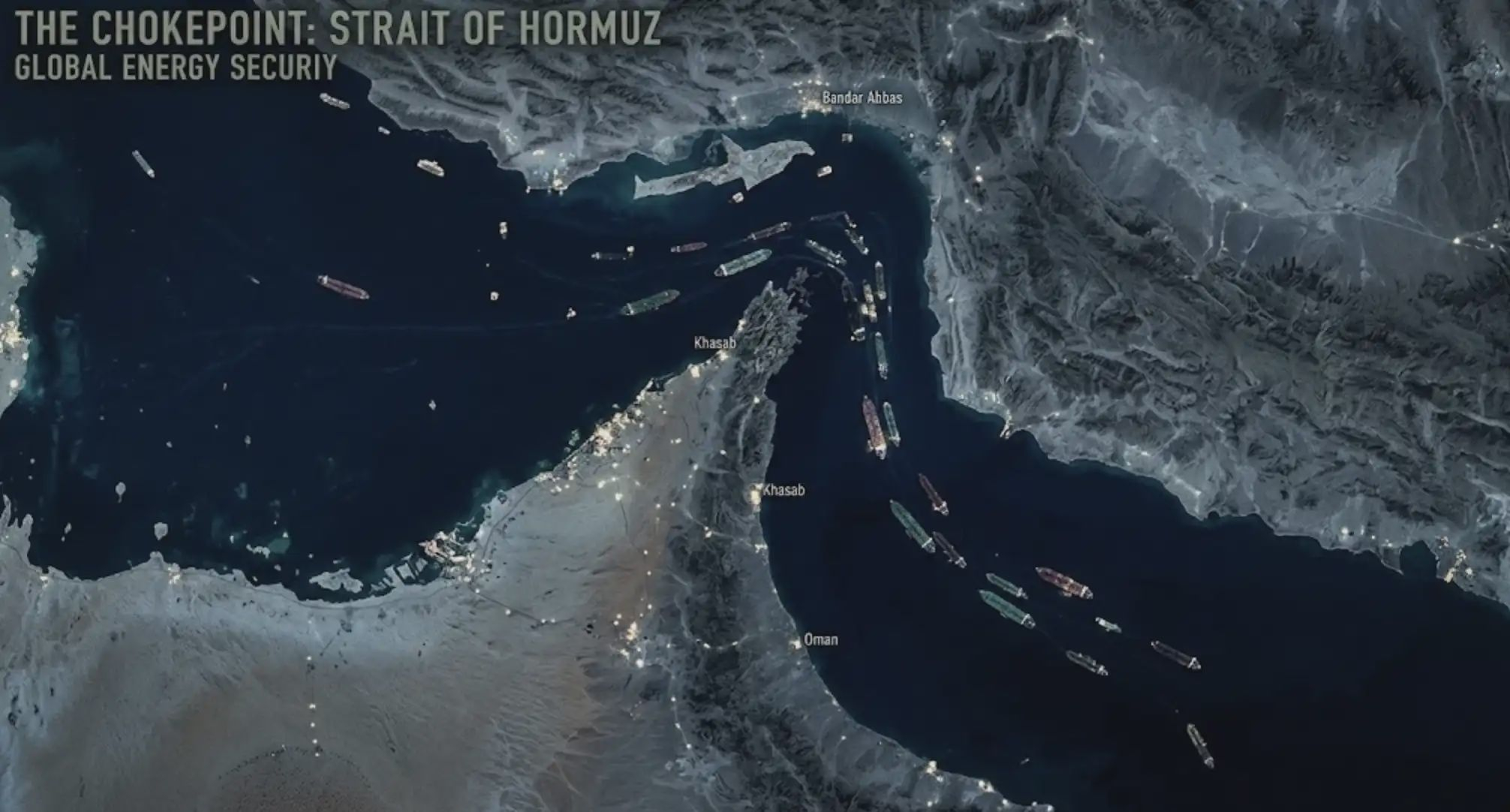
These core chip factories are all located in South Korea, which needs to import 2.76 million barrels of oil daily, the vast majority of which comes from the Persian Gulf and must be transported via the Strait of Hormuz.
Although Iran announced the closure of the Strait of Hormuz, it later retracted the statement, but insurance companies have suspended coverage for war risks, and shipping companies have suspended route scheduling; an undeclared blockade of the strait has effectively taken place.
Just as the South Korean stock market faced a crash, a piece of news quietly fermented: Samsung's wafer factory in Taylor, Texas, has delayed its mass production schedule again, from 2026 to 2027. This factory, regarded as the core of the US 'chip reshoring' strategy, still relies on oil supplies from the Persian Gulf even though it is built in the desert, with the influence of geopolitical conflicts already penetrating regional limitations.
The US dollar has triumphed against the trend, while global assets have collapsed across the board.
The final outcome of the market is cruel yet realistic.
In this market cycle, 'de-dollarization' is one of the most mainstream macro narratives: the US dollar's share of global reserve currency has fallen below 47%, central banks around the world are increasing their gold holdings at a record speed, BRICS countries are building the mBridge cross-border settlement platform, and the scale of on-chain stablecoins has expanded from $205 billion to over $300 billion. Market participants are almost all betting that the era of dollar hegemony has already ended, and the future will be an era of multipolarity, hard assets, and decentralization.
However, after the outbreak of geopolitical conflict, the US dollar index surged by 1.1%, marking the largest single-day increase since May of last year.
On the day of the conflict, global assets were sold off simultaneously: stocks, bonds, gold, silver, and commodities all fell across the board, with the only flow of funds being into the dollar.
This is the essence of liquidity squeeze: it is not that the dollar itself has a stronger value, but that the dollar is the most liquid asset in the global financial system. In a sudden crisis, global funds urgently need to liquidate for safety, and the dollar serves as the most spacious 'exit.' Leveraged liquidation requires dollars, supplementing margins requires dollars, and the first step in fleeing cross-border assets is also converting to dollars; no other asset can match the liquidity scale of the dollar.
The current market situation in Iran provides the most direct evidence for this logic.
Since the beginning of this year, the Iranian rial has depreciated by more than 30%. Nobitex, as the largest crypto exchange in Iran, has handled more than 87% of the country’s on-chain crypto transactions. Within minutes of the airstrikes breaking out, the withdrawal volume on the Nobitex platform surged by 700% (Elliptic data). Chainalysis tracking data shows that a large amount of outflow funds eventually went to compliant exchanges abroad, converting to stablecoins like USDT and USDC.
In the true context of a currency crisis, the Iranian people, leveraging crypto networks, ultimately still choose to flee toward dollar assets.
This does not deny the value of currency devaluation trades; the high level of US debt, persistent inflation pressures, and long-term decline in the purchasing power of the dollar are all objectively existing facts, and the logic of gold maintaining value has not been overturned by this stress test.
But this crisis has made the market see a truth: the currency devaluation trade is a slow variable logic that requires a long time dimension to realize its value; whereas geopolitical conflicts are fast variable shocks, focusing only on the current short-term market. When the logic of these two time dimensions collide, the short-term fast variable shocks will inevitably overshadow the long-term slow variable logic.
This time, the dollar won. In the future, when facing sudden crises, it is highly likely that the dollar will still prevail. Until one day, the dollar's hegemony completely collapses, but that day will definitely not be a dramatic moment triggered by such sudden geopolitical conflicts.#全球股市暴跌 #战争 #暴跌 $BTC $ETH