In the future streets, the one delivering your takeout may no longer be a guy on an electric bike, but a robot with a dedicated 'ID card'.
It can not only be delivered on time, but also prove itself to be safe, reliable, and trustworthy with an 'electronic passport'.
This is the future that @Fabric Foundation is building.
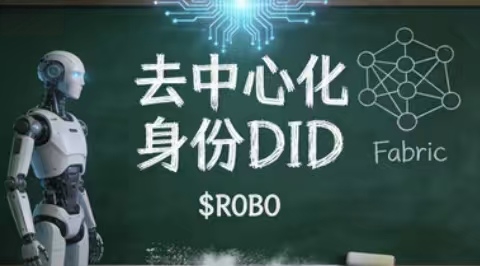
Relying on its decentralized identity (DID) system, every universal robot connected to the Fabric network will register a unique on-chain identity - just like issuing a blockchain passport for machines.
This passport permanently records all key information of the robot, such as factory parameters, maintenance records, task history, and operational performance, fully on-chain, tamper-proof, and publicly verifiable.
Imagine this: you need to hire a robot to do a job, and under traditional models, you cannot confirm its true abilities and past credit, making the trust cost extremely high.
With the DID system from Fabric, you only need to scan its 'ID card' to clearly determine whether this machine is qualified and whether it is worthy of trust.
At the same time, whether the robot complies with the contract can also be constrained and guaranteed through the pledged $ROBO margin, which effectively provides strong credit endorsement for the 'machine worker', fundamentally eliminating trust friction in collaboration.
This mechanism not only significantly enhances the credibility of robots but also truly provides the foundation for their scalable commercial use. Without an underlying architecture based on identity and trust, the so-called machine economy cannot be discussed—collaboration between machines and humans, as well as between machines, must be built on clear rules and trusted mechanisms, and Fabric's DID is the core cornerstone of all this.
As robot technology matures, they will penetrate every corner of factories, hospitals, homes, and even cities, taking on more work. The DID system created by Fabric enables these machines to have verifiable, traceable, and trustworthy identities, truly integrating into human society and business systems.
The underlying architecture of Fabric and the $ROBO token will continue to safeguard the machine economy: ensuring compliance in operation, safety in procedures, and fairness in value distribution.
Without this set of infrastructure, the 'Internet of Everything' will remain an empty concept, and robots will forever operate in closed, isolated scenarios.
The decentralized identity of Fabric + $ROBO economic model is the key to opening this door—allowing machines to step out of the laboratory and into the real world, becoming true 'members' of future society.
Personal opinions do not constitute investment advice.