Recently, I reviewed over 4000 real transaction records of top trader Bit浪浪 from the past two years by organizing every transaction record.
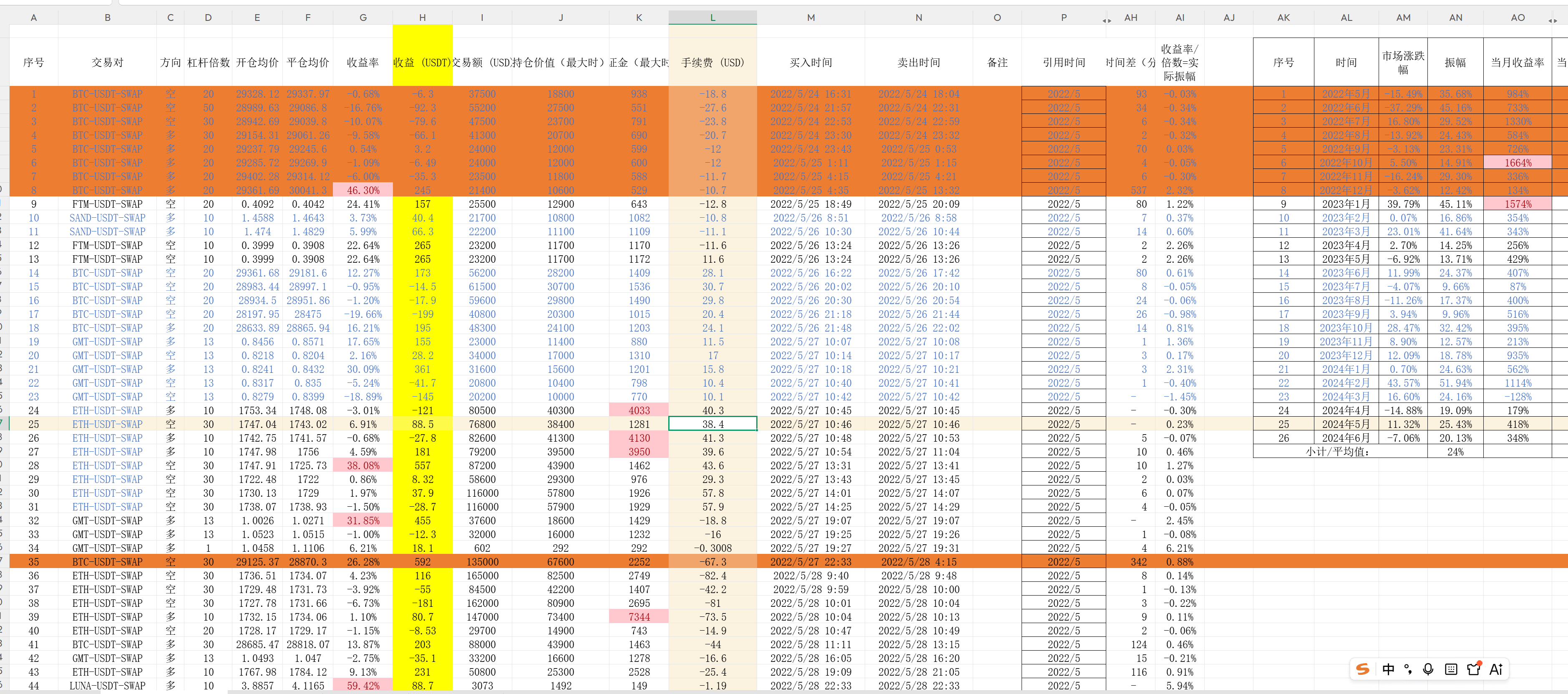
Many friends have reported that they don't know what to look at when faced with thousands of rows of data. In fact, when you convert this cold data into a 'profit and loss distribution chart', you will discover a truth that changes your perception: a trader's success is not about having more correct predictions than you, but about 'cutting losses and letting profits run'.
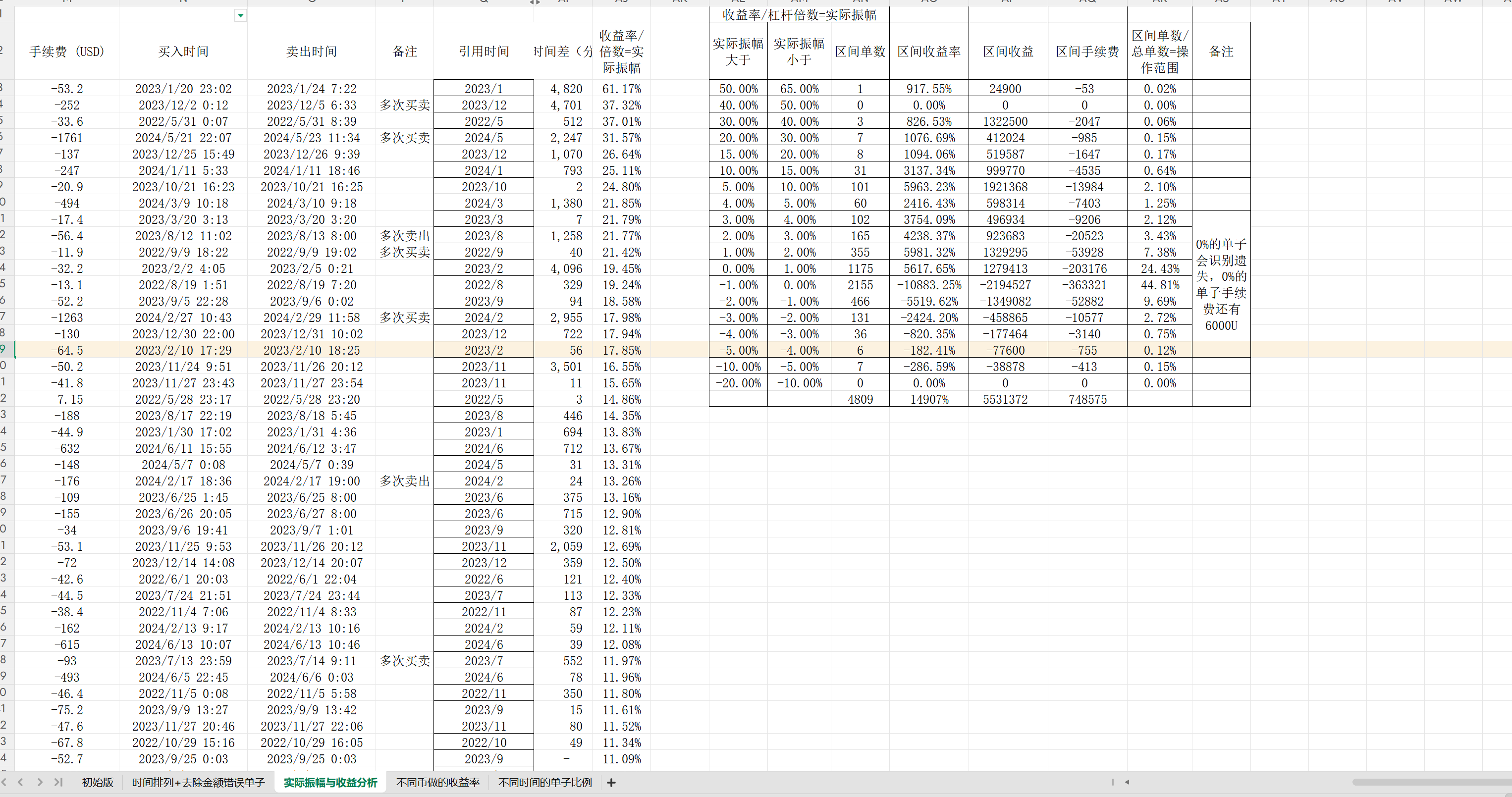
Here are three core findings I derived from data analysis.
1. The collapse of superstitions about win rates: Even at 60%, he is still losing money.
In many people's imaginations, a top trader should be a 'general who always wins', entering each trade accurately. But look at the profit distribution chart after truncating the tail below:
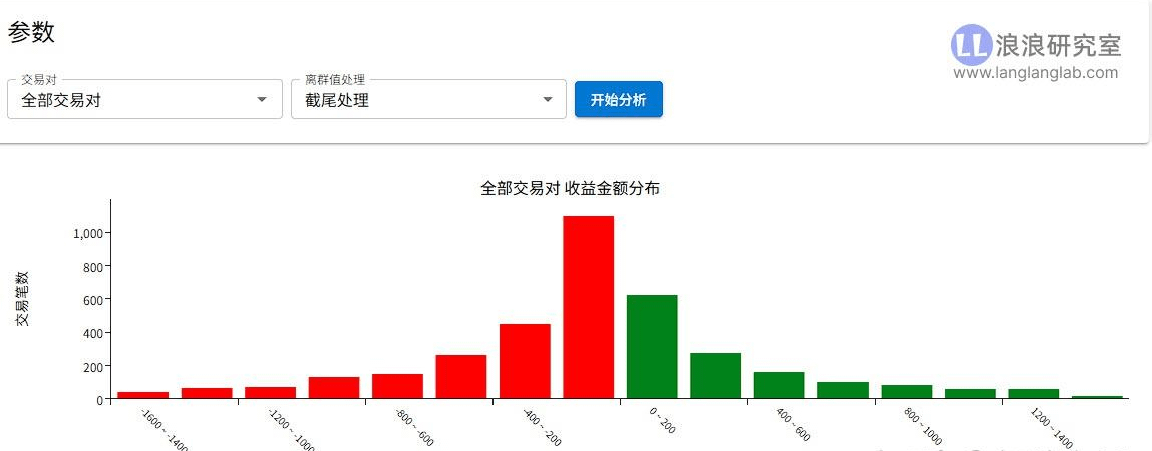
Through statistical data, we found:
Number of losing trades: approximately 2278, number of profitable trades: approximately 1387, real win rate: only about 38%.
At this point, you should feel a sigh of relief. Even top players like Bit Langlang lose money in 6 out of 10 trades. If you start to doubt life because of consecutive stop-losses, or even begin to resist trades, it means you haven't crossed the first threshold of professional trading.
2. The art of stop-loss: A man-made 'cliff'.
Please carefully observe the distribution on the left side of the chart (red area). You will notice a very interesting phenomenon: the number of losing trades within -200 USDT is the highest (up to 1098 trades), and as the loss amount increases, the bars rapidly shorten, presenting a steep cliff.
This means:
A very strong protection mechanism: Bit Langlang does not reject stop-losses, treating them as naturally as breathing. He never resists a trade: In every trade he enters, he has a firm red line in his mind. Once the market proves him wrong, he will immediately cut the losses, never allowing a trade to slide into an irretrievable abyss.
3. The truth about huge profits: Capture that 1% 'black swan' profit.
If the first image shows 'defense', then the second image shows 'offense'. When we bring back those outliers (large profits) that were cut off, you will see a completely different picture:
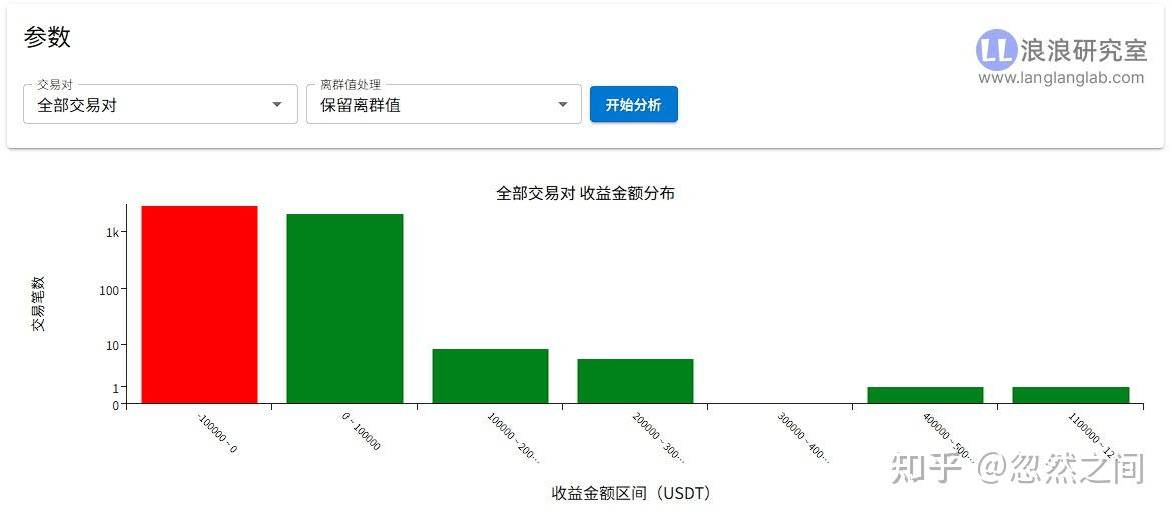
The data hides two shocking details:
Among over 4000 trades, the vast majority were small gains and small losses. However, he had one trade that made over 1.1 million dollars, and about ten trades that made between 100,000 to 300,000 dollars.
This huge profit of 1.1 million dollars is enough to cover his previous hundreds, or even thousands, of small stop-loss trades.
4. Conclusion
So, true enormous profits are not earned by diligently 'grinding short trades', but by daring to make low-cost mistakes, seizing that one or two opportunities to catch the 'super trend'. When the market is favorable to him, his ability to take positions is astonishing, until he squeezes out all the profits.
This table is a compilation of all trading records from Bit Langlang's real account over two years, organized by me in one month. It details how to turn 1000 USDT into 100 million, which can be invaluable for short-term contract traders. Now I’m sharing it for free, just leave a comment and follow me, and once I reach 1000 followers, I can go live and share this invaluable compilation with you.
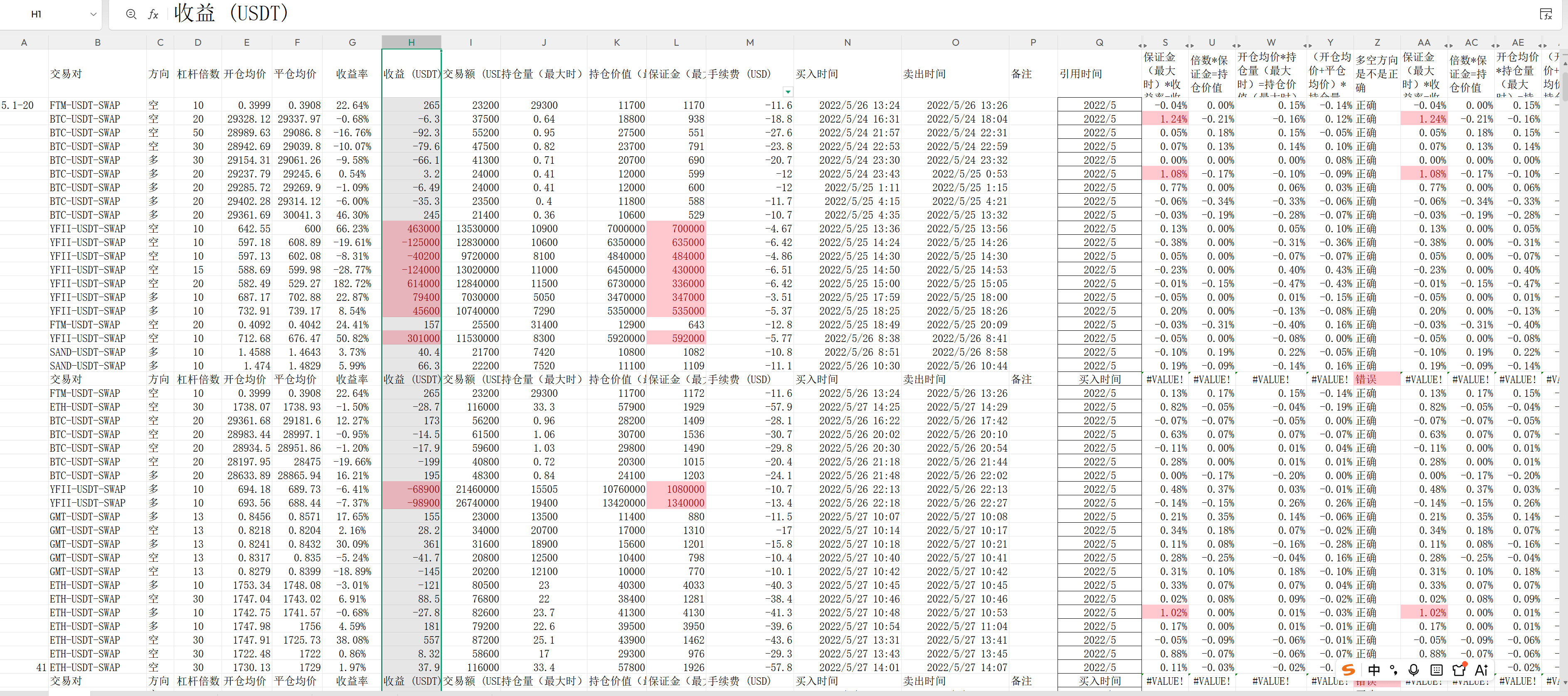
This also includes all live broadcasts from Bit Langlang's internal member groups, where Langlang personally breaks down his profit logic and teaches you step by step. Langlang has mentioned that if you want to make money through short-term trading, you must do three things.
1. Review the historical trends of BTC and all leading coins.
2. Review your own trades.
3. Review the trading records of excellent traders.
Now I have organized the records of the best traders in the world for you, just a single follow is all you need to share the live broadcast.
Followers who leave comments, I will send you the materials in the order of comments during the live broadcast!