
I remember the exact moment the Mira thread dropped. September 26, 2025, 11:14 GMT – @miranetwork posted “Mira Mainnet is Live” with a short video that felt more like a quiet announcement than a hype explosion. No fireworks, no countdown timer, just a clean statement: the trust layer for AI had arrived.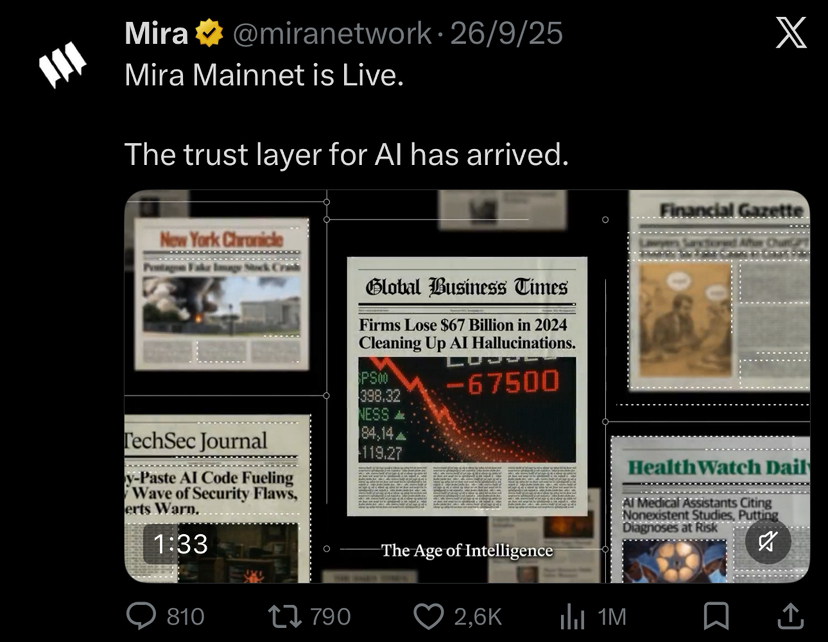
The thread was straightforward. They linked to registration, claiming, staking, and explorer pages. They shared stats: 7M+ queries generated in testnet, 4.5M+ users across ecosystem apps, 3B+ tokens processed daily. Dozens of integrations already live – compute providers, storage, model hosts, prediction agents, consumer apps. It wasn’t a launch party; it was a handover. The network was ready for real usage.
What stood out to me then (and still does now): Mira didn’t launch with massive fanfare because the tech had already been battle-tested. Mainnet meant shifting from controlled testnet verifications to open, permissionless use. Anyone could register as a verifier, stake $MIRA, run checks on AI outputs, earn rewards, and get slashed for bad behavior. The hybrid consensus (PoS + AI-weighted elements) started handling real queries at scale, producing on-chain certificates that apps could trust.
Fast-forward to March 2026. Mainnet has been live for over five months. Daily token processing is still in the billions. The Plume RWA integration is active, verifying asset valuations on-chain. Agent frameworks like Eliza and SendAI are embedding Mira checks to prevent hallucinations in live trades. The numbers aren’t hype – they’re from explorer data and ecosystem updates. Verifier participation has grown steadily, staking rewards are flowing, and the network hasn’t had a major outage or exploit.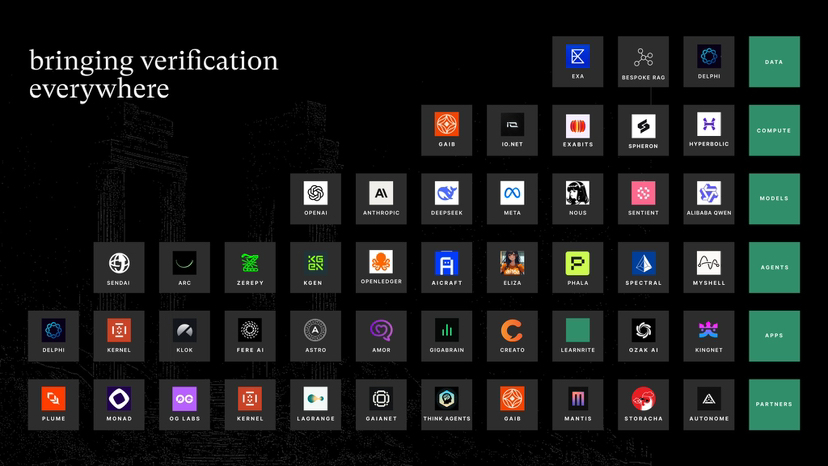
Deep insight: This launch wasn’t about price action (though MIRA saw a solid post-launch run). It was about maturity. Most AI-crypto projects launch mainnet as a marketing milestone. Mira launched it as an operational milestone. The team (Ninad Naik and the ex-Google/Polygon builders) prioritized hardening over hype. No aggressive unlocks early, focus on ecosystem grants, non-profit-aligned structure – all of that showed in how smoothly mainnet transitioned.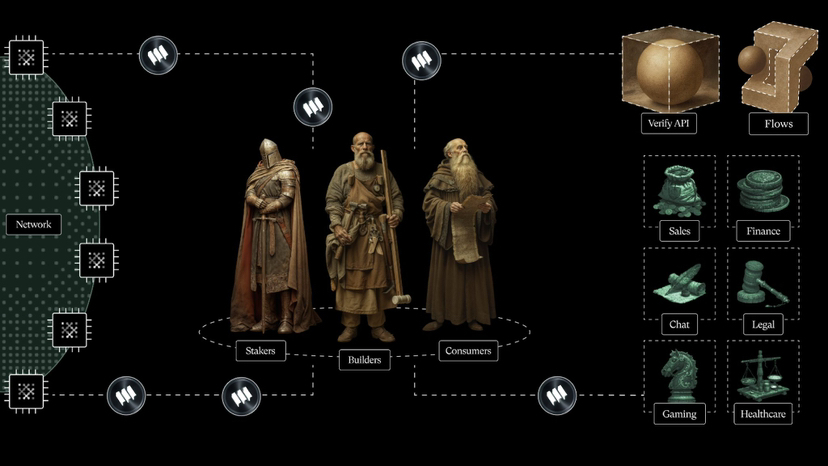
Token-wise, MIRA’s role became crystal clear post-launch:
Verifiers stake to participate and earn from honest work.
Consumers pay MIRA for premium verified queries.
Ecosystem apps use MIRA as base pair or access token.
Governance lets stakers vote on upgrades.
If you’re in the CreatorPad campaign (250k MIRA pool ends March 11), threads like this one are gold. Share your own take on mainnet stats, verifier experience, or why trust matters more than model size. Quality analysis + personal angle = leaderboard movement.
What surprised you most about Mira’s mainnet rollout? Or what’s one use case you’re waiting for next?