
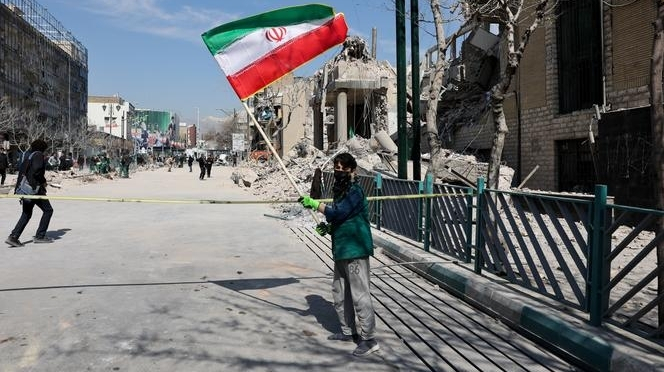
Geopolitical conflicts have always had a profound impact on global financial markets. The war involving Iran is no exception, and its consequences are felt even in the world of cryptocurrencies. Amid increased volatility, capital flight, and growing adoption in sanctioned areas, this crisis highlights the increasingly important role of digital assets in an unstable world.
Immediate volatility in the crypto markets
When military tensions escalate, markets generally react with nervousness. Cryptocurrencies, known for their volatility, are particularly sensitive to such events. As soon as an announcement of military escalation or strikes in the region is made, the price of Bitcoin and major cryptocurrencies can plummet suddenly.
This reaction can be explained by the behavior of investors. In times of war or international uncertainty, market participants tend to reduce their exposure to assets considered risky. Cryptocurrencies are often classified in this category, alongside certain tech stocks or speculative assets. Investors then prefer to turn to traditional safe havens like gold or the US dollar.
Cryptocurrencies as an economic escape
Paradoxically, geopolitical tensions can also promote the adoption of cryptocurrencies, particularly in countries directly affected by conflict or economic sanctions. In Iran, financial restrictions imposed by several Western powers have already limited the country's access to the international banking system.
In this context, cryptocurrencies are becoming an alternative for citizens and some businesses. They allow for money transfers abroad, bypass certain financial restrictions, and sometimes protect savings against inflation or the devaluation of local currency.
For many Iranians, converting their savings into Bitcoin or stablecoins can be a way to preserve the value of their money in an uncertain economic environment.
Indirect effects on the global economy
The war in Iran also indirectly influences cryptocurrencies, notably through its impact on the global economy. Tensions in the Middle East tend to drive up oil prices, which can fuel inflation in many countries.
When inflation rises or financial markets become unstable, investors readjust their strategies. Some turn to cryptocurrencies in hopes of finding protection against inflation or disruptions in the traditional financial system. However, this dynamic remains uncertain, as the crypto market is still relatively young and heavily influenced by speculation.
An increasingly strategic role
The war in Iran highlights an important reality: cryptocurrencies are no longer just a technological or speculative phenomenon. They are gradually becoming a financial tool capable of playing a role in economic and geopolitical crises.
If their volatility remains a major challenge, their decentralized nature and global accessibility allow them to be used in situations where traditional financial systems are limited or disrupted.
Conclusion
The impact of the war in Iran on cryptocurrencies illustrates the growing complexity of the relationships between geopolitics and digital finance. International tensions can lead to sharp price drops, but they can also accelerate the adoption of digital assets in regions facing economic restrictions. In a world marked by uncertainty, cryptocurrencies could thus continue to gain importance as an alternative to the traditional financial system. 📉📈