

I learned to pay attention to coordination long before I started worrying about failure.
Failures are obvious.
Coordination problems are quieter.
A system keeps running.
Tasks execute.
Agents respond.
But meaning starts drifting.
That’s the lens I keep using with $ROBO inside Fabric Protocol.
Not whether machines can act.
Whether the outcomes of those actions stay stable once activity begins to stack.
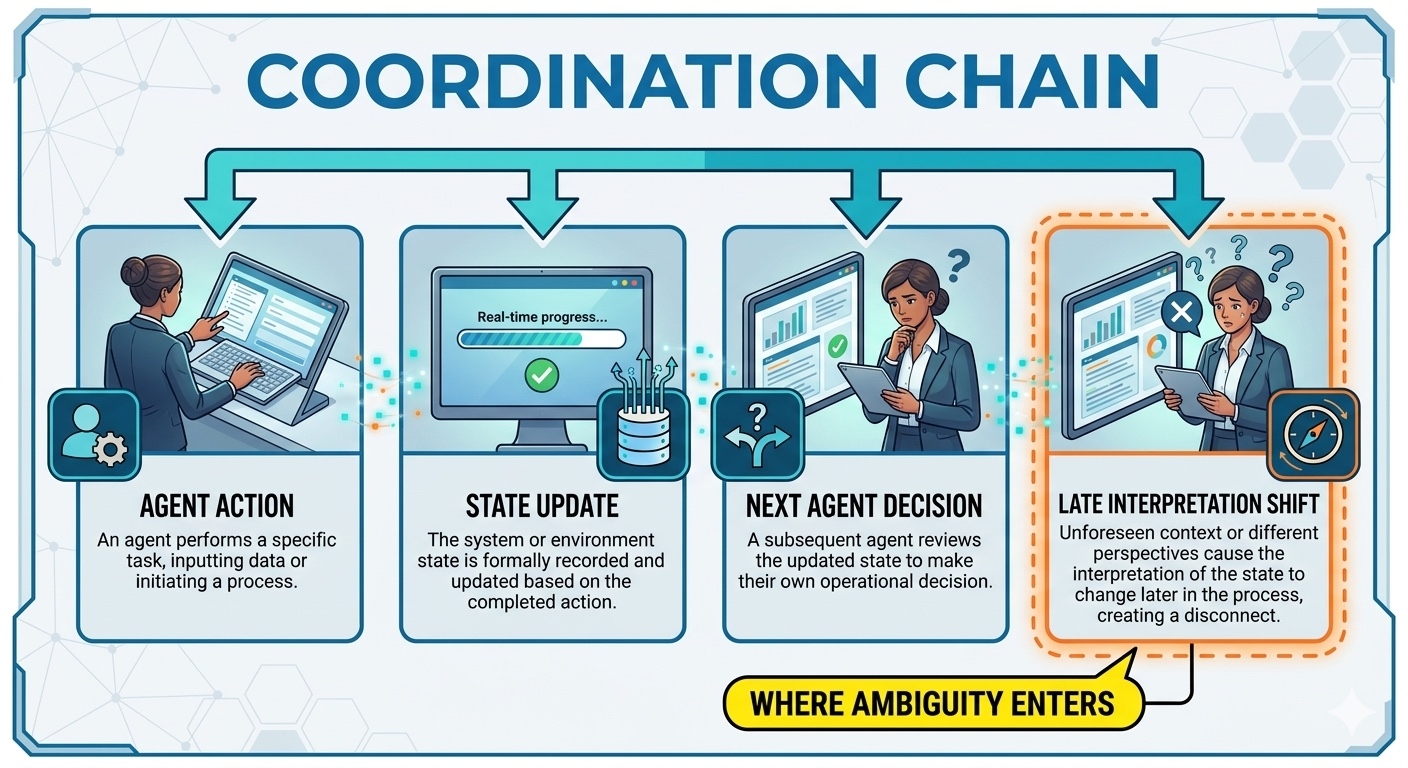
In coordinated systems, nothing happens in isolation.
An action updates state.
That state informs another agent.
That agent triggers the next decision.
Meaning compounds across layers.
When interpretation shifts after that chain begins, the system doesn’t fail.
It redistributes responsibility.
Humans step in to resolve what automation already moved forward.
The first signal of structural strain is reinterpretation frequency.
How often does an accepted result change its meaning later?
Rare reinterpretations are manageable.
But clusters create hesitation.
When participants expect outcomes to shift, they begin inserting buffers.
Additional checks appear.
Downstream actions wait longer.
Autonomy becomes supervised automation.
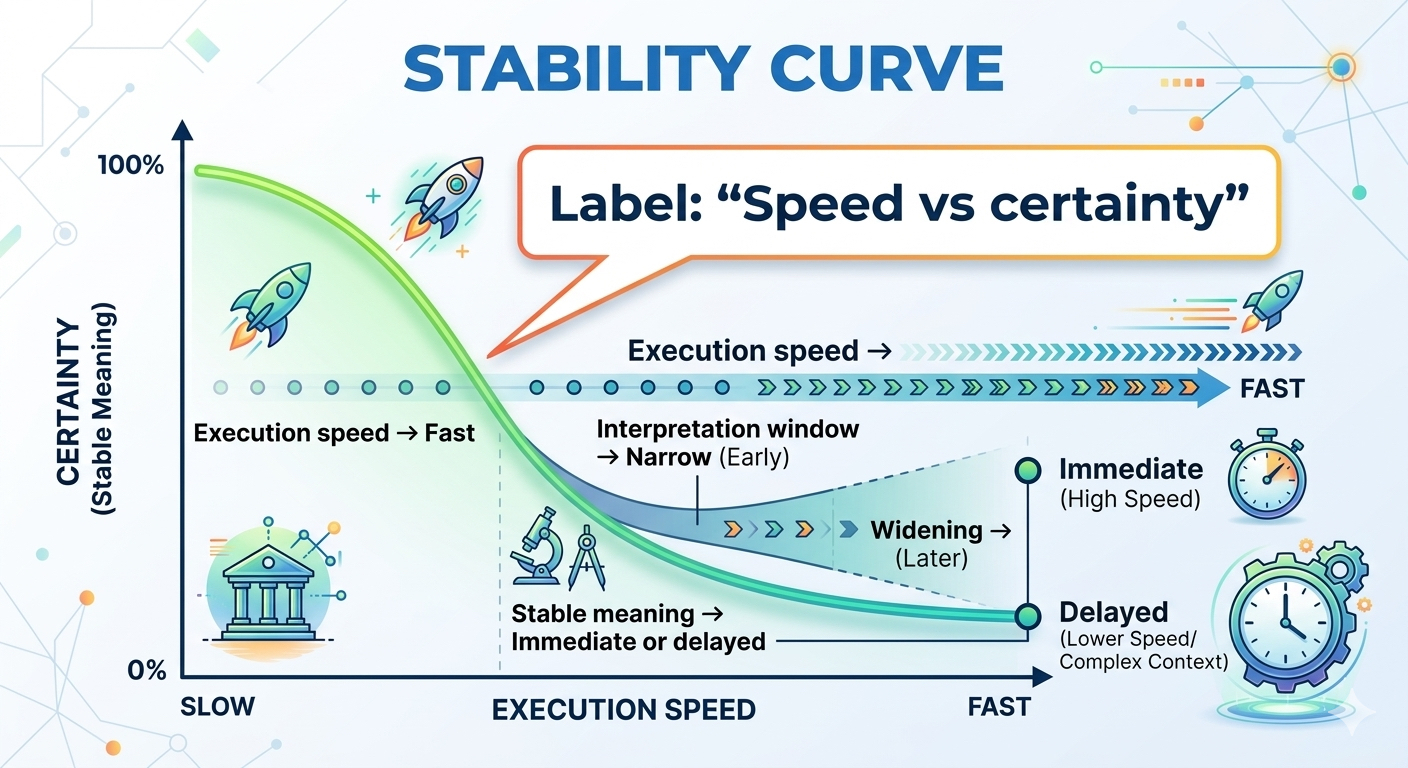
The second signal is time to stable meaning.
Execution speed is easy to show.
Interpretation stability is harder.
A fast action with unstable meaning isn’t efficiency.
It’s deferred uncertainty.
Measure tails, not averages.
Look at stress periods, not calm ones.
Healthy systems compress back to baseline once pressure fades.
Unhealthy systems normalize delay.
The third signal is explanatory clarity.
When reinterpretations happen, the system either becomes smarter or heavier.
Stable reason codes allow automation to adjust.
Drifting explanations force human intervention.
Ambiguity doesn’t destroy systems.
It reallocates labor.
Backed by the Fabric Foundation, the long-term relevance of $ROBO won’t be determined by short-term market excitement.
It will depend on whether ambiguity becomes easier to resolve over time.
Tokens can coordinate incentives.
They cannot create trust alone.
Trust emerges when outcomes remain replayable.
Healthy systems leave scars that heal.
Unhealthy ones leave buffers that stay.
If $ROBO supports coordination where meaning stabilizes quickly after pressure, autonomy compounds.
If not, automation quietly becomes operations.
And operations never scale the way autonomy does.